Springs · Oakland
Torsion Spring Replacement in Oakland
You heard a sharp bang from the garage, and now the opener hums for a second and gives up.
In plain words
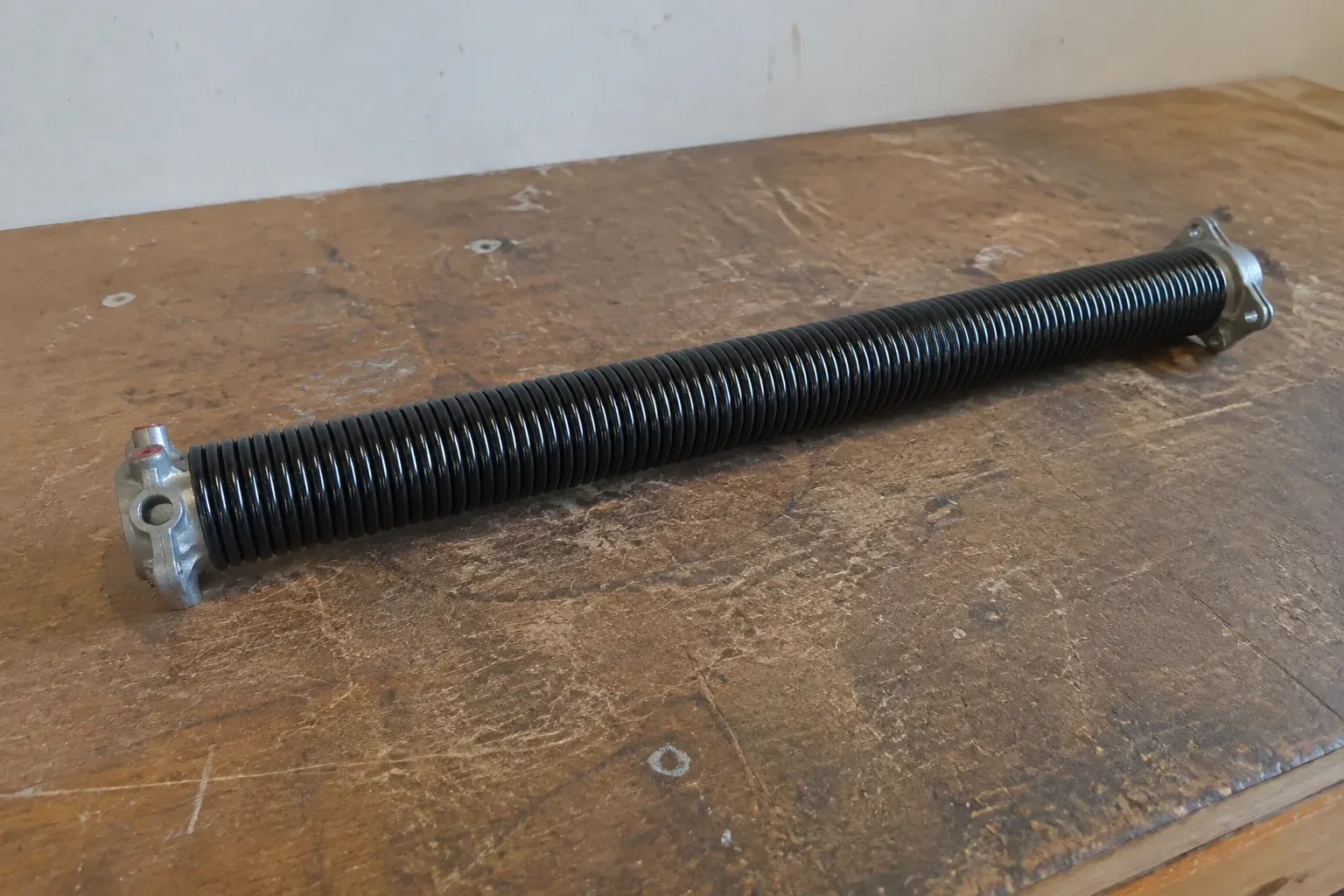
The heart of this service is matching, not just swapping. Two springs can look identical and behave very differently, because the force a torsion spring produces depends on its wire thickness, inside diameter, length and wind direction, and the right combination depends on the door's weight, height, drum type and track lift. The technician measures all of those before choosing a spring, then confirms the choice the only way that counts: lifting the finished door by hand and feeling it stay put at waist height. A properly matched spring lasts longer and keeps the opener working easily.
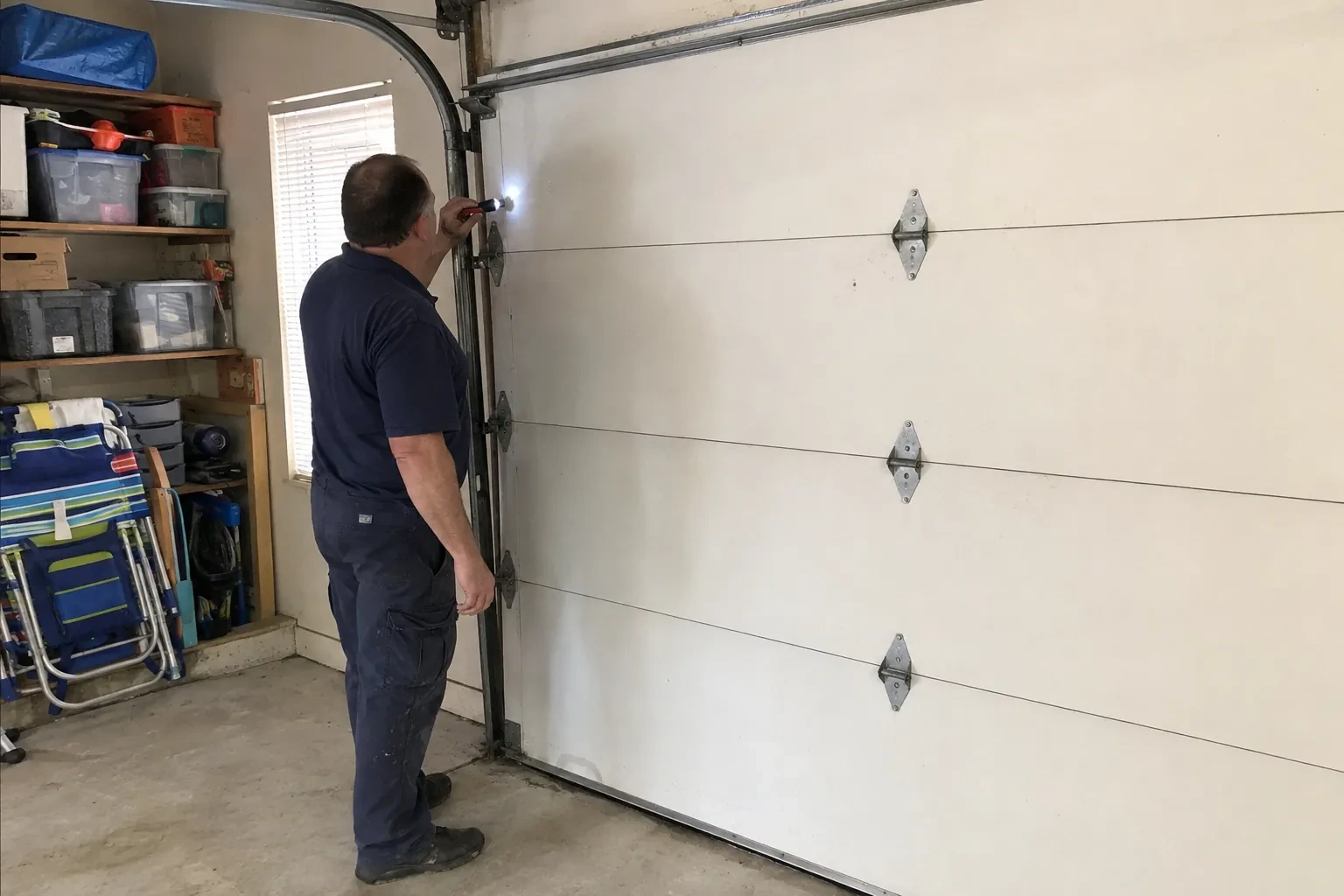
How the visit goesAfter pulling the red release cord, you tried lifting the door yourself and it would barely leave the floor. A door that used to glide up with one hand now takes real effort, which points to the counterbalance rather than the opener.
Torsion Spring Replacement
How the visit goes
Following the hardware the spring drives
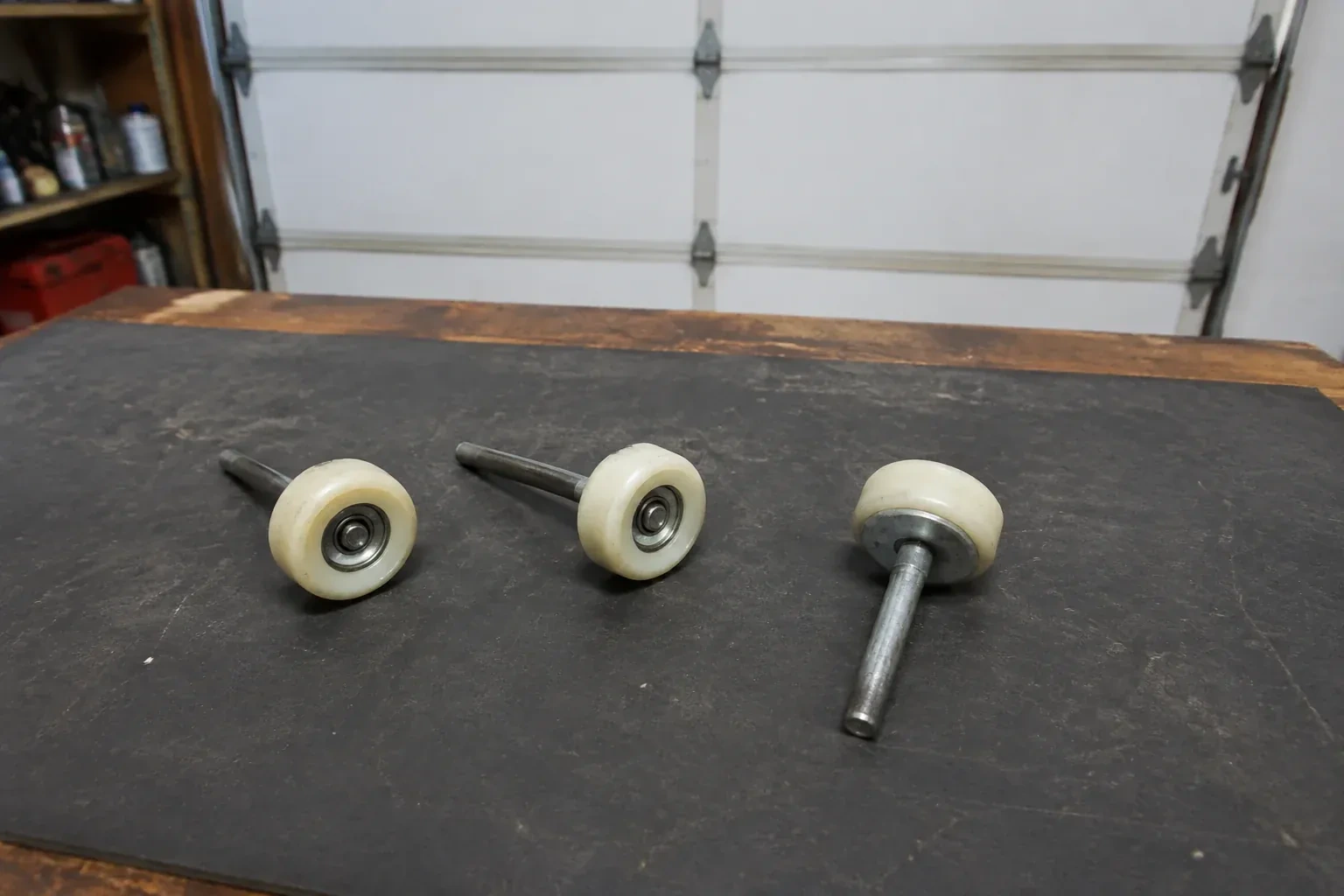
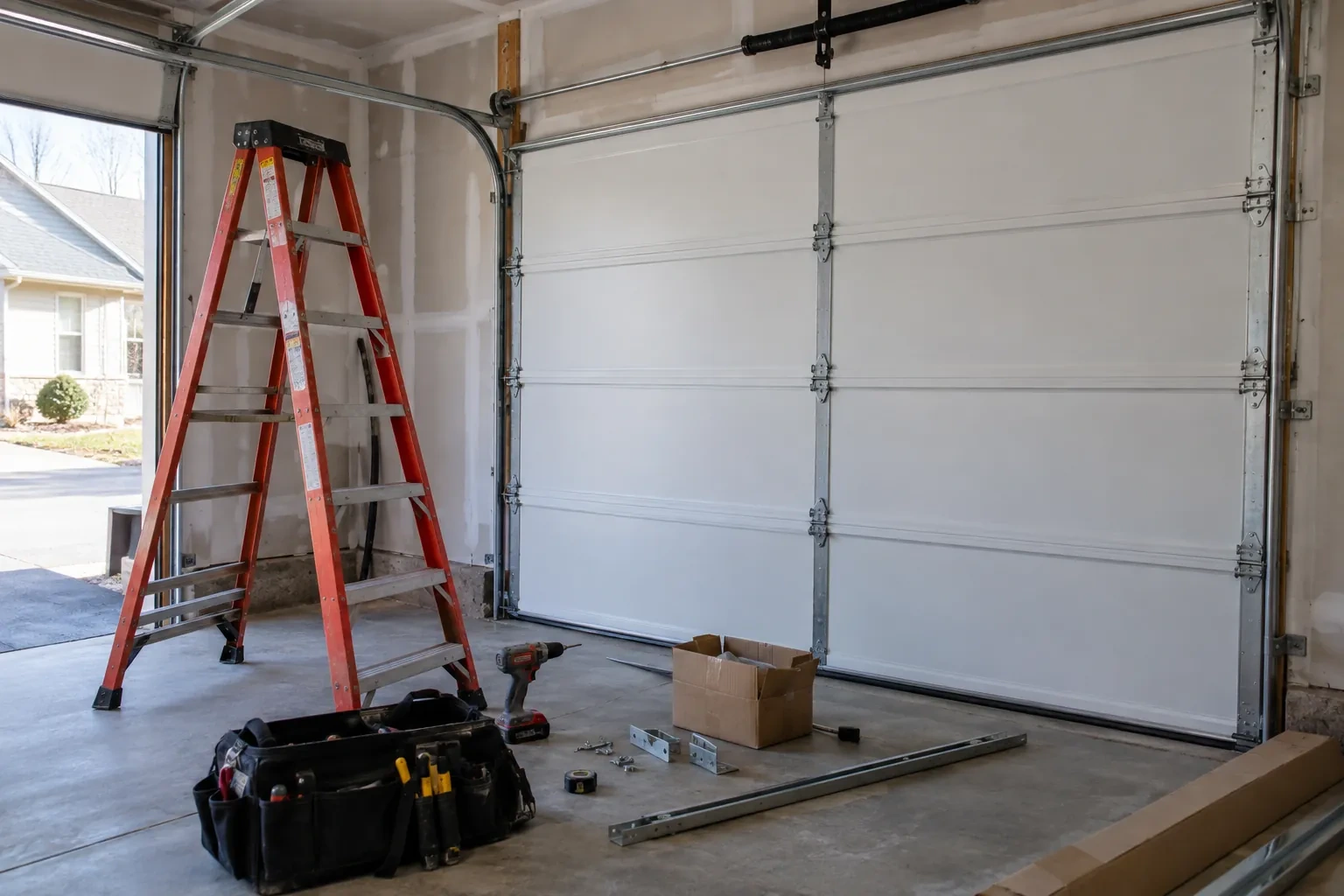
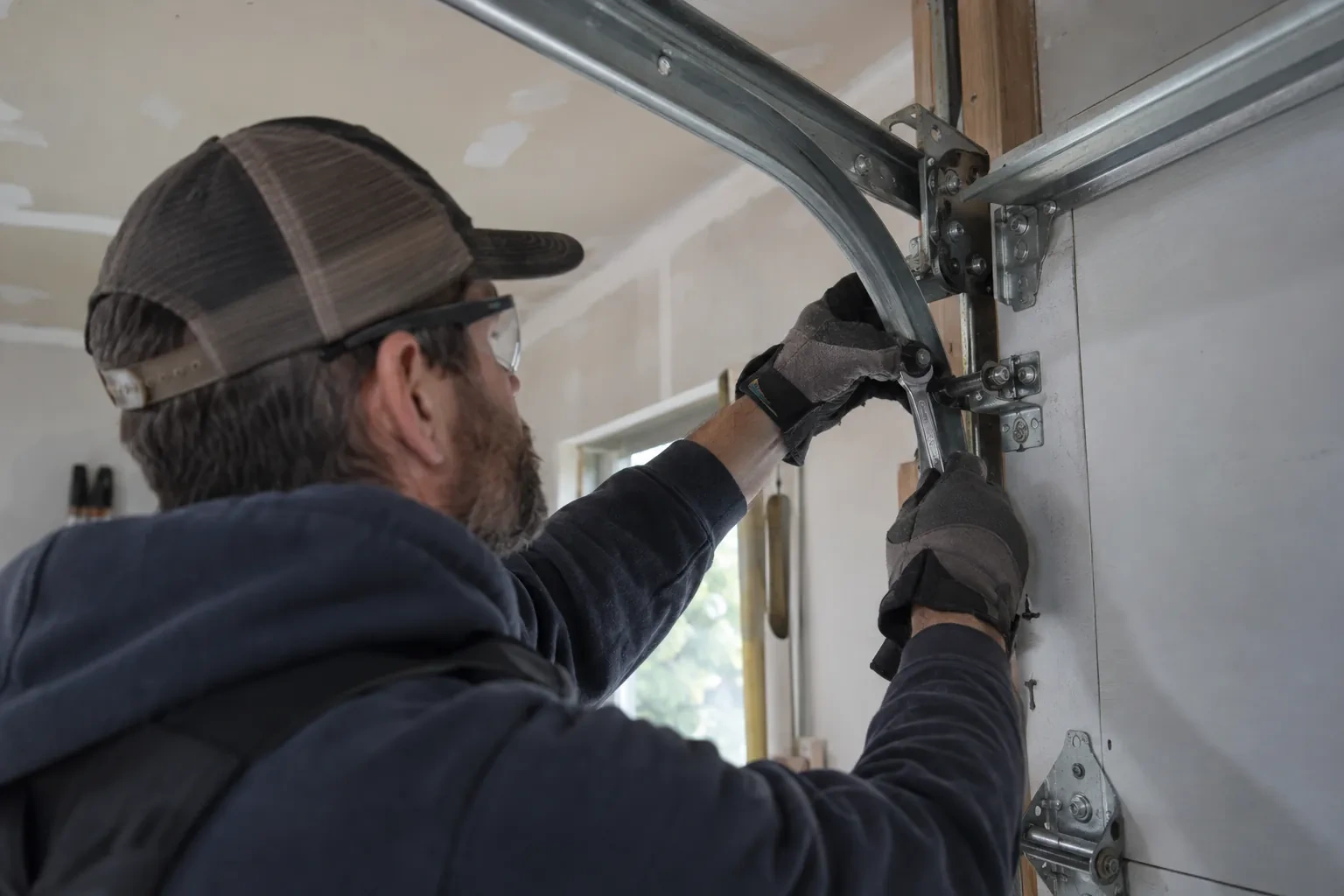
The spring is one part of a chain, so the check follows that chain from the shaft outward. The centre bearing and the end bearings are turned by hand to feel for roughness or wobble. Cable drums are inspected for cracked flanges and worn grooves, and lift cables are examined along their length and at the bottom brackets, where fraying and rust usually start. Bottom brackets and their fasteners are looked at for corrosion, and the shaft is checked for straightness. Findings here decide whether the visit is a spring swap alone or a spring plus a few tired companions.
Fitting a matched pair
On a two-spring door the springs are installed as a set: one left-wound and one right-wound, mirrored on either side of the centre bracket, with matching wire size, diameter and length so each carries half the load. Both stationary cones bolt to the centre bracket and both winding cones face outward. The technician winds each spring the same number of quarter turns, alternating between them, so the shaft is never loaded unevenly. Once both are set, the door is balanced and tested as one system. Equal springs mean equal wear, so the pair reaches the end of its life together rather than one after the other.
Through the seasons
The new spring has been set for the door as it is today, and the seasons are part of its life. Cold mornings make steel and grease a little stiffer, so the door may feel marginally slower in deep winter while still balanced; lubrication in autumn helps. Slush and road salt carried in on tires settle on the bottom brackets and cable ends, so a rinse and a light spray in spring slow corrosion where the cables anchor. Summer humidity is easier on hardware but rewards a dry, clean track. Small seasonal habits like these let the spring reach its full rated cycle count.
Torsion Spring Replacement
In the van
Torsion springs, oil-tempered or galvanized
End bearing plates
Stationary cone bolts and nuts
Locking pliers for the track
Centre bearing bracket and bearing
Torsion Spring Replacement
What affects the quote
Oversize or non-standard doors
Very wide doors, tall doors, carriage-house doors with heavy overlays and light-commercial doors may need duplex springs, multiple springs or larger drums, which changes both the hardware and the method.
One spring or two
A single-spring door needs one spring; a paired system is usually replaced as a matched set of left- and right-wound springs. The number of springs and whether both are replaced is the largest single influence on the scope.
Converting from extension springs
Moving a door from extension springs to a torsion system adds a shaft, bearings, drums and brackets, and removes the old pulleys, which is a broader job than replacing an existing torsion spring.
What to have ready
- Can you see a gap in the spring above the door?
- Is the door currently closed, open, or stuck partway?
- Did you hear a loud bang before the door stopped working?
Torsion Spring Replacement: questions
QuestionsWhat is the difference between torsion and extension springs?
Torsion springs mount on a shaft above the door and twist to store energy, lifting the door through cables and drums. Extension springs run alongside the horizontal tracks and stretch as the door closes, pulling it up through pulleys. Torsion systems tend to lift more evenly, take up less space beside the tracks and are the standard on most modern doors. Both are professional service items because of the energy they hold.
What happens if the header wood or centre bracket is damaged?
The centre bracket anchors the spring's reaction force to the framing above the door, so it has to be solid. If the header has split or softened, or the lag bolts have pulled, the technician can refasten into sound wood, add a reinforcing plate or replace the bracket before the new spring is wound. Dealing with this first keeps the shaft level and the spring pulling straight, which protects the bearings and the door.
Will the new spring look the same as the old one?
Not necessarily, and that is fine. The paint colour on the winding cone or coil is a code that identifies wire size and wind direction, and different suppliers use their own schemes, so a matched replacement can carry a different colour than the spring it replaces. What matters is that the wire size, diameter, length and wind direction suit the door's weight and height, which is confirmed by the balance test.
Related services
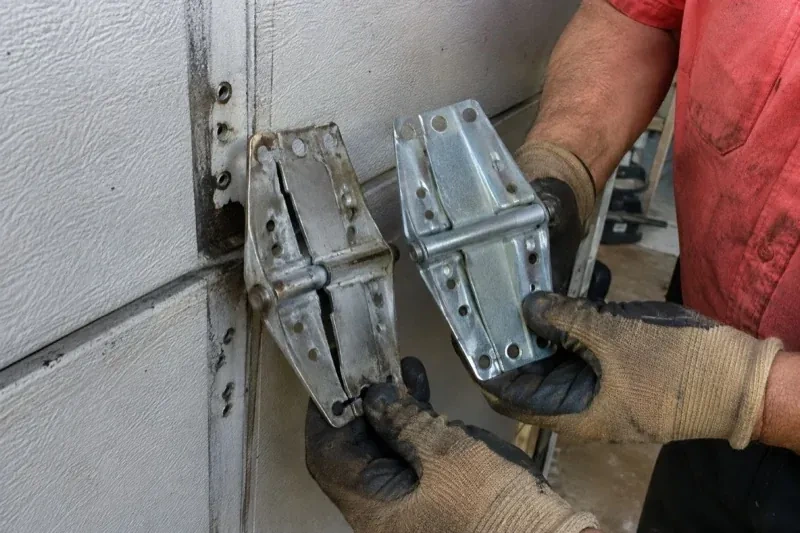
- Garage Door Hinge ReplacementPressing a hand against one of the middle hinges makes it rock on the panel.
- Garage Door Track Repair or ReplacementThe garage floor has settled at one corner, and the door now scrapes the concrete on that side while daylight shows at the other.
- Garage Door Cable ReplacementThe cable has wrapped itself around the shaft above the door instead of sitting on its drum.