Openers · Brant
Belt-Drive Opener Repair
After the power came back you pulled the red cord to get the car out.
In plain words
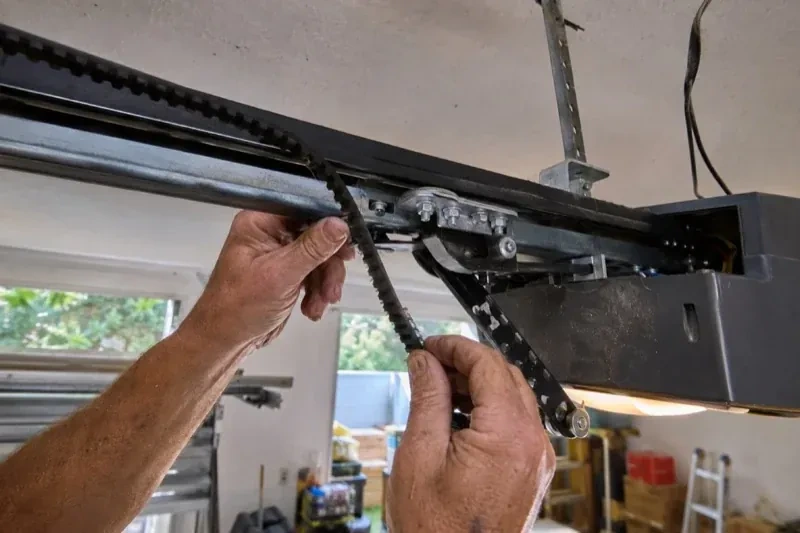
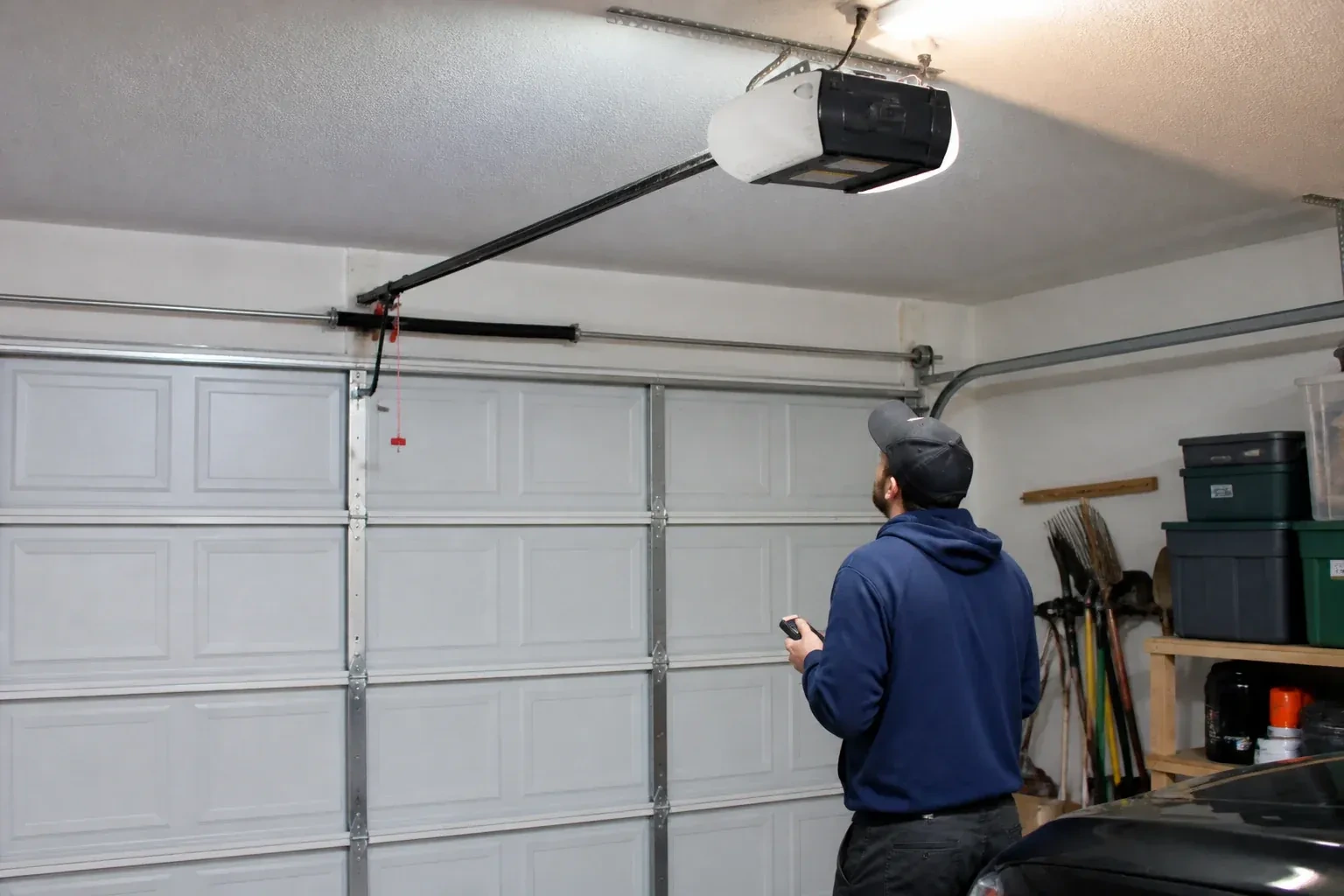
A belt drive is chosen for its quiet, so one that has started to rattle is saying something specific. Sprocket noise usually means the belt is either too loose or too tight. A squeal from the front of the rail points to the idler pulley bearing. A clack at the same point in every cycle is a run of worn teeth or a rail joint out of line. A hum with no movement is a broken clip, a stripped gear or a belt off its sprocket. Repair means reading those sounds, confirming them by inspection and replacing the one component responsible, so the operator returns to its hush.
How the visit goesSomeone tightened the belt last month to stop the sag. Now the opener sounds like a chain drive, the motor labours on the way up, and the whole rail vibrates under the ceiling.
Belt-Drive Opener Repair
How the visit goes
The garage in winter and what it does to a belt
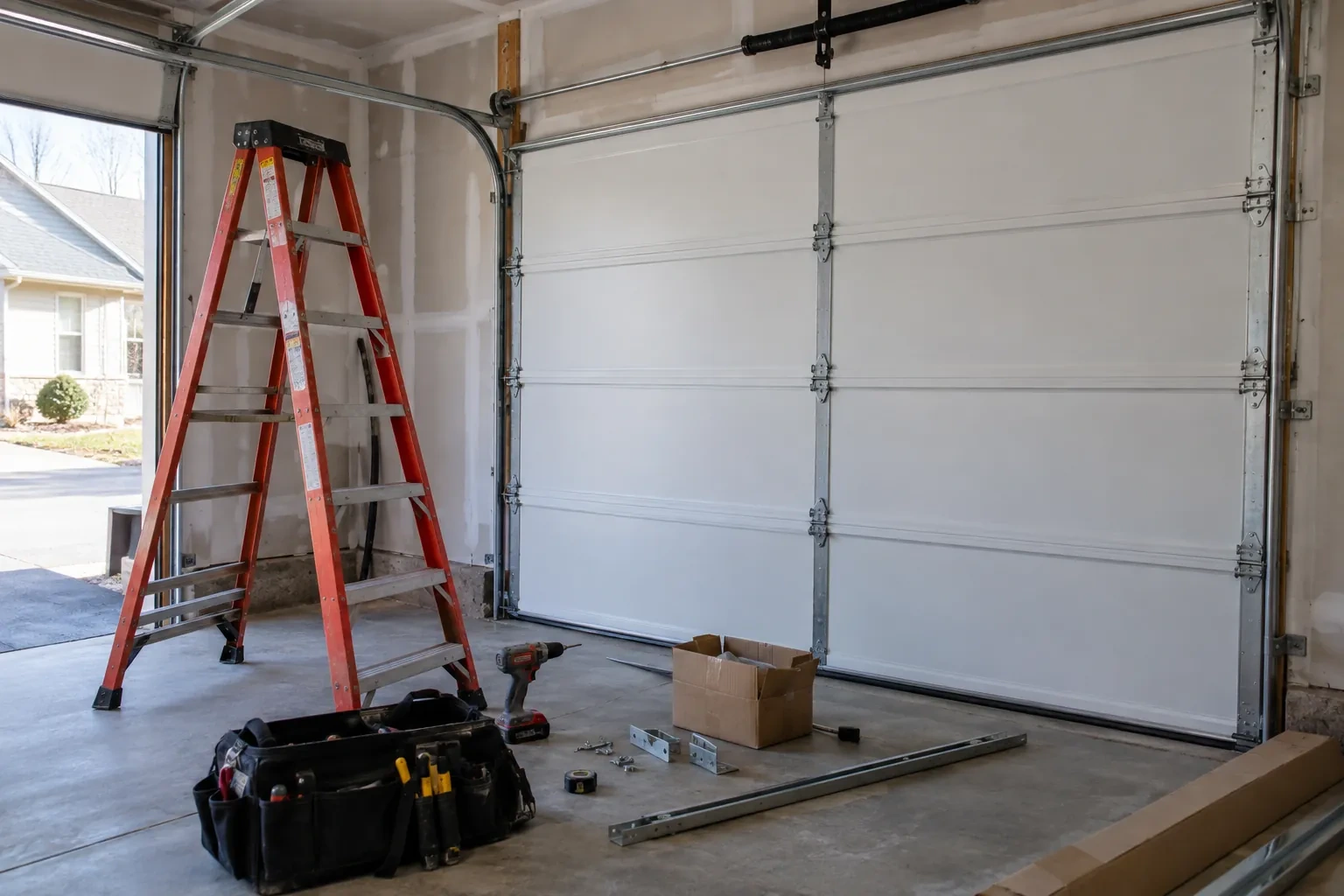
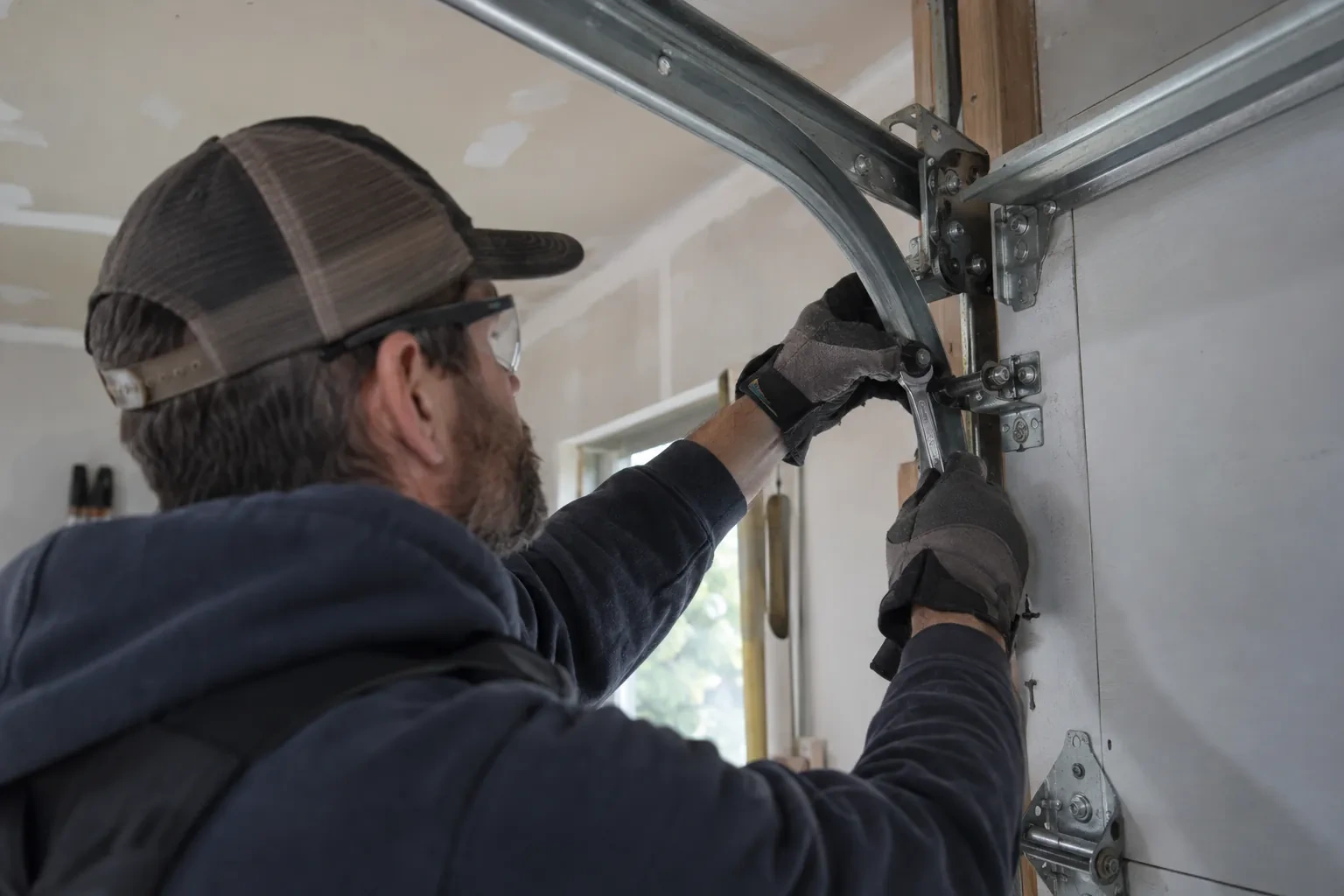
For a detached or unheated garage the technician asks about the season the trouble started. Rubber stiffens in deep cold, so a belt that runs quietly in June can slap or bind in January, and tension set on a mild day may need a second look at minus twenty. A bottom seal frozen to the slab makes a modern operator reverse before the door has lifted, which looks like a belt fault and is not. Salt tracked in on tires corrodes the bottom brackets and cable ends that the balance test depends on. The belt's tension still follows the opener maker's specified measurement, not a temperature-based setting, though a cold-rated lubricant suits the door hardware in an unheated garage.
Idler pulley and the front of the rail
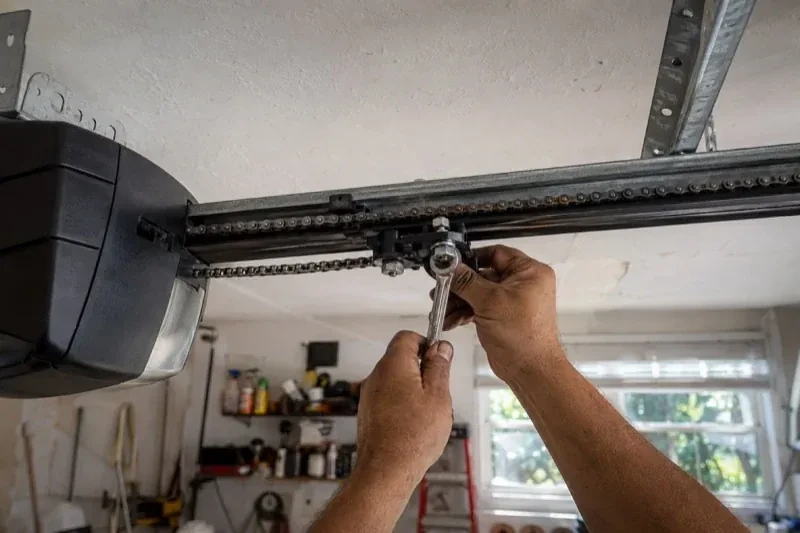
A squeal or a belt tracking to one side leads to the idler pulley at the header end of the rail. With the belt slack, the pulley's axle bolt is removed, the worn pulley and its bearing come out of the rail end, and a new pulley goes in on a clean axle. The technician spins it by hand for smoothness, sights the rail to be sure the pulley sits square, and re-tensions the belt. Where the rail itself was bent or a hanger had let it sag, the rail is straightened or re-hung level before the belt is run. The belt edge that was fraying is inspected; if the cords are exposed, the belt is replaced too.
A door that is balanced under a belt that is right
Because the door was tested by hand before the belt was touched, you leave with the springs and the drive in agreement. Once a season, with the door closed, unplug the operator, pull the release and lift the door to about a metre: it should stay there. If it drifts down or creeps up, the springs have moved and the belt will soon be working harder than it should, so book a spring adjustment before the belt shows it. A door that hesitates at one point in its travel with the operator disconnected is telling you about a roller or a hinge rather than the belt, and that too is a small visit.
Belt-Drive Opener Repair
In the van
Reinforced drive belt with clip
Belt tension spring and square nut
Rail joint brackets and stop bolts
Garage-door lubricant for hinges and rollers
2x4 offcut for the reversal test
Belt-Drive Opener Repair
What affects the quote
Idler pulley
A squealing or wandering pulley at the header end of the rail is a separate part and a few extra minutes with the belt slack, quoted only when the inspection finds it.
Detached or unheated garage
A cold garage still gets the belt tensioned to the maker's specified measurement, but calls for a cold-rated lubricant on the door hardware, a small item that a winter quote names.
How far the technician drives
A garage on the edge of town and one down a long rural road take different time to reach, and that trip is a line of the quote.
What to have ready
- Is anything hung from the ceiling or rail, such as a bicycle hook or storage rack?
- What is the belt doing: sagging, slapping, clicking, frayed, or hanging loose?
- Can you send a photograph along the rail showing the belt, and one of the label?
Belt-Drive Opener Repair: questions
QuestionsHow long should a belt last once repaired?
A belt's life is counted in cycles and years, and on a balanced door with the rail straight and the tension right it runs for many years. What shortens it is a heavy door, an over-tight adjustment, a bent rail rubbing one edge, or grease on the rubber. Keep the door balanced and lubricated, the belt dry, and glance along the rail a few times a year.
I pulled the red cord during a power cut. Could that have caused this?
It can, if the door was open or out of balance when it was released. The release itself disconnects the trolley from the belt, so a falling door does not throw its weight onto the drive; the real risk is the door itself crashing down and damaging the tracks, hinges or panels. Nothing about the cord itself is harmful; it is designed to be used. The habit to keep is to release the door only when it is closed.
What is the difference between belt-drive repair and opener replacement?
Repair keeps the operator you have and renews the piece of the drive that has failed: the belt, its tension, the trolley, the idler pulley or the gear and sprocket at the motor head. It suits a unit with a sound motor and board, photo eyes near the floor and rolling-code remotes. Replacement is the answer when the operator predates those features or when its board or motor has failed and is no longer made.
Related services
- Chain-Drive Opener RepairThe door opens about a third of the way and stops.
- Garage Door Opener ReplacementPress the button and the motor hums, but the door stays exactly where it is.
- Photo-Eye Sensor Alignment or ReplacementSomeone backed the car in a little too far, a bin or a bicycle brushed the track, and since then the door starts to close and comes back up.