Repairs · Oakland
Garage Door Manual Lock Repair in Oakland
The T-shaped handle on the outside turns a full quarter, exactly as it has for twenty years, but nothing moves behind it.
In plain words
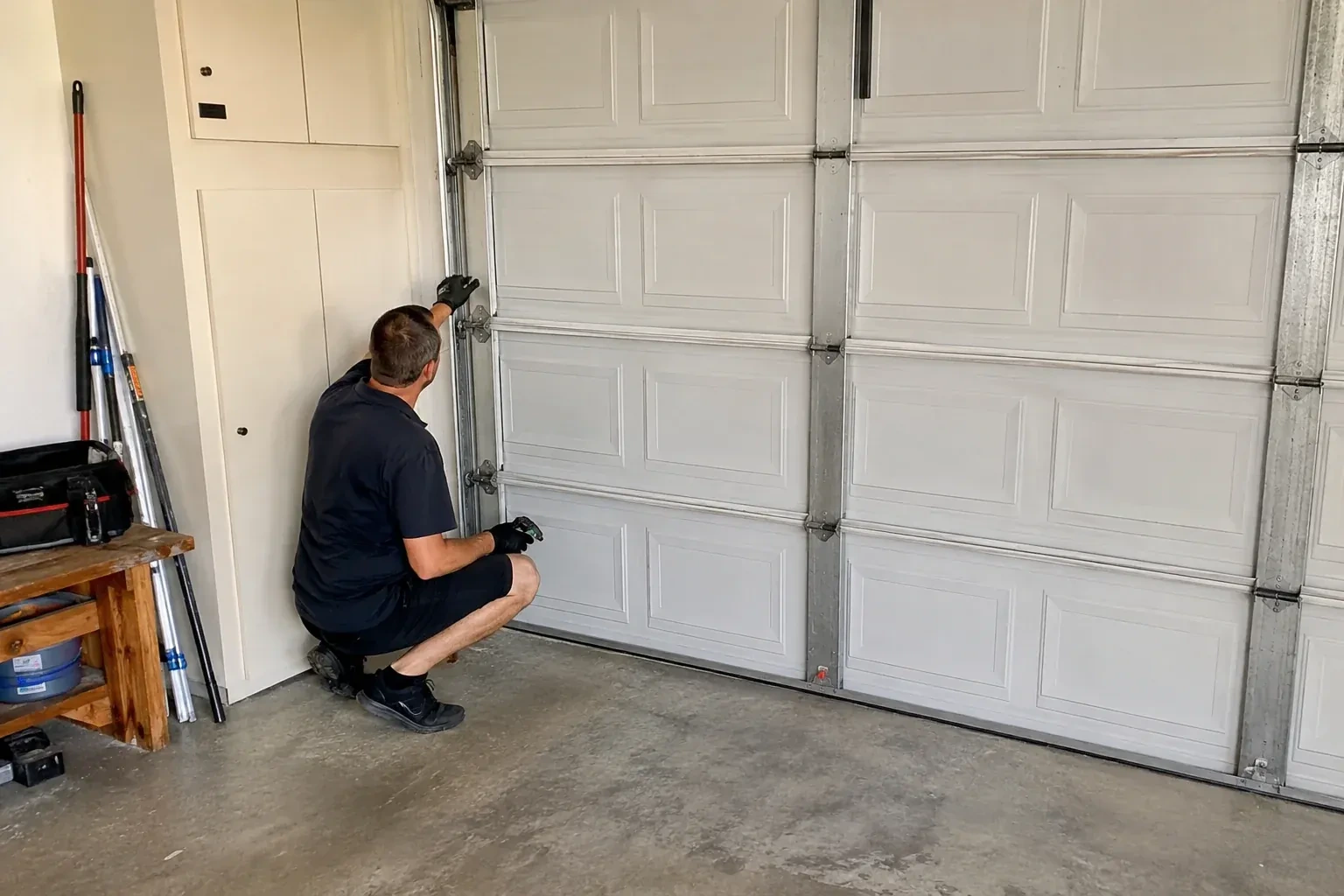
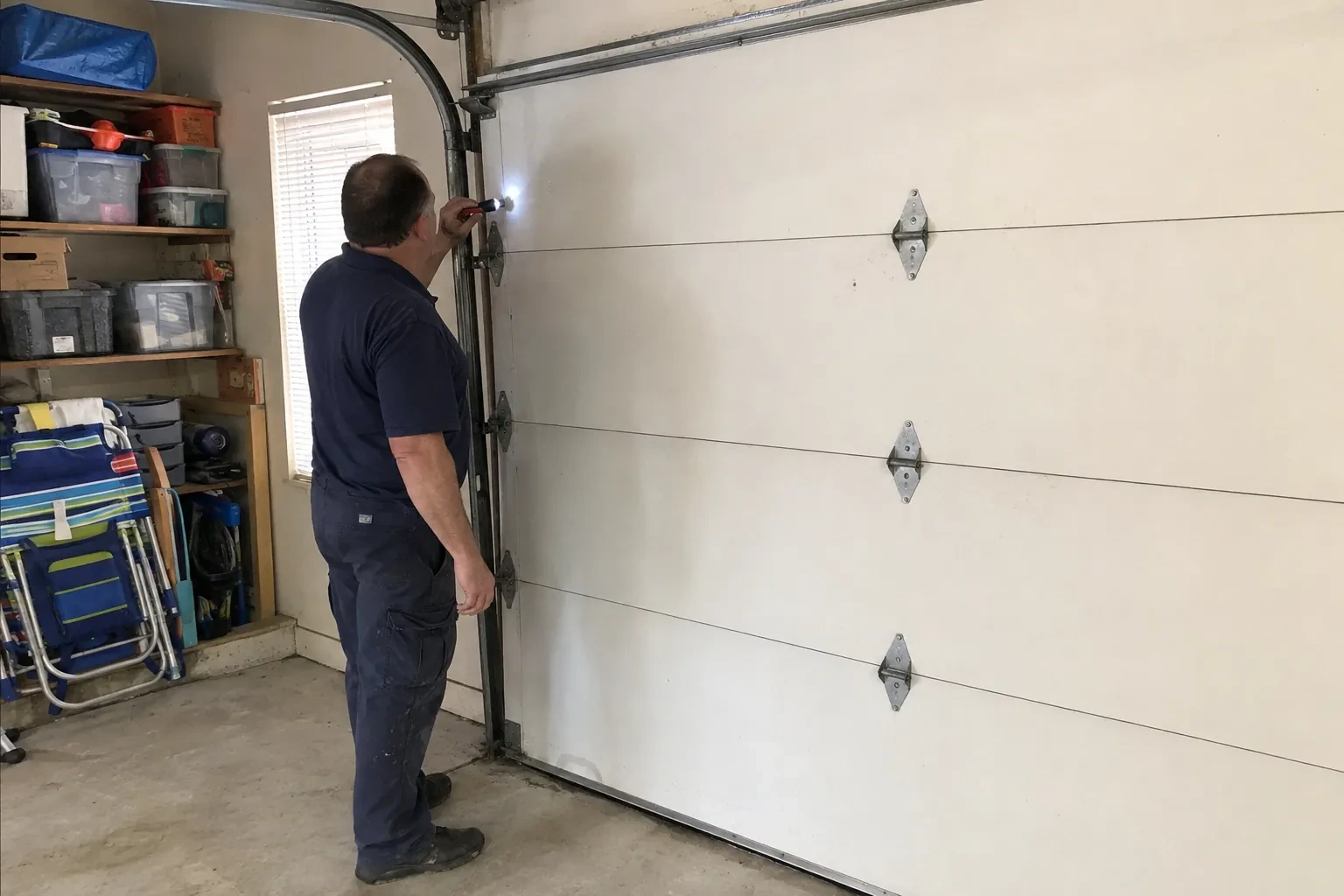
The visit runs in a settled order. On the phone you describe the lock, the door, whether an opener is fitted and whether the lock is currently jammed. On site the opener is disconnected, the door is closed by hand and checked for level. The lock is then examined piece by piece: handle, spindle, centre mechanism, bars, guides, cylinder, fasteners and the track slots. Adjustments are made first, worn parts replaced second, and the lock is cycled from both sides with the door shut. Finally the opener is reconnected, the door runs full cycles, and you are shown how the lock and the opener are meant to be used together.
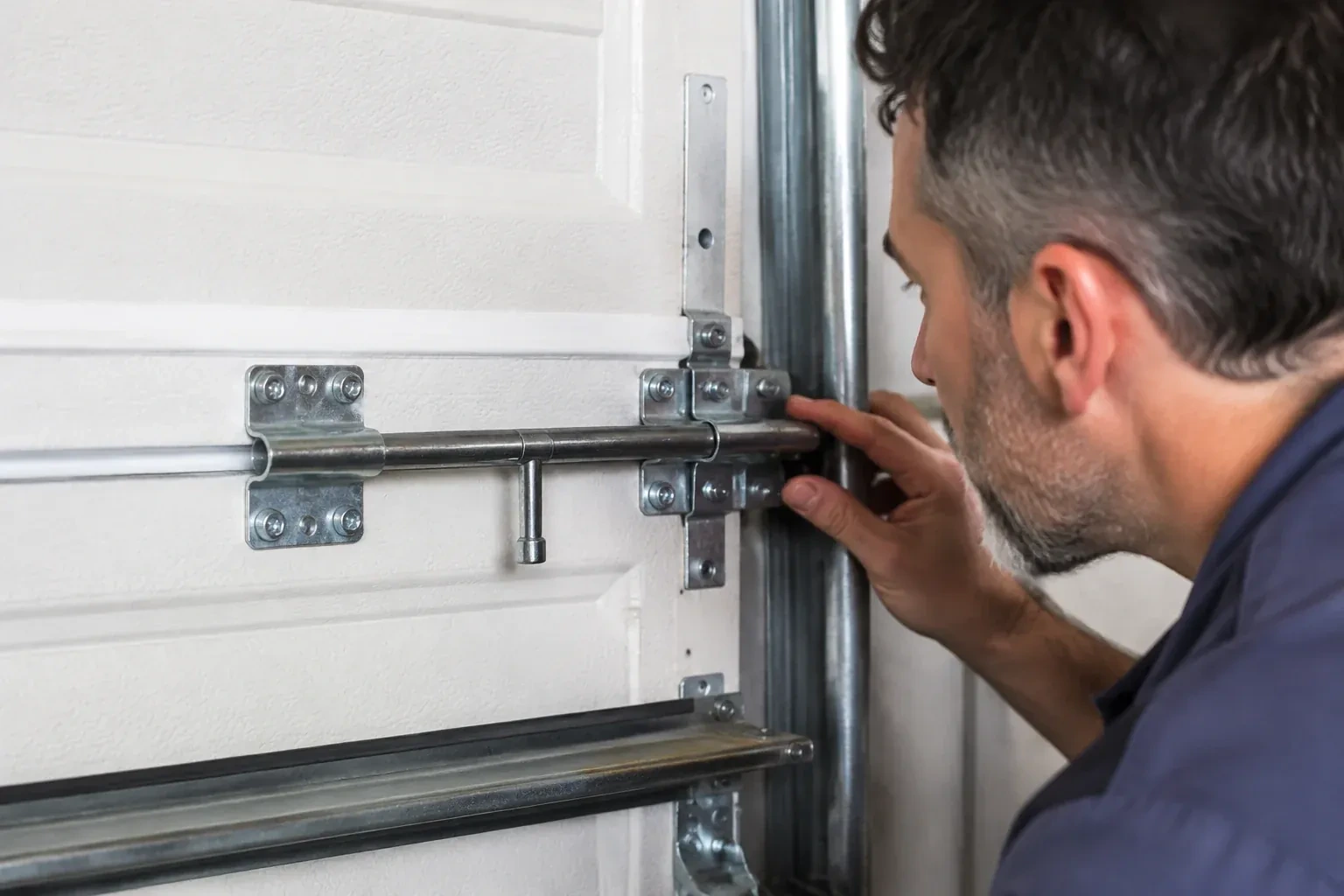
How the visit goesYou pushed the slide bolt across like always, but tonight it stops short of the slot in the track and springs back. The door is down, the bottom seal is on the concrete, yet the bar and its hole are a finger's width apart.
Garage Door Manual Lock Repair
How the visit goes
The cylinder and its key
A keyed handle gets the same attention a house lock would. The technician tries the key, feels for grit, ice or wear, and checks whether the cylinder is firm in the handle or has worked loose. A key that turns freely without unlocking anything means the tailpiece or cam at the back of the cylinder has broken or slipped. A key that will not enter or turn in cold weather usually means meltwater has frozen in the keyway. A key that needs a wiggle means worn pins or a worn key. Whether you hold a key at all is noted too, since a lost key shifts the plan from repair to rekeying or replacement.
Lining the bar up with its slot
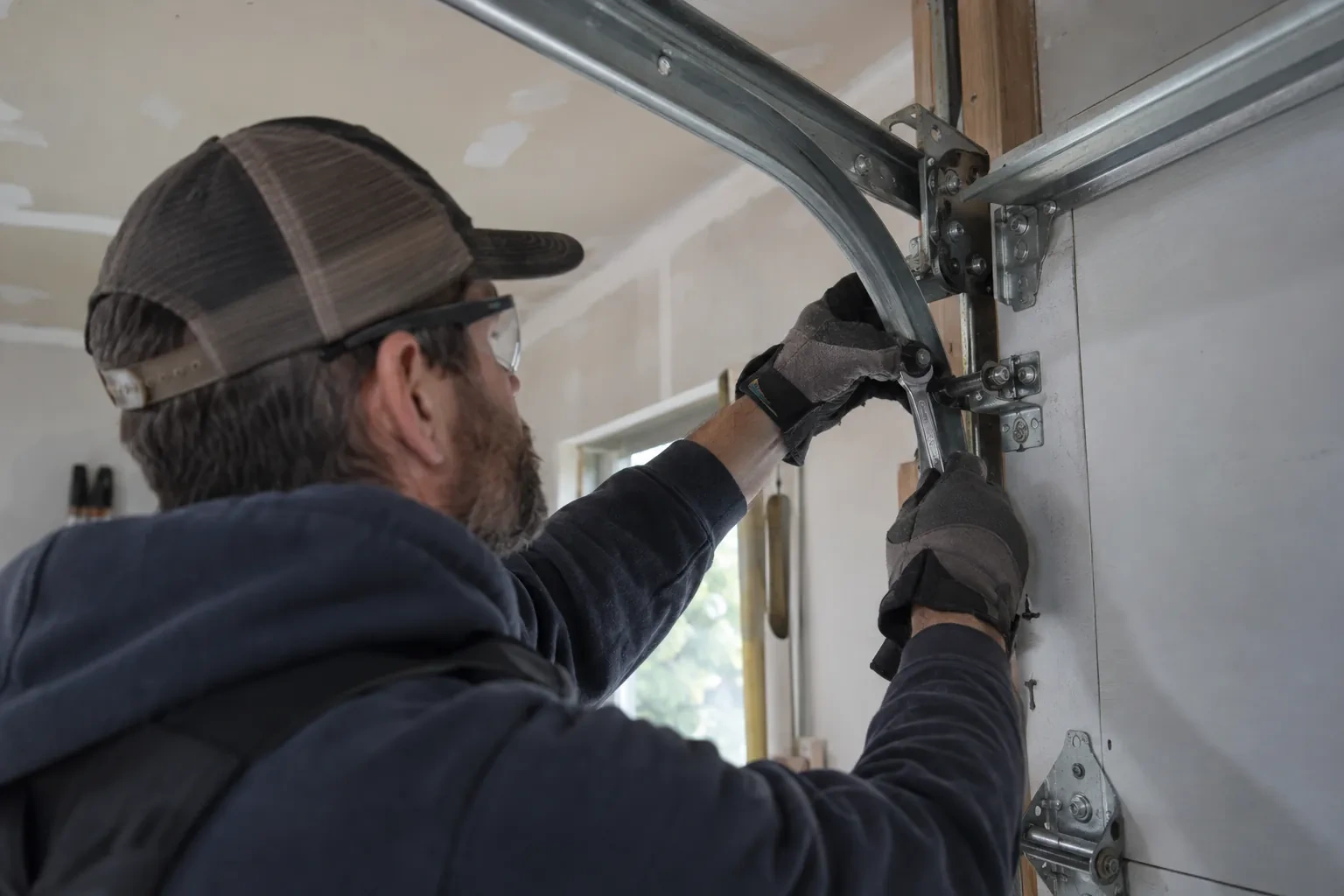
When door position is the cause, the fix goes to the door, not the lock. Track brackets that have loosened are tightened so the vertical track sits plumb and at the correct distance from the door. If the opener's down limit stops the door a little high, the limit is reset so the door rests on the floor. Bar guides are then repositioned or shimmed so each bar meets the centre of its slot with the door shut, and the slot is dressed with a file if a burr has formed. Only where a slot is genuinely in the wrong place is a new one punched, with the old one left clean.
A record of what was fitted
Before the technician leaves you get a plain account of the work: which lock type is on the door, what was adjusted, which parts were renewed, the cylinder and keyway details, how many keys were cut, and how the lock and the opener have been set up to work together. If the bars were disabled at your request, that is written down too, so a future technician or a new owner knows why they are fixed back. Keep the note with the door manual or on a card by the opener. It turns any later service into a short conversation and saves someone measuring the door's thickness and bar length from scratch.
Garage Door Manual Lock Repair
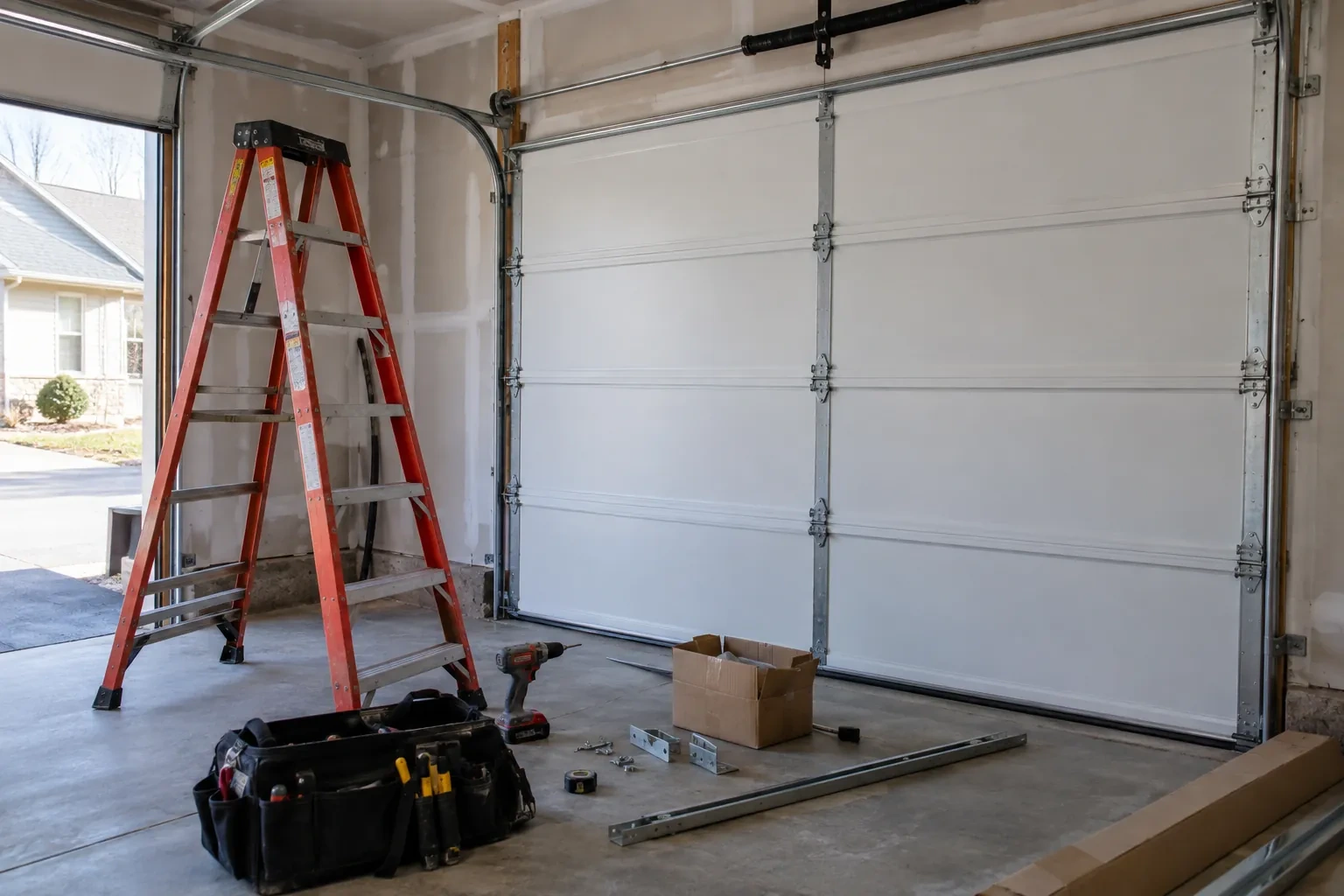
In the van
Spring-steel lock bars
Lock bar guides
Carriage bolts and backing plates
Inside slide bolt or snap latch
Inside turn handle and spindle
Garage Door Manual Lock Repair
What affects the quote
Steel skin or wood
Thin steel that has let the screws pull, or wood gone soft around the handle, calls for carriage bolts, backing plates or a filler block. That reinforcement is its own line in the quote.
Cylinder work and the number of keys
Rekeying, a new cylinder and each key cut are separate items. Keying the garage to match the house key adds a little pinning time and is listed on its own.
Related hardware noticed on the way
Worn rollers, a loose track bracket or a tired bottom seal seen while the door is being aligned are pointed out and offered as optional items, since they are easy to do in the same visit.
What to have ready
- Does the key go in and turn, or is it stiff or spinning freely?
- Has the opener ever been run while the lock was engaged?
- Is the door steel, wood or aluminum, and roughly how old is it?
Garage Door Manual Lock Repair: questions
QuestionsThe wood around my lock is soft. Can it still be repaired?
Yes. The decayed wood is cut back to sound material and a hardwood block or a steel backing plate is let in behind the handle and along the stile where the bar guides sit. The handle, mechanism and guides are then fixed to that new material with through-bolts rather than screws into soft grain, so the lock turns without rocking and the bars hold their line.
The handle turns but the bars stay put. What has broken?
Something in the short chain between the handle and the bars. The square spindle may have twisted or sheared, the set screw holding the inside knob may have let it spin free, the cam inside the centre body may have worn round, or the return spring may have snapped. The inside cover comes off to see which, and the failed part or the whole mechanism is replaced to suit.
Does lock work involve the springs or cables?
The lock, its bars and its guides all live on the door sections and the tracks, well away from the counterbalance, so the visit involves no winding or unloading of springs. Where a lock misses its slot because the door hangs crooked or sits high, the door's balance or a cable may be part of the story, and the technician points that out so it can be dealt with properly.
Related services
- Garage Door Tune-UpYou pulled the red cord to lift the door by hand during a power cut and it felt like lifting a car.
- Off-Track Garage Door ResetThe door came down fine but with a scraping noise, and now the vertical track on one side is bowed away from the wall.
- Garage Door Panel ReplacementYears of slap shots have peppered the lower two sections with dents.