Repairs · Oakland
Garage Door Bottom Seal Replacement in Oakland
There are mouse droppings along the wall behind the recycling bins, and at one bottom corner of the door the vinyl has a neat chewed notch the width of a thumb.
In plain words
Bottom seals come in a handful of profiles, and the retainer on your door decides which one fits. A T-style seal has T-shaped edges that slide into a single or double channel; a bead seal has rounded edges for the bead channels found on many older steel doors; a bulb or U-style seal is a larger tube that compresses further and suits rough or dished floors. The technician measures the channel spacing and the door width, then picks the profile, height and material to match. A correctly matched seal slides home, stays put through thousands of cycles and closes evenly along its whole length.
How the visit goesThe garage doubles as a workshop, and with the heater running the floor near the door stays cold and the draft finds your ankles at the bench. When the wind is up you can feel the air moving under the door.
Garage Door Bottom Seal Replacement
How the visit goes
Why the old seal failed
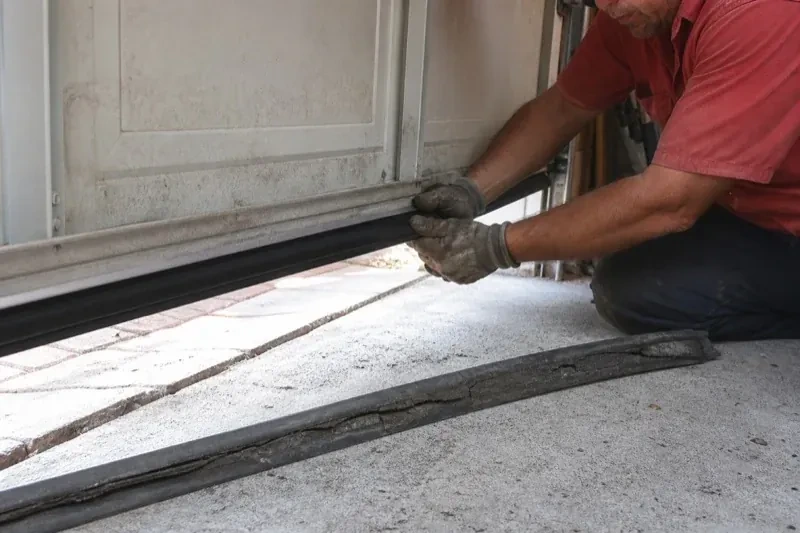
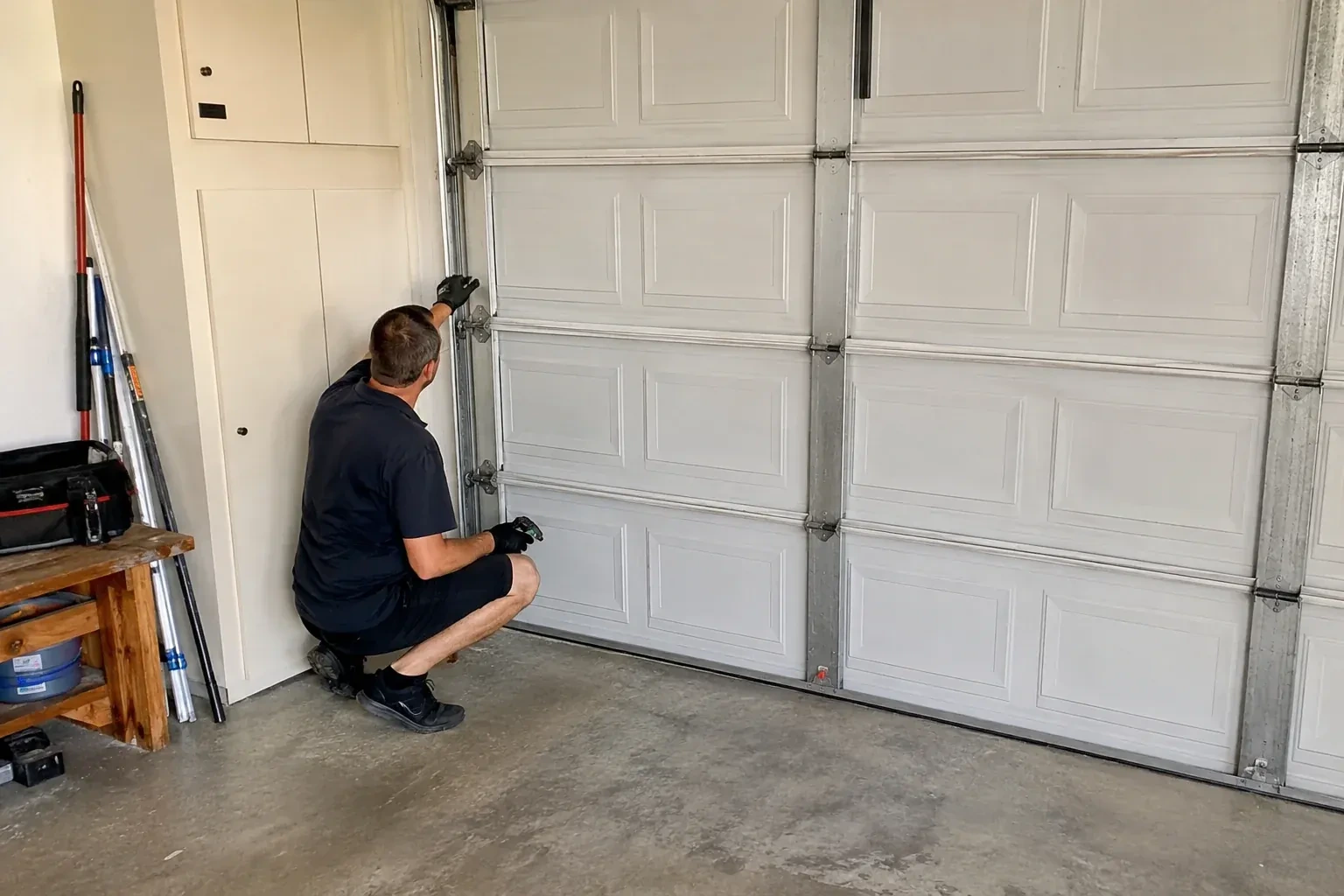
The old strip is read for its history before it comes off. Cracks along the fold and a chalky surface point to sun and age. A flattened bulb that no longer springs back is compression set. A torn edge at one end usually means the seal froze to the floor and the opener pulled it free. Chew marks say rodents. A strip that has slid partly out of its channel points to a bent or opened retainer, or to a seal that was slightly the wrong size. Each of these leads to a different choice of material, profile or retainer work, so the new seal is spared the fate of the old one.
Feeding the seal into the retainer
Both edges of the new seal are started into their channels together at one end of the door. A spray of soapy water or silicone on the edges lets the strip glide, and the technician works it across in stages, pulling gently from the front end and feeding from the other so the seal is never stretched, since a stretched seal shrinks back and leaves a gap later. Once it is across, the bulb is checked to hang evenly with no twists. The ends are trimmed flush with the door and folded up into the channel or capped, so water running along the seal drains out rather than into the section.
The rest of the weather line
With the bottom sealed, any remaining draft points to the perimeter: the vinyl fin on the stop moulding at the jambs and header, and the joints between sections. These were looked over during the visit and anything torn, shrunk or missing was pointed out. Replacing perimeter stripping is straightforward work that can be planned for a mild day. Together with a sound bottom seal and, where the floor calls for it, a threshold, the garage gains a stronger barrier against wind, water and cold on all four edges, and an attached garage can stay closer to the temperature of the house.
Garage Door Bottom Seal Replacement
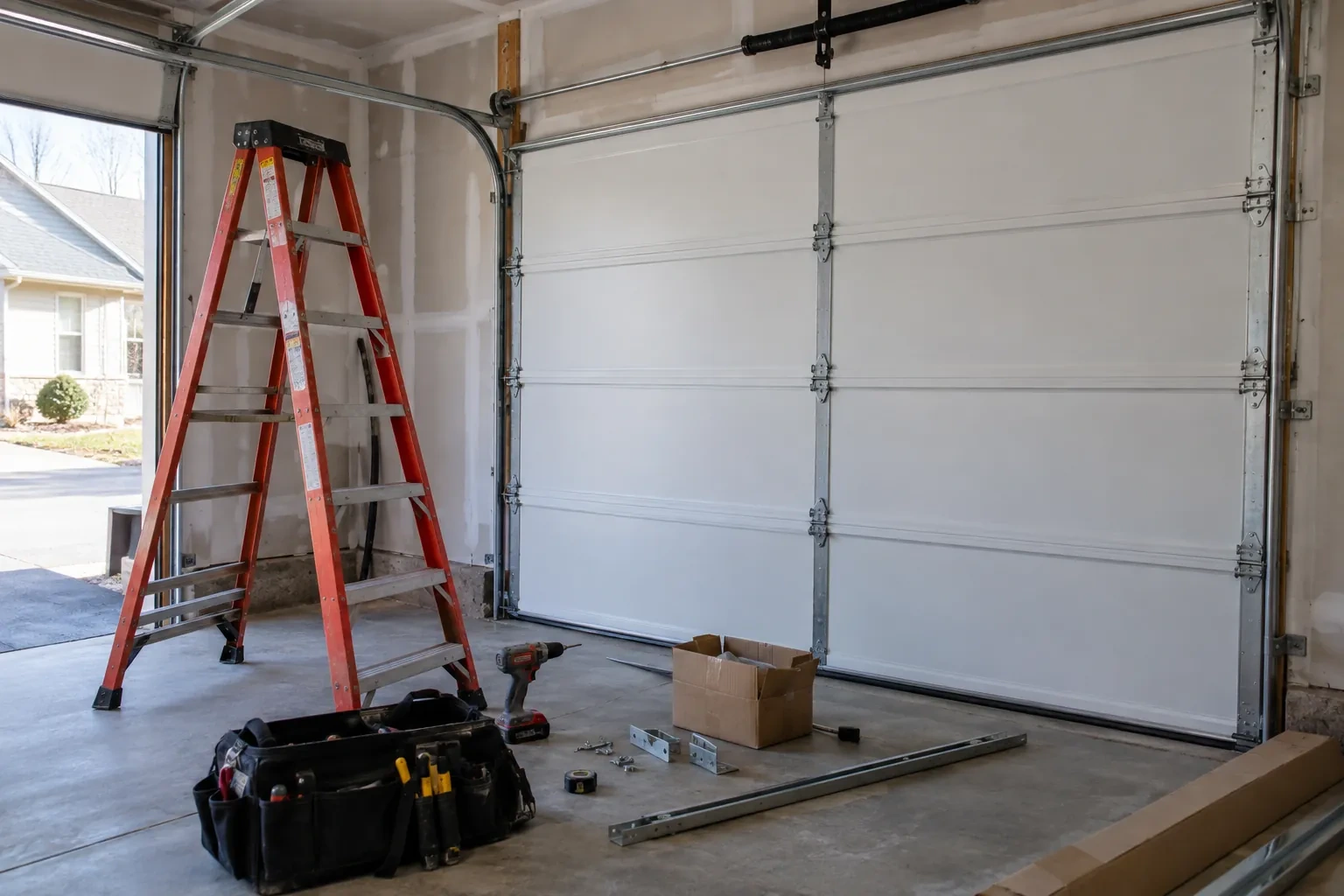
In the van
Straightedge and tape measure
Self-drilling retainer screws
Aluminum bottom seal retainer
Silicone spray lubricant
T-style bottom seal
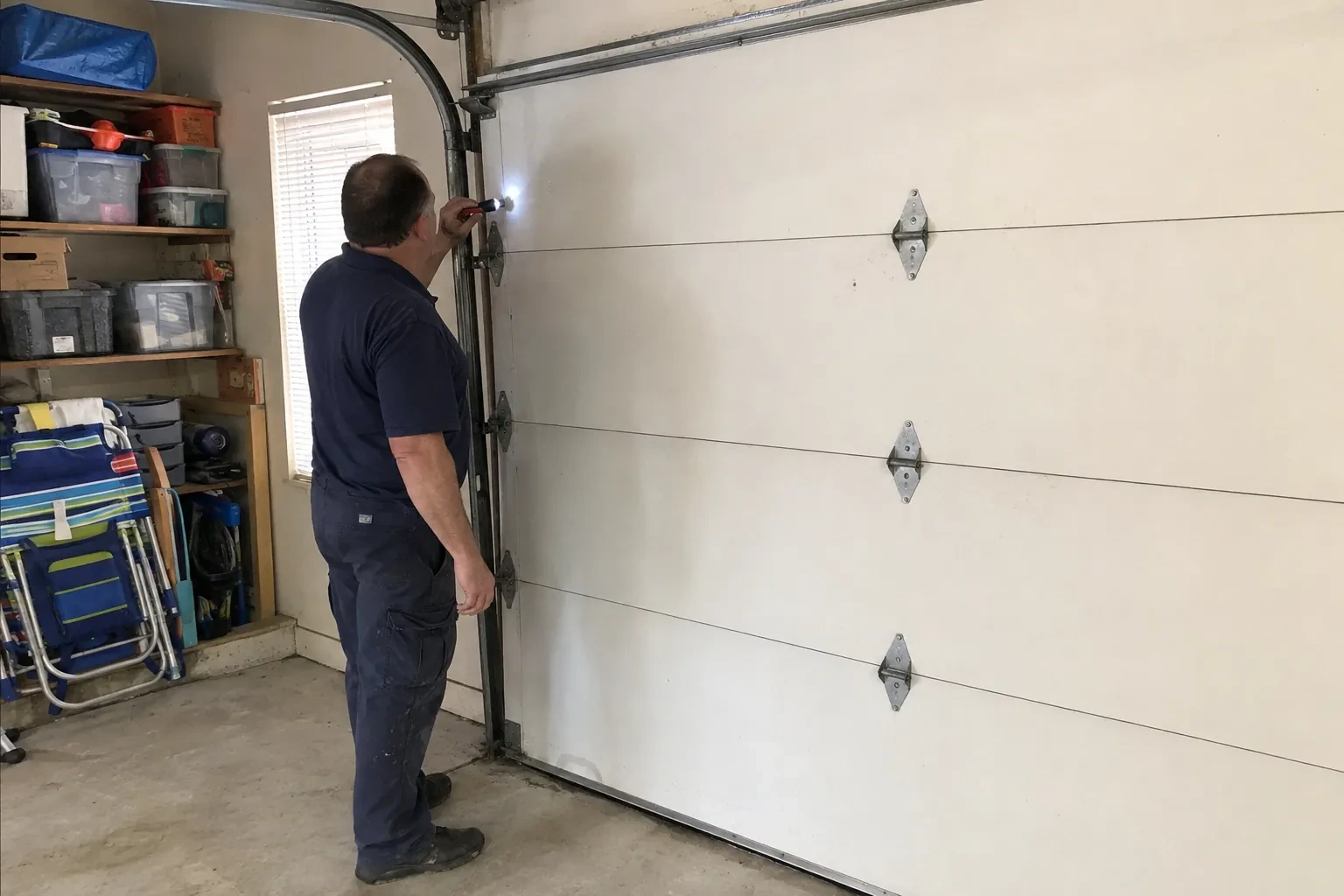
Garage Door Bottom Seal Replacement
What affects the quote
Threshold seal added
Where a floor threshold is recommended, its length, its type, whether rubber or aluminum-backed, the adhesive and the floor preparation before it is laid appear as a line of their own.
Retainer replacement
If the aluminum or plastic retainer is bent, spread open or corroded, a new extrusion, fasteners and the time to fit it straight along the rail are added as their own line.
Door width
A single door takes a shorter length of seal than a double, and the widest doors need more time to feed the strip evenly across. The quote starts from the width measured on the day.
What to have ready
- Is the door steel, wood, or insulated with a plastic bottom cap?
- Has the seal frozen to the floor this winter?
- Are the side and top weather strips also worn or torn?
Garage Door Bottom Seal Replacement: questions
QuestionsWill I need a new retainer as well as a seal?
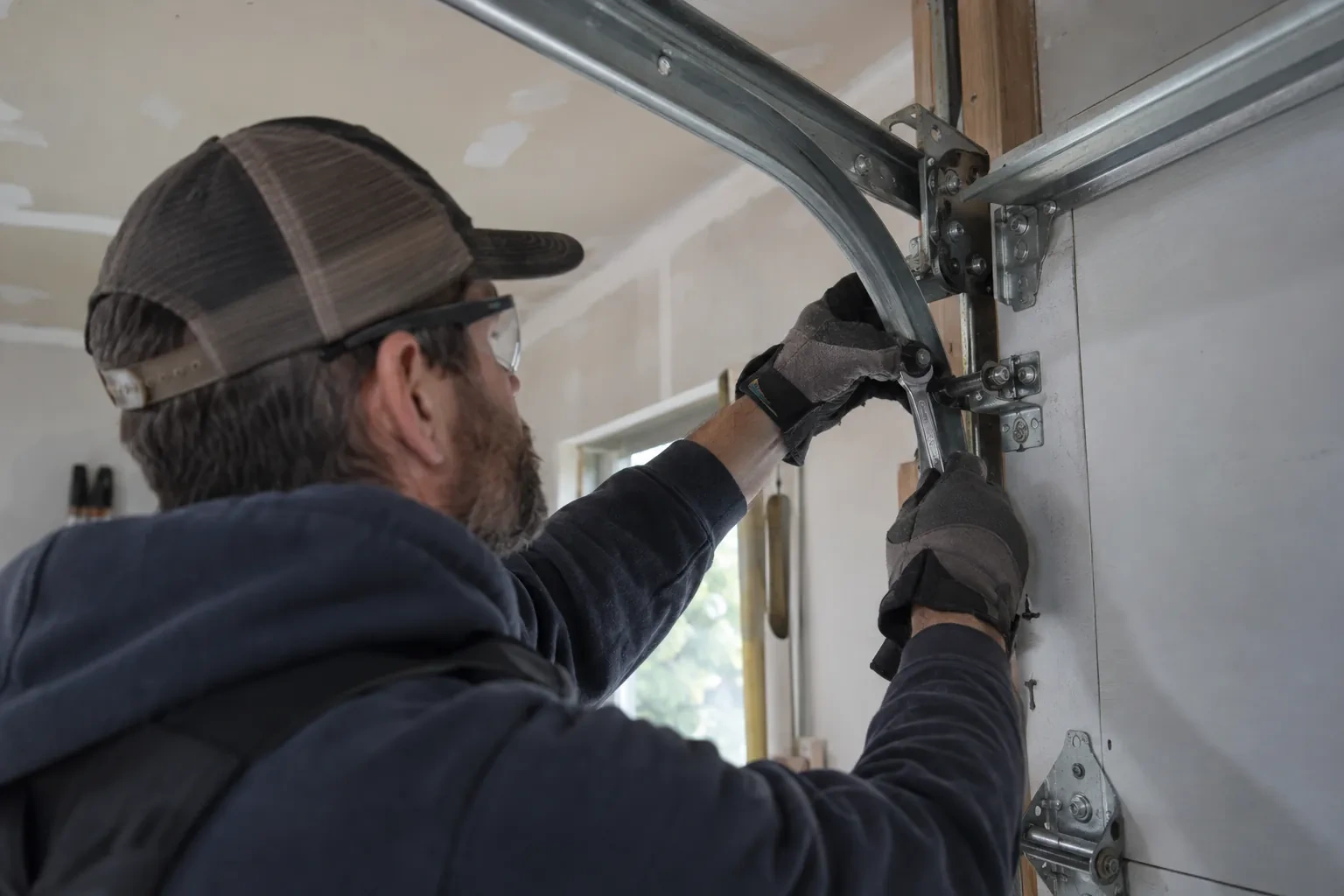
Only if the existing one is damaged, and most are reused. A retainer that is straight, tight to the rail and free of heavy corrosion stays. One that has been kinked by a bumper or shovel, spread open so the seal slips out, or eaten by salt is replaced with a matching aluminum extrusion so the new seal seats properly. The inspection at the start of the visit settles which applies.
The seal looks fine, so why is there still daylight under the door?
A seal can look intact and still have taken a permanent set, so the bulb no longer springs up to fill the gap. Otherwise the gap belongs to something else: a door hanging out of level, a bowed bottom section, a floor that has settled at one end, or an opener down limit set so the door stops short. The first look during the visit sorts these apart so the fix goes to the right place.
What is a threshold seal, and when is it worth adding?
A threshold seal is a rubber or aluminum-backed strip glued to the garage floor along the line where the door closes. The door's bottom seal lands on it, and its raised outer edge turns water, wind-blown debris and small visitors back toward the driveway. It earns its place where the drive slopes toward the garage, the slab sits below the apron, or the floor edge is too uneven for the bottom seal alone to meet cleanly.
Related services
- Garage Door Tune-UpYou pulled the red cord to lift the door by hand during a power cut and it felt like lifting a car.
- Off-Track Garage Door ResetThe door came down fine but with a scraping noise, and now the vertical track on one side is bowed away from the wall.
- Garage Door Panel ReplacementYears of slap shots have peppered the lower two sections with dents.