Repairs · Mount Vernon
Garage Door Manual Lock Repair in Mount Vernon
The T-shaped handle on the outside turns a full quarter, exactly as it has for twenty years, but nothing moves behind it.
In plain words
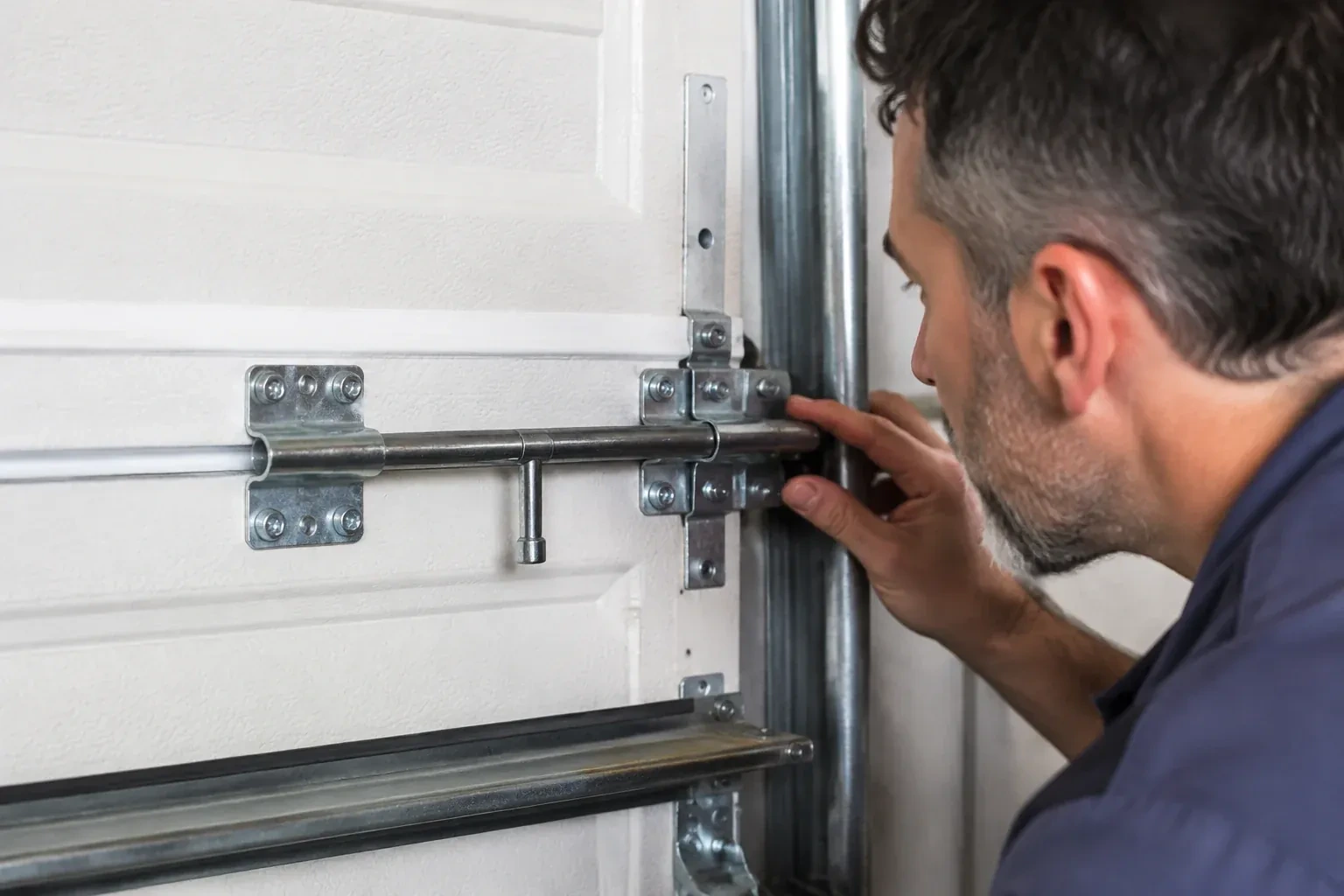
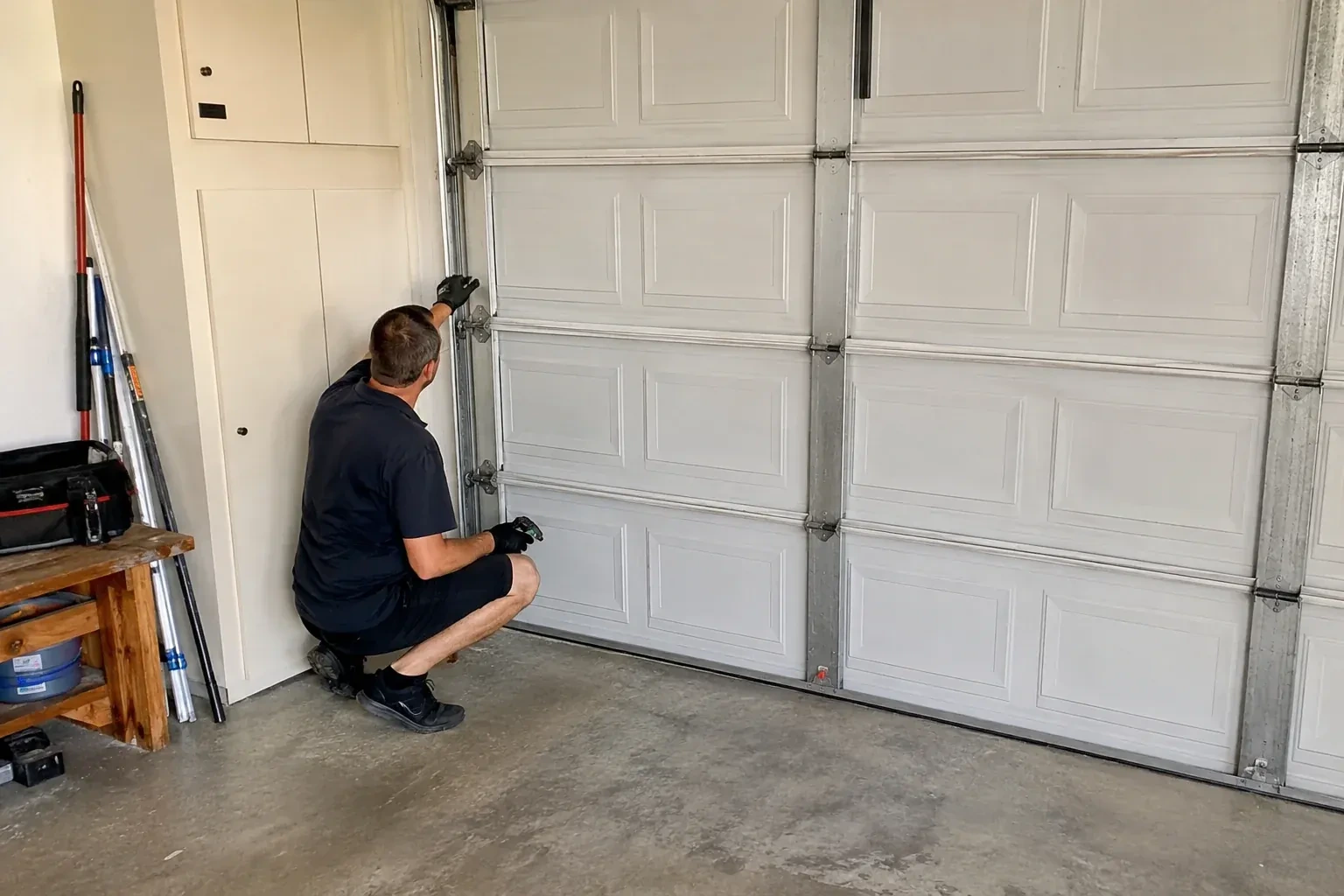
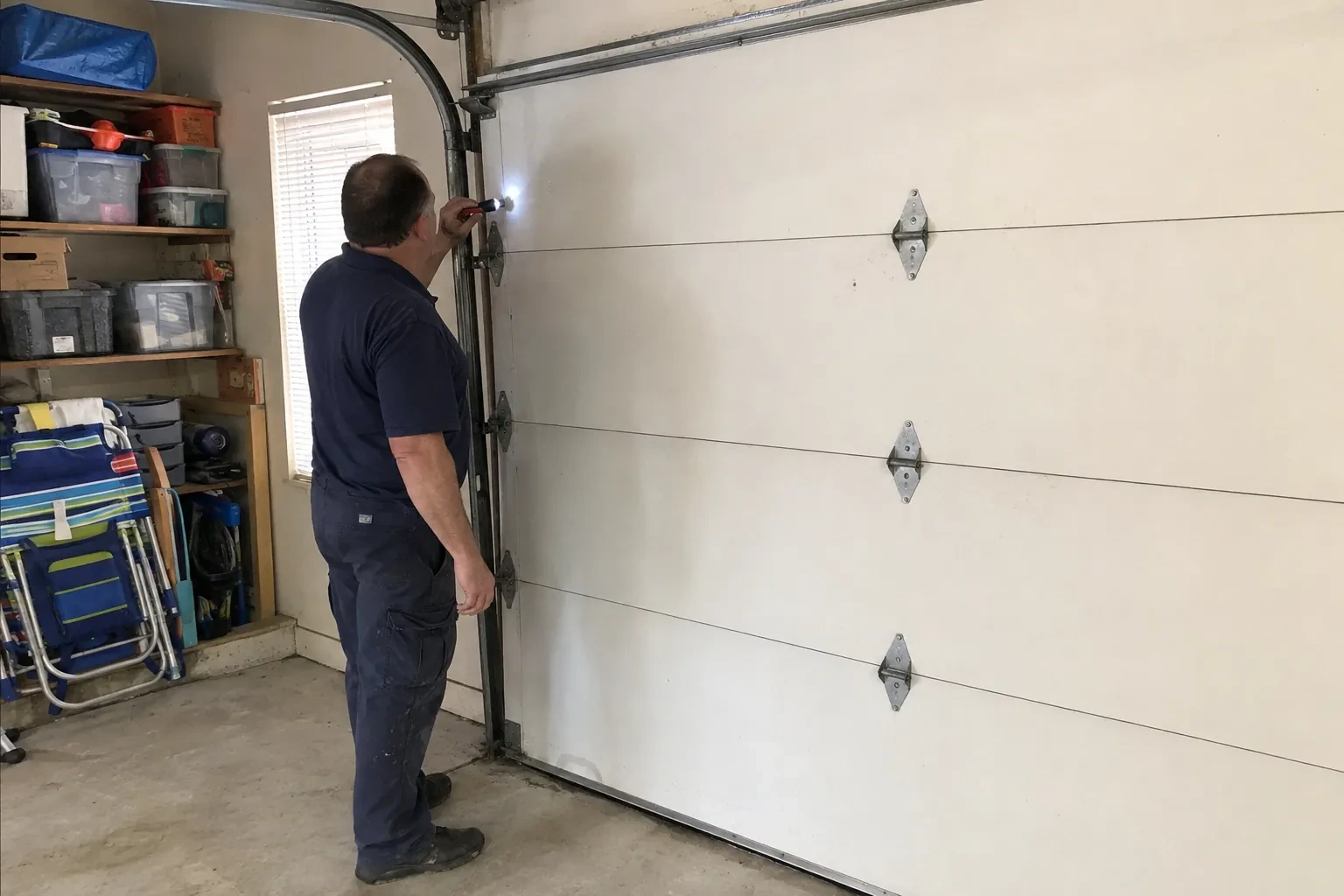
Many lock complaints turn out to be door complaints. The bar on a slide lock or a T-handle has to land in a small slot, and it only gets there if the door stops exactly where it stopped when the lock was fitted. A floor that has heaved, a track bracket that has loosened, a bottom seal that has flattened, or ice under the door all shift that landing point. The visit begins with the door: closed by hand, checked for level and for how it meets the floor and the tracks. With the door where it belongs, the lock often needs only a small adjustment to its guides.
How the visit goesSomeone slid the inside lock across before bed, and in the morning someone else pressed the remote. The opener groaned, the door jumped and shuddered, and now the lock bar is bent, the section is creased and the door hangs crooked at the top.
Garage Door Manual Lock Repair
How the visit goes
Signs the opener and the lock have met
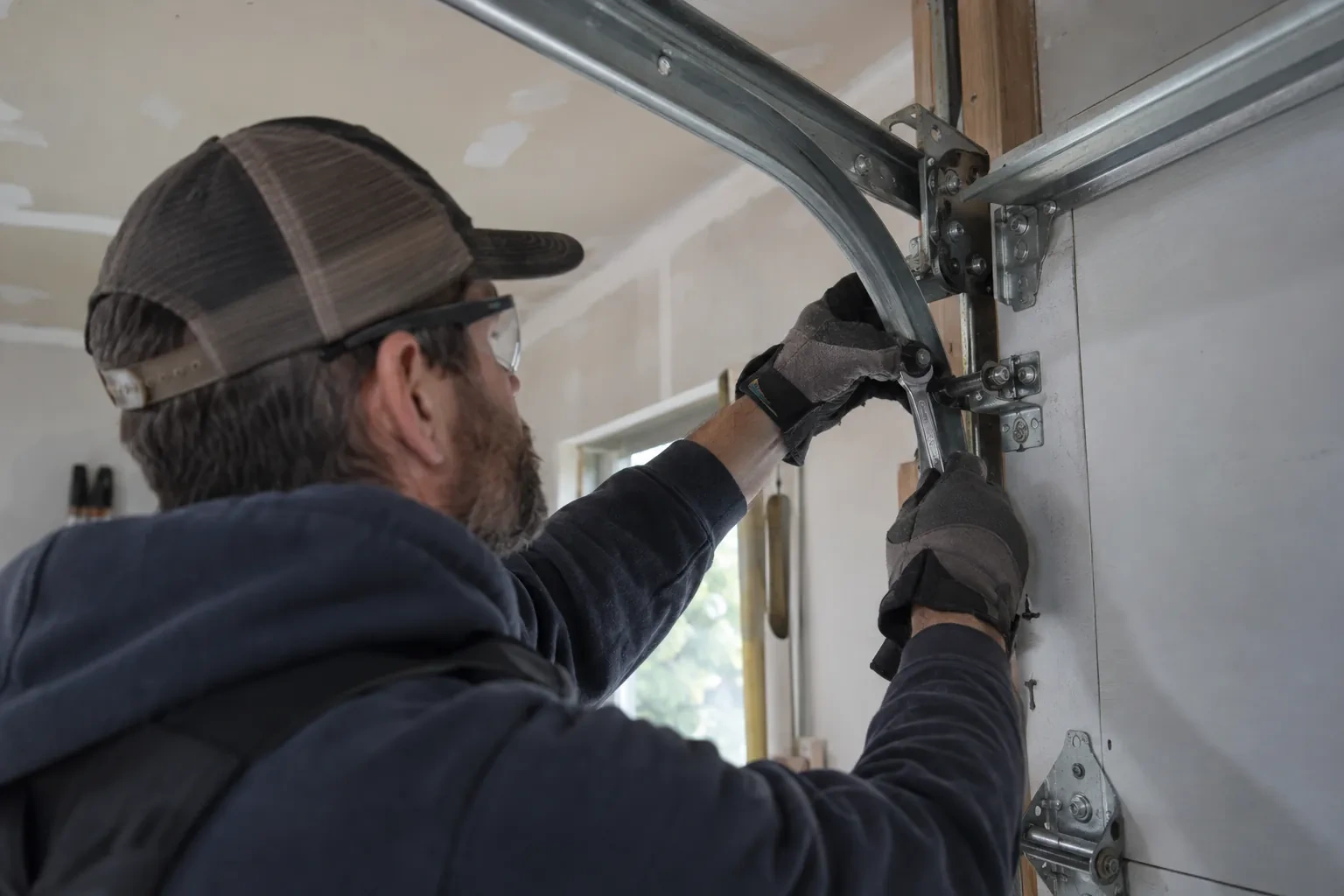
When an automatic opener shares the door, the technician looks for evidence that the two have collided: a bar bent at the track, a lock body pulled part-way from the section, a crease above the lock, a bent opener arm or a bracket strained at the top panel, and an opener that labours or reverses. The current arrangement is noted as well. Has the lock been disabled as opener makers direct, left live with no reminder, or removed altogether? Does the wall console have a lock-out feature the household knows about? These observations decide what is repaired and, just as importantly, how the door will be set up so the same thing does not happen again.
Replacing an inside slide lock
A slide bolt that is bent, seized or missing is replaced with a new lock of the same style, fixed to the door's edge stile so its bar lines up squarely with the slot in the track. Spring-loaded snap latches, which lock by themselves when the door closes, are set so they engage on closing and can be held open with their catch when the door is to be used with an opener. The fixing screws go into solid steel or wood, with through-bolts where the material is thin. The bolt is then thrown and released several times with the door down, and the technician confirms it clears the track fully so the door can rise without catching.
Locking the door when the power is out
The manual lock is now your plan for a dark evening. The sequence is simple: with the door closed, pull the opener's release cord so the trolley disconnects, then throw the slide bolt or turn the T-handle to lock. In the morning, or when the power returns, reverse it exactly: unlock first, confirm both bars are clear of the track, then re-engage the opener as its manual describes, usually by running it once so the trolley picks up the arm. The technician walks through this with you at the door, and it is worth practising once so the order is second nature before the storm that makes it matter.
Garage Door Manual Lock Repair
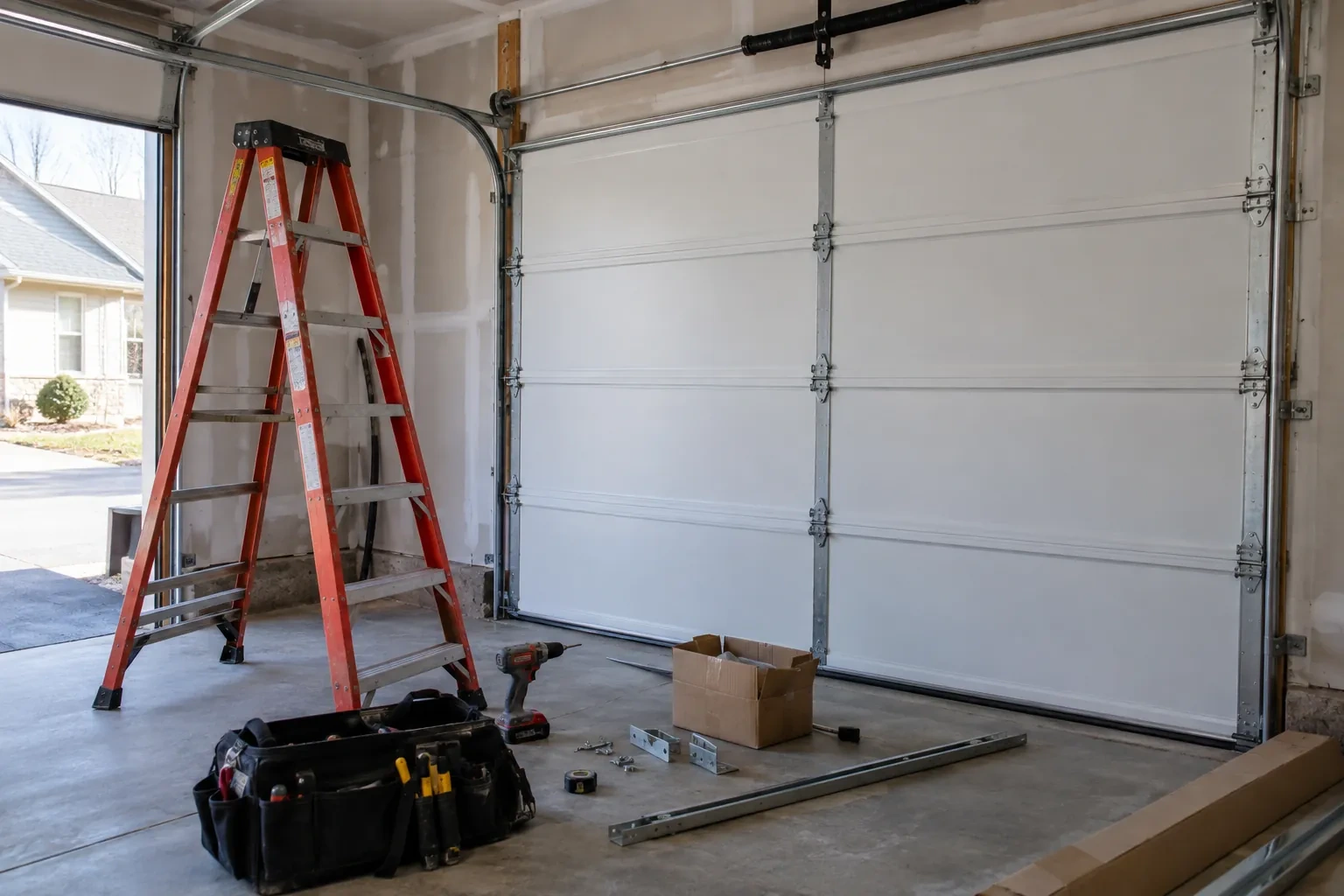
In the van
Spring-steel lock bars
Lock bar guides
Carriage bolts and backing plates
Inside slide bolt or snap latch
Inside turn handle and spindle
Garage Door Manual Lock Repair
What affects the quote
Adding a lock where none existed
Fitting a new slide bolt or a keyed handle to a door that never had one includes punching track slots, a section cutout for a handle and running bars to both tracks.
Access along the door edges
Shelving, bikes or storage against the vertical tracks and door edges slow the work at the guides and slots. Clearing a metre either side beforehand shortens the visit.
Related hardware noticed on the way
Worn rollers, a loose track bracket or a tired bottom seal seen while the door is being aligned are pointed out and offered as optional items, since they are easy to do in the same visit.
What to have ready
- Is the lock a sliding bar inside, a T-shaped handle outside with a key, or both?
- Has the opener ever been run while the lock was engaged?
- Are the lock bars bent, rusty or hanging loose?
Garage Door Manual Lock Repair: questions
QuestionsThe wood around my lock is soft. Can it still be repaired?
Yes. The decayed wood is cut back to sound material and a hardwood block or a steel backing plate is let in behind the handle and along the stile where the bar guides sit. The handle, mechanism and guides are then fixed to that new material with through-bolts rather than screws into soft grain, so the lock turns without rocking and the bars hold their line.
The handle turns but the bars stay put. What has broken?
Something in the short chain between the handle and the bars. The square spindle may have twisted or sheared, the set screw holding the inside knob may have let it spin free, the cam inside the centre body may have worn round, or the return spring may have snapped. The inside cover comes off to see which, and the failed part or the whole mechanism is replaced to suit.
Does lock work involve the springs or cables?
The lock, its bars and its guides all live on the door sections and the tracks, well away from the counterbalance, so the visit involves no winding or unloading of springs. Where a lock misses its slot because the door hangs crooked or sits high, the door's balance or a cable may be part of the story, and the technician points that out so it can be dealt with properly.
Related services
- Garage Door Tune-UpYou pulled the red cord to lift the door by hand during a power cut and it felt like lifting a car.
- Off-Track Garage Door ResetThe door came down fine but with a scraping noise, and now the vertical track on one side is bowed away from the wall.
- Garage Door Panel ReplacementYears of slap shots have peppered the lower two sections with dents.