Repairs · Cainsville
Garage Door Safety Inspection in Cainsville
A tenant mentioned the door is louder than it used to be.
In plain words
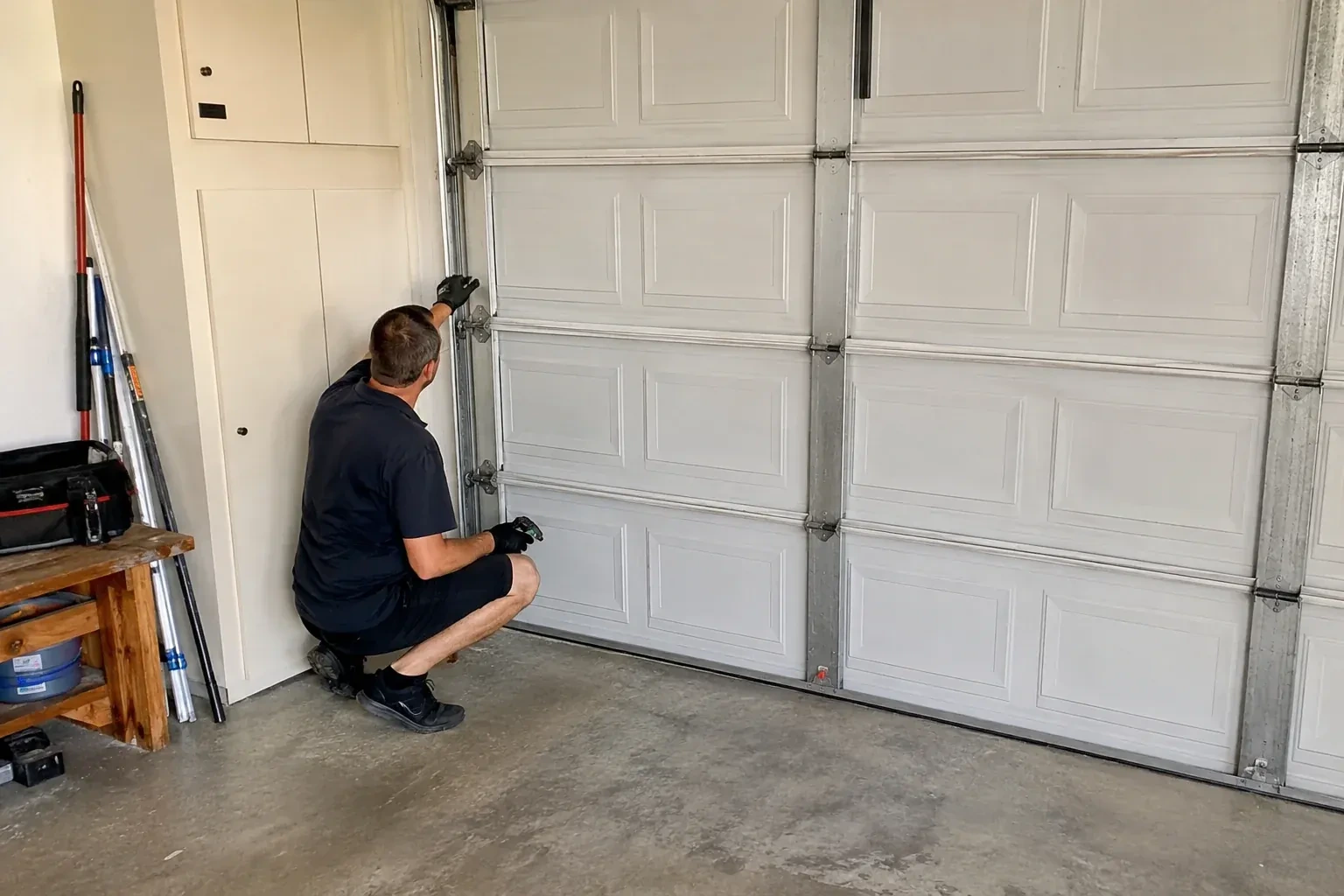
Winter is hard on the bottom of a garage door, and an inspection here pays particular attention to it. Slush and salt collect where the cables loop onto the bottom brackets and where the lowest hinges sit, the bottom seal freezes to the slab and the opener is asked to break it free, and photo eyes near the floor pick up a film of road grime. The technician checks each of these, along with the strain a winter of hard starts has put on the springs and the opener drive, and leaves you with the small habits that carry the door comfortably to spring.
How the visit goesYour toddler has discovered the wall button. You want to know, from someone who checks these things for a living, that the door will stop and reverse if a small person is under it.
Garage Door Safety Inspection
How the visit goes
Watching one full cycle under power
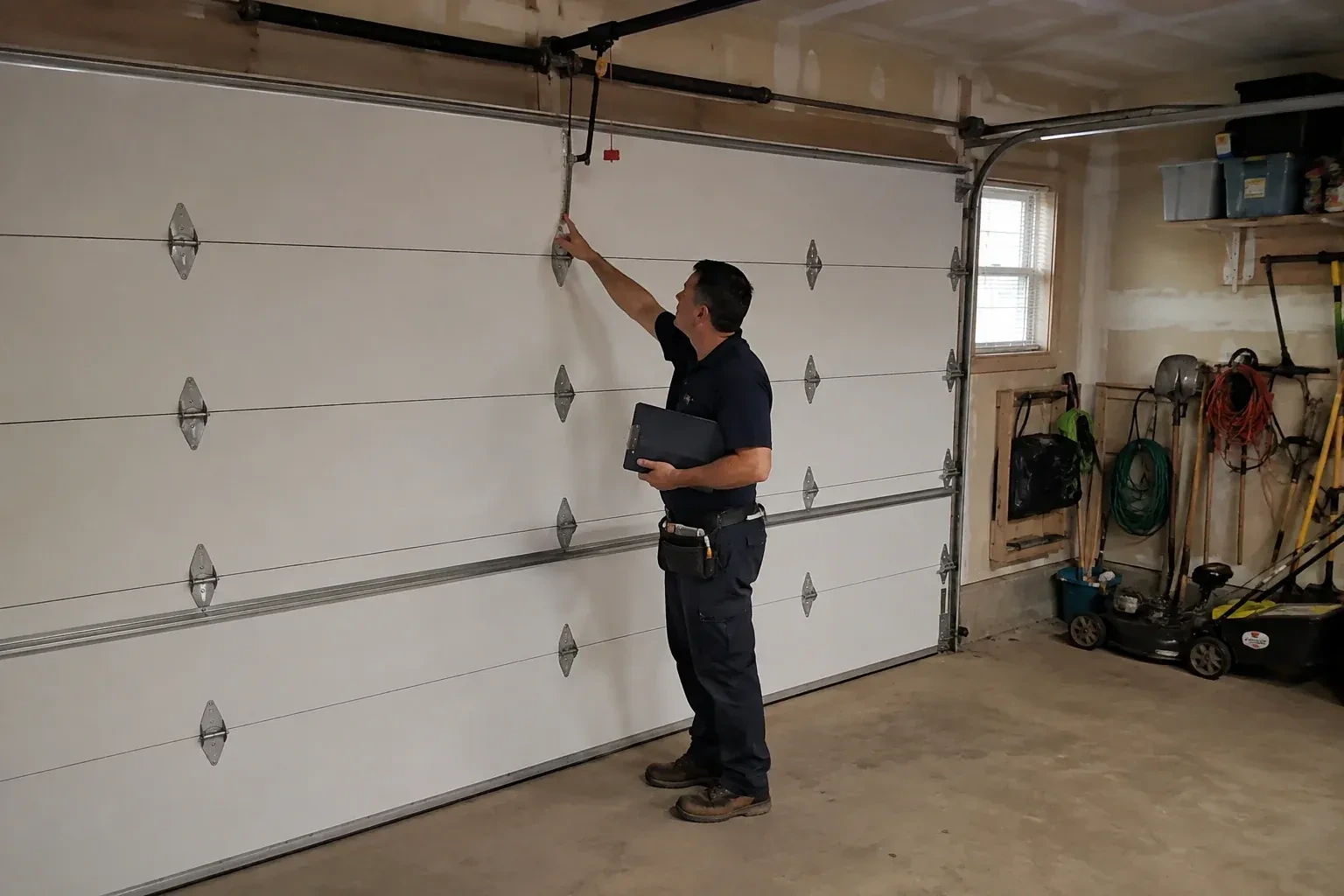
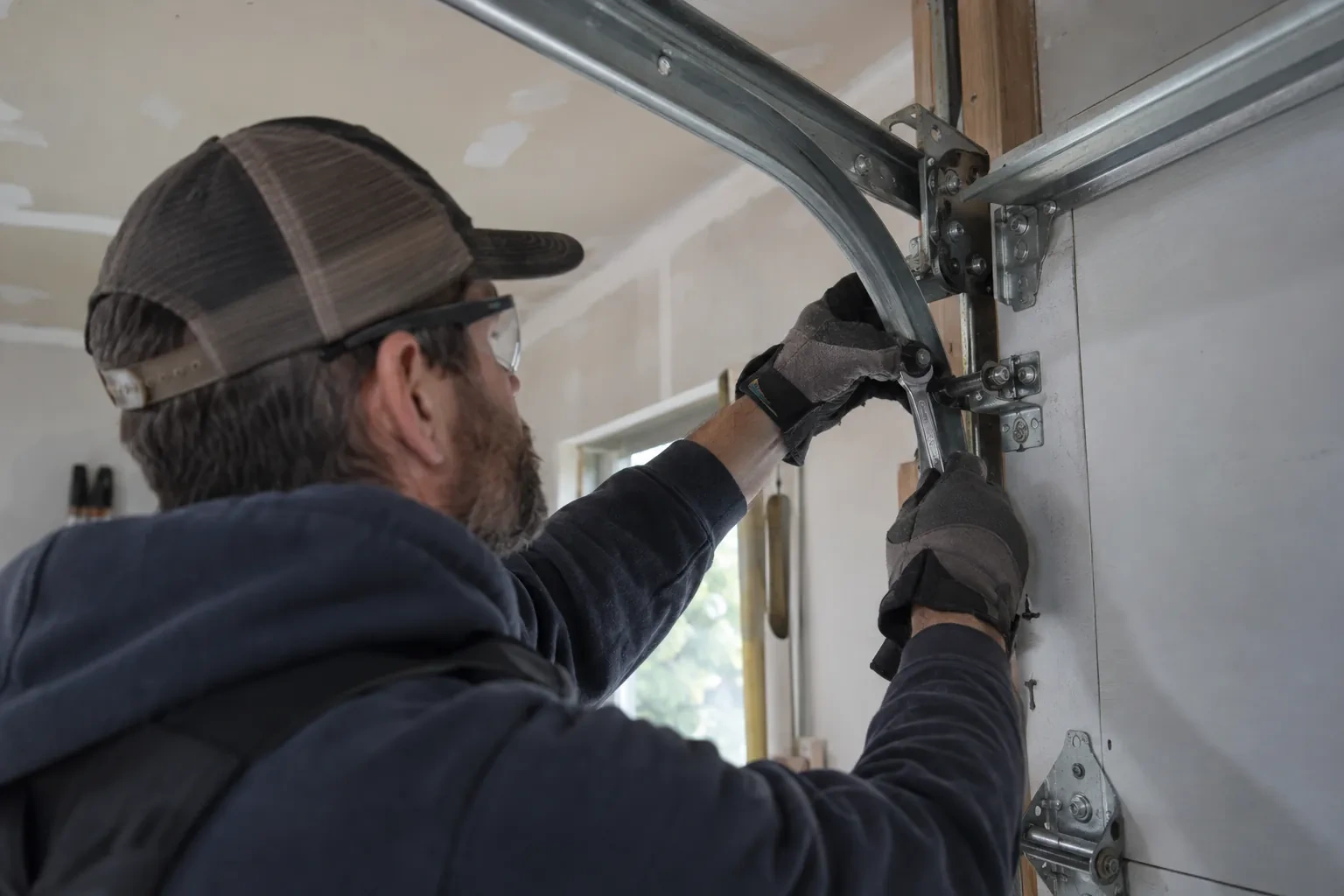
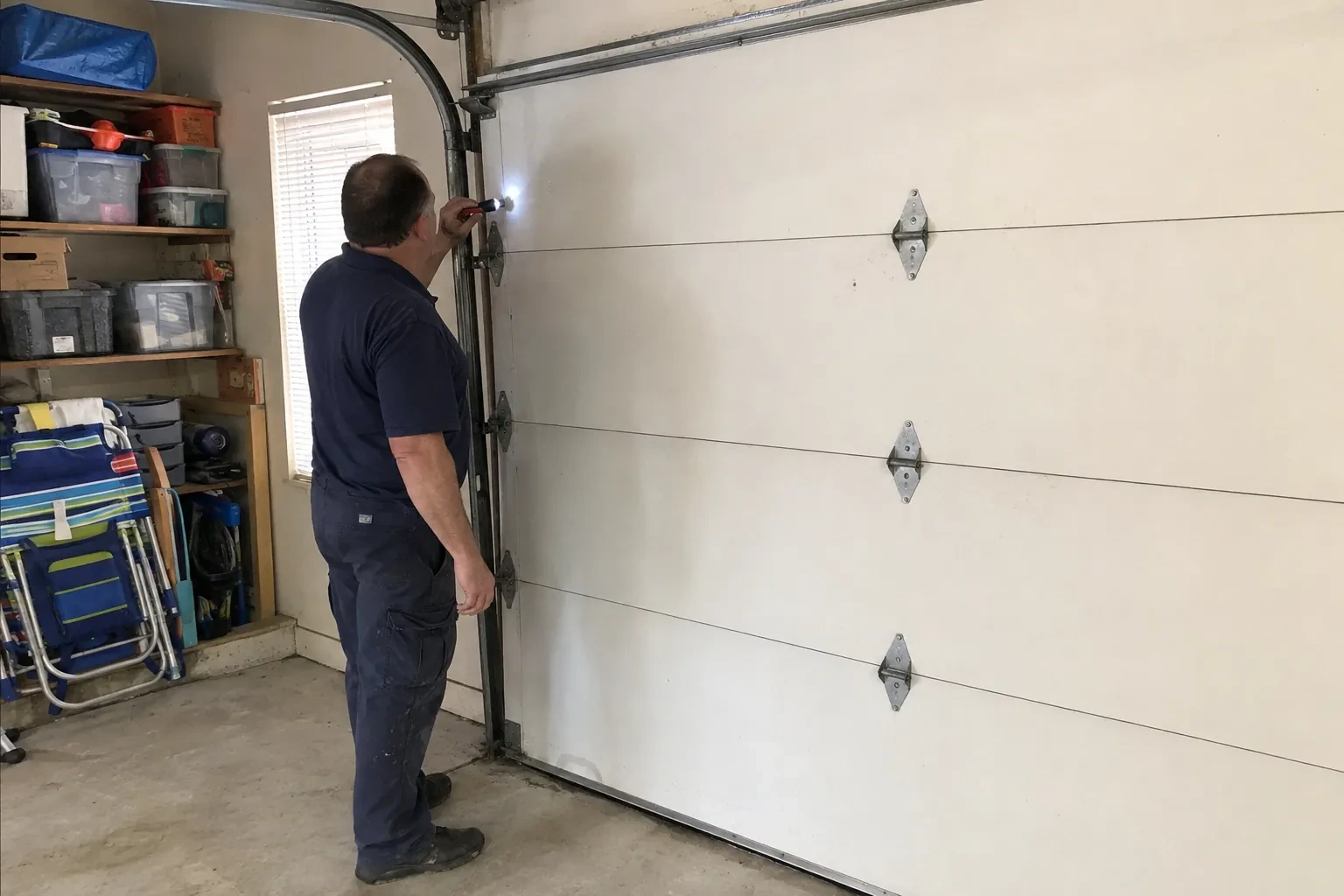
Before anything is measured, the technician stands back and runs the door through a full open and close, listening as much as watching. A healthy door sounds even from bottom to top; a knock at the turn into the horizontal track, a squeal at a particular hinge, a grinding drum or a motor that changes pitch under load each point somewhere specific. The eyes follow both bottom corners to see whether they leave the floor together, the top section as it passes the curve, and the final inch of closing, where the door should settle onto its seal without a thud. This one cycle often tells the technician where to spend the rest of the visit.
Measuring and photographing what matters
A report that says only fine or worn is not much use next year, so the technician records numbers. Spring wire size, inside diameter and length on a torsion door, and stretch on an extension door; cable diameter and the condition of each bottom loop; the gap at the bottom seal along its length; the height of the photo eyes; the door's overall dimensions and the opener's model. Each finding, from a rusted bracket to a cracked roller, is photographed with the light on it. These measurements let the next inspection show what has changed and let a future repair be quoted from the record instead of a second visit.
Three checks you can repeat each month
The inspection leaves you with a short routine. Once a month, with the door closed, pull the release cord and lift the door by hand; it should move easily and hold at waist height. Reconnect the opener, lay a flat board on the floor and send the door down; it should reverse when it touches. Then start it closing and wave a broom handle through the photo-eye beam; it should reverse before contact. Each of these takes under a minute and mirrors what the technician did. If any of the three behaves differently from the day of the inspection, that is the moment to call, while it is still a small job.
Garage Door Safety Inspection
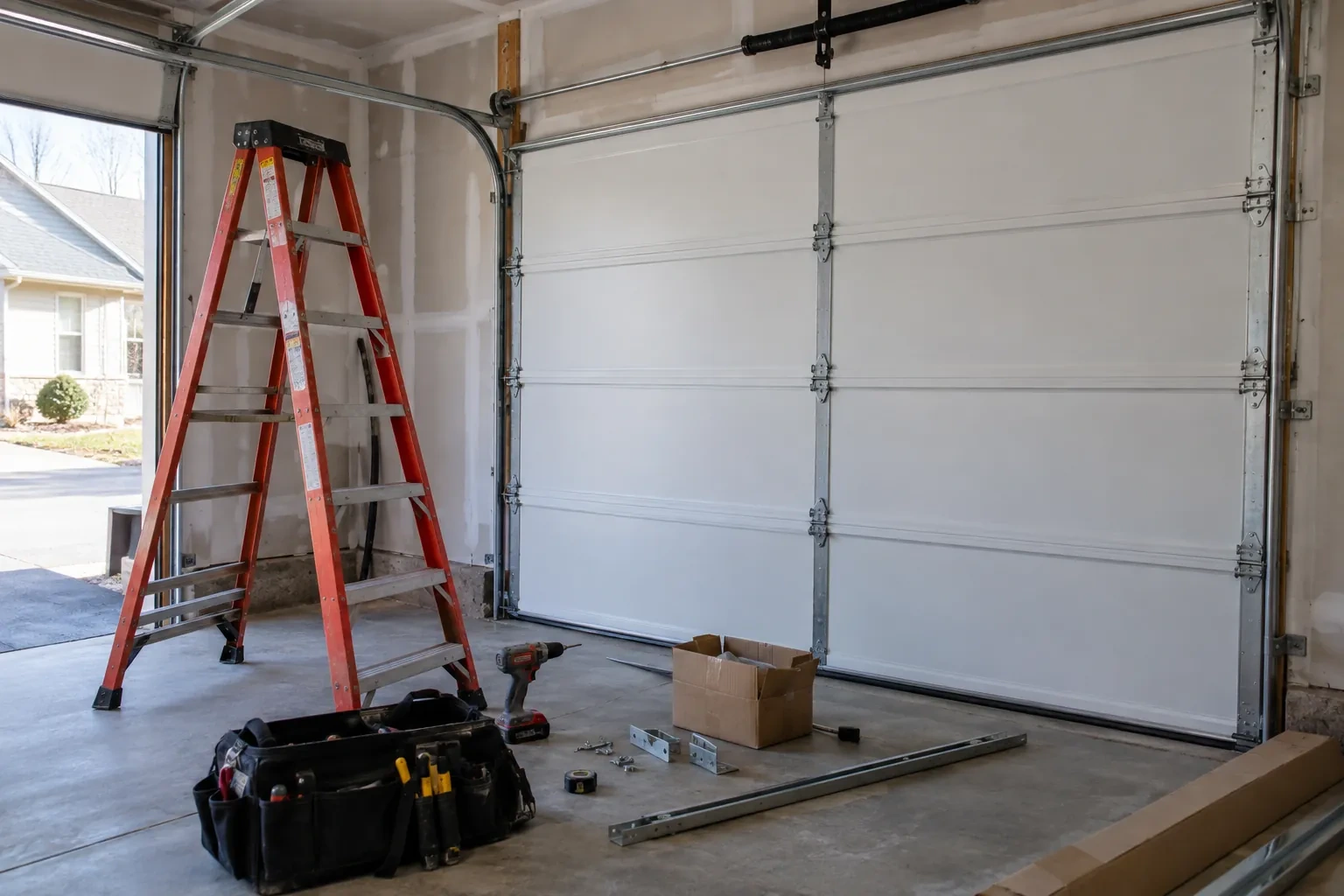
In the van
Tape measure and level
Flat 2x4 test board
Inspection checklist and report form
Lens cloth and cleaner
Weatherstrip samples for matching
Garage Door Safety Inspection
What affects the quote
Small parts replaced on the spot
A missing hinge bolt, a stripped track lag or a remote battery can be replaced from the van. Parts fitted this way are listed individually rather than folded into the inspection.
What is stored around the door
Shelving under the spring shaft, bikes along the tracks or a car left inside slow the visual walk. Clearing the area beforehand keeps the inspection to its planned length.
Manuals and unusual models
A door or opener with no label, a discontinued model or a custom lift setup means the test procedure has to be established rather than looked up, which adds time.
What to have ready
- Does the door sound or move differently going up than coming down?
- How many doors need inspecting, and are they all at the same address?
- Is there a spring on a shaft above the opening, or springs stretched along the tracks?
Garage Door Safety Inspection: questions
QuestionsWhat information helps when I call to book?
Whether the door is single or double and roughly how tall; whether there is a spring on a shaft above the opening or springs along the tracks; the opener make if you can see it; how many doors need looking at; what prompted the call and when it began; and whether anything happened to the door lately. A photo of the opener label and of the spring area is a useful extra.
How often should a garage door be inspected?
Once a year suits most households, and early spring, after the salt and freeze-thaw season, is a natural time. A door that opens many times a day, an older door, or one on a rental where nobody watches it closely does well with a look each season. Between visits, the monthly balance, reversal and photo-eye checks that industry guidance recommends catch most changes early.
What is in the written report?
The date, the door and opener model numbers, the spring type and dimensions, and a line for each component with its condition. Findings are sorted into in good order, maintenance done, planned repair and stop-use. Measurements such as seal gaps, track spacing and photo-eye height are recorded, and photographs of anything worth showing are attached. It is written so a future technician can quote from it and a future inspection can compare against it.
Related services
- Off-Track Garage Door ResetThe door came down fine but with a scraping noise, and now the vertical track on one side is bowed away from the wall.
- Garage Door Panel ReplacementYears of slap shots have peppered the lower two sections with dents.
- Garage Door Bottom Seal ReplacementThere are mouse droppings along the wall behind the recycling bins, and at one bottom corner of the door the vinyl has a neat chewed notch the width of a thumb.