Repairs · Brant
Garage Door Perimeter Weatherstrip in Brant
The new door went in last year and looks perfect, but the old wooden stop and its tired seal were left in place.
In plain words
Winter is what wears a perimeter seal out here. Sun and cold cycles harden the vinyl until it cracks, freezing rain glues the fin to the door so the opener tears it, and salty slush sits against the bottom of the jambs and rots the wood the strip is nailed to. One visit deals with all of that: soft wood at the base of the jamb is cut out and replaced, fresh seal is fitted in continuous lengths with the corners overlapped, and the fin is wiped with silicone so ice does not bond to it. The garage stays drier and calmer through the next freeze-thaw season.
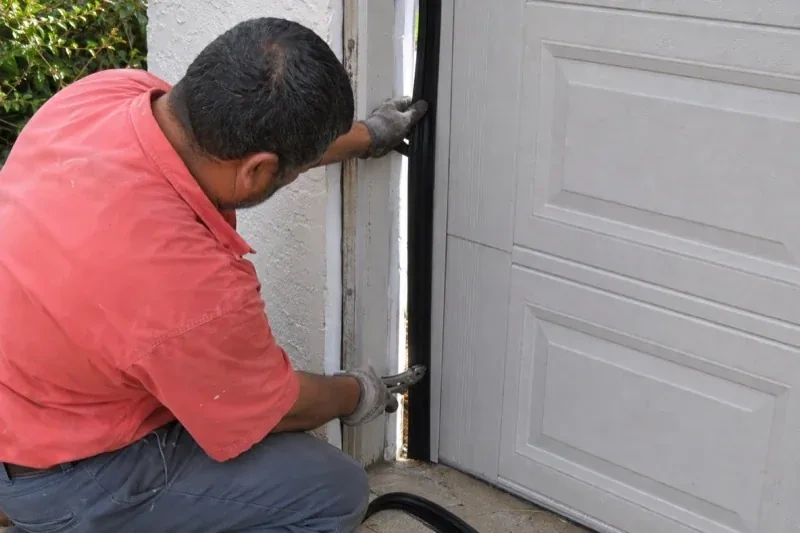
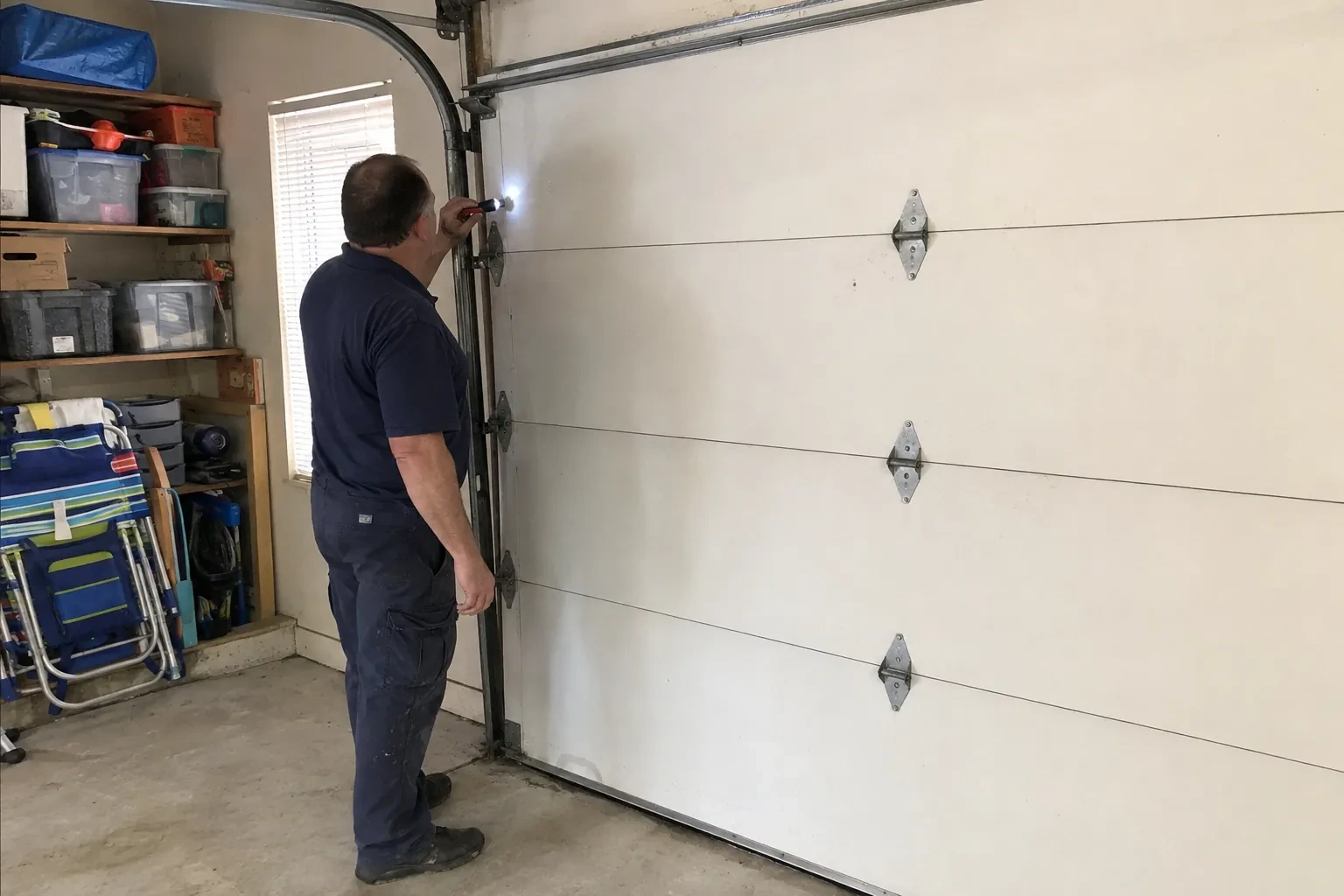
How the visit goesA length of weatherstrip along the right jamb has pulled away, nails and all, and it slaps against the trim every time the wind picks up. The wood behind it is dark and soft where it meets the floor.
Garage Door Perimeter Weatherstrip
How the visit goes
What kind of seal is there now
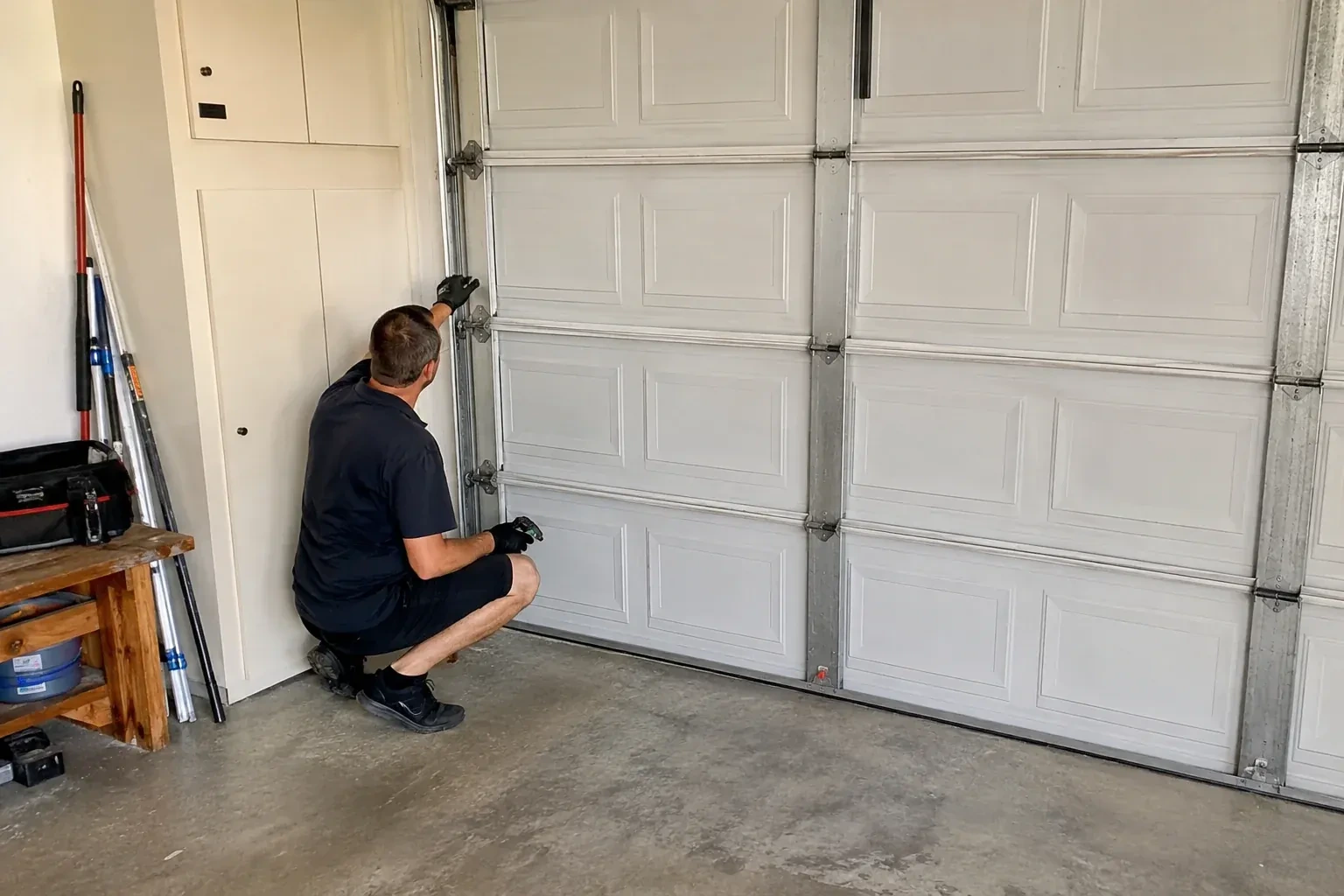
Openings carry different seals depending on their age and who last worked on them. Many older garages have a painted wood stop with a flexible vinyl fin nailed to its face. Newer installations often have a one-piece vinyl stop with the fin moulded in. Some commercial and premium doors use an aluminum retainer with a slide-in rubber insert, or a brush seal. The technician identifies which is present, whether the rigid part is sound enough to keep, and what the fastening was, because that decides whether a new fin goes onto the existing stop or the whole stop is replaced.
Making the jamb sound
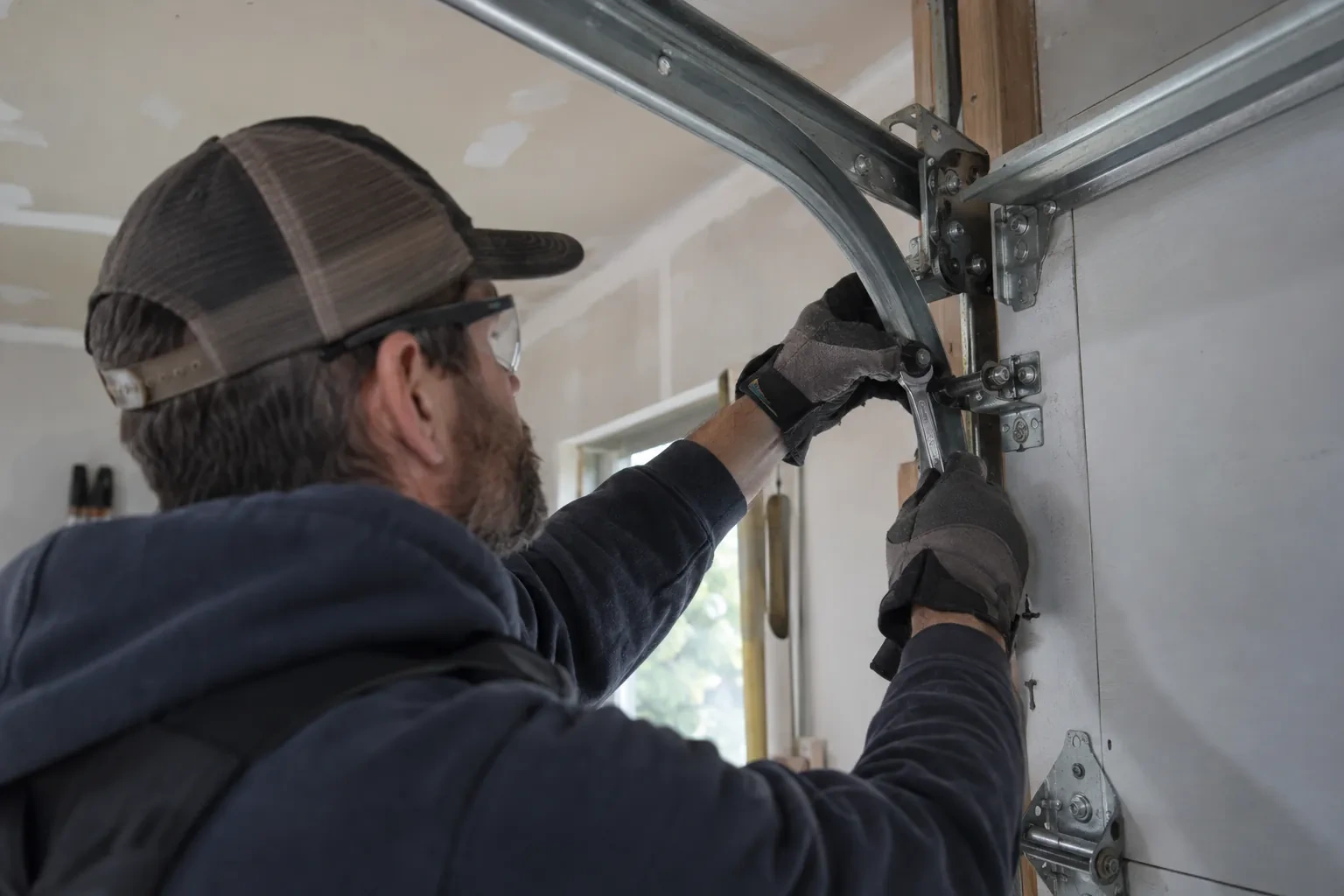
Where probing found soft wood, it is dealt with before the seal. Rot at the base of the jamb is cut back to solid material and a matching piece of lumber or PVC trim is spliced in, fixed and primed. Minor soft spots are hardened with an epoxy consolidant and filled. Fasteners that will hold the new stop are then going into wood that grips them, which is what keeps the strip tight through years of the door pressing on it. Where the jamb is clad, the technician finds the solid framing behind the cladding and fastens through to it rather than into the thin skin.
A note of what was fitted
Before leaving, the technician tells you what went on: the seal type, the profile and fin width, the colour, and the lengths of the header and sides. It is worth writing this on a card near the opener or in the door's paperwork. If one length is ever damaged, by a ladder or a car mirror, the same profile can be matched and a single piece replaced rather than the whole set. If a jamb was repaired, the note records where and with what, so anyone painting or working on the frame later knows what is behind the finish.
Garage Door Perimeter Weatherstrip
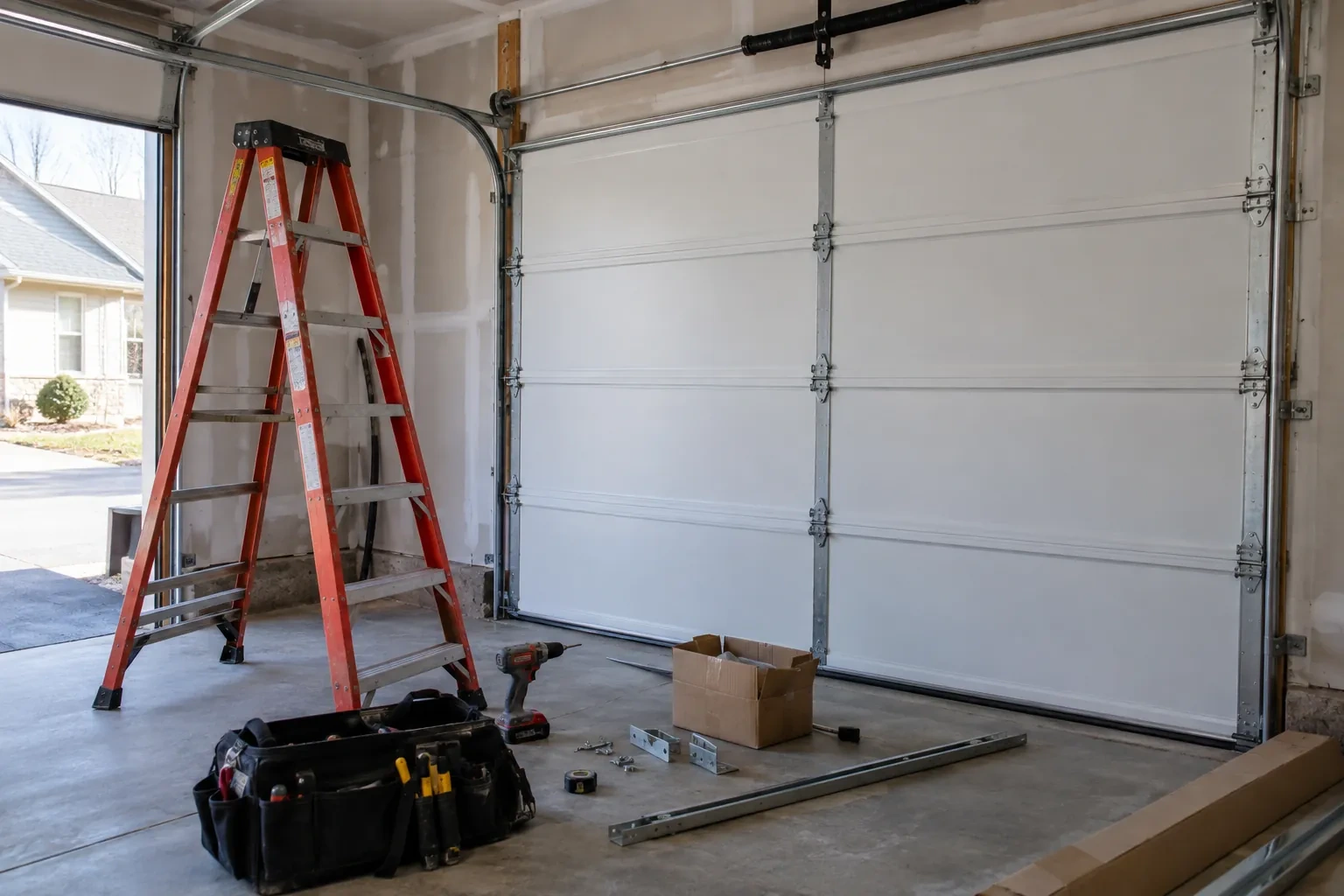
In the van
Galvanized or stainless trim nails
Utility knife and mitre saw
Epoxy consolidant and exterior primer
Silicone spray lubricant
Flat bar, hammer and nail set
Garage Door Perimeter Weatherstrip
What affects the quote
Doing the bottom seal at the same time
When the bottom seal on the door is also worn, renewing it during the same visit is offered as a separate line and saves the cost of a second call.
Trim, brickmould and caulking
Re-caulking the joint between stop and trim, or dressing capping that channels water down the jamb, is small work done while the surface is bare and is listed on its own line.
Fin on the existing stop or a one-piece vinyl stop
Nailing a new fin to a sound wood stop uses less material than replacing the stop with a one-piece vinyl moulding, which costs more as a part but needs no paint and does not rot.
What to have ready
- What colour is the trim around the door?
- Is the existing seal a flexible strip on a wood stop, or a one-piece vinyl moulding?
- Is the bottom seal on the door also worn?
Garage Door Perimeter Weatherstrip: questions
QuestionsHow long does perimeter weatherstrip usually last?
It depends on sun, cold and how the door meets it. One manufacturer's guide suggests replacing seals every two to three years, while a well-set fin kept free of paint and wiped with silicone before winter often goes considerably longer. Rather than a calendar, watch the fin: when it stiffens, cracks or shrinks back from the door, it has done its work.
How long does the visit take?
A straightforward fin replacement on a single door is often a matter of an hour or two once the technician is set up; a double door with a one-piece stop takes longer, and any jamb repair adds to it. Most of the time goes into checking the door, preparing the surface and setting the contact carefully, since those are what make the seal last. You are given a sense of the timing when the work is confirmed.
Can the seal be replaced in winter?
Yes. The technician keeps the lengths warm in the van until the moment they are fitted, because cold vinyl is stiff and can split at a fastener, and works with the door closed so the garage is not open to the weather for long. Jamb repairs can be done in the cold as well. Many households have it done in autumn or winter because that is when the gaps make themselves felt.
Related services
- Garage Door Tune-UpYou pulled the red cord to lift the door by hand during a power cut and it felt like lifting a car.
- Off-Track Garage Door ResetThe door came down fine but with a scraping noise, and now the vertical track on one side is bowed away from the wall.
- Garage Door Panel ReplacementYears of slap shots have peppered the lower two sections with dents.