Springs · Brant
Garage Door Hinge Replacement
Pressing a hand against one of the middle hinges makes it rock on the panel.
In plain words
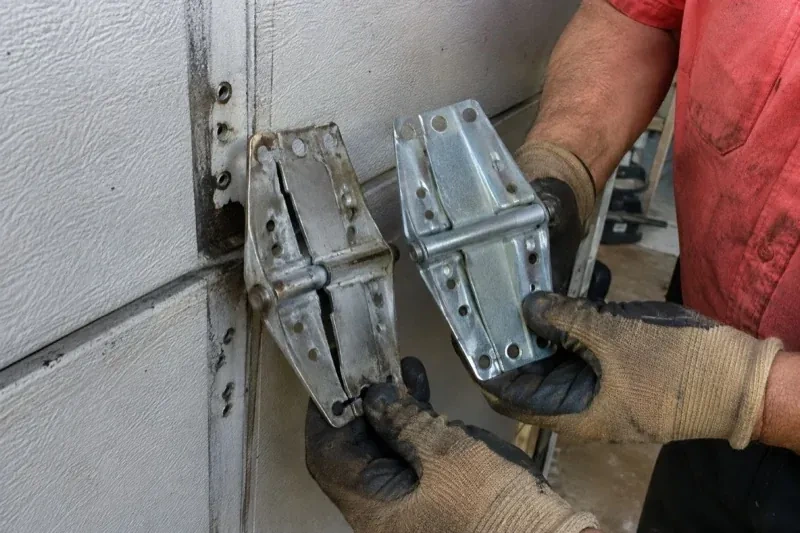
The hinge is only as good as what it is screwed to. On a steel door the screws bite into the stile, a folded steel channel at the panel edge, sometimes with a support plate behind it; on a wood door they thread into timber. Years of vibration back screws out, and once a hole is stripped the hinge rocks and the joint loosens. Hinge replacement includes fresh fasteners, and where holes have opened up the technician shifts to sound metal, steps up to a larger self-drilling screw, or bolts through the panel with a nut and washer or a backer plate. The new hinge then stays put.
How the visit goesAfter a cold night the bottom seal had frozen to the slab. The opener strained, something gave, and now one of the upper hinges sits with its leaf bent outward and the panel below it flexes when the door moves.
Garage Door Hinge Replacement
How the visit goes
Why the hinge gave up
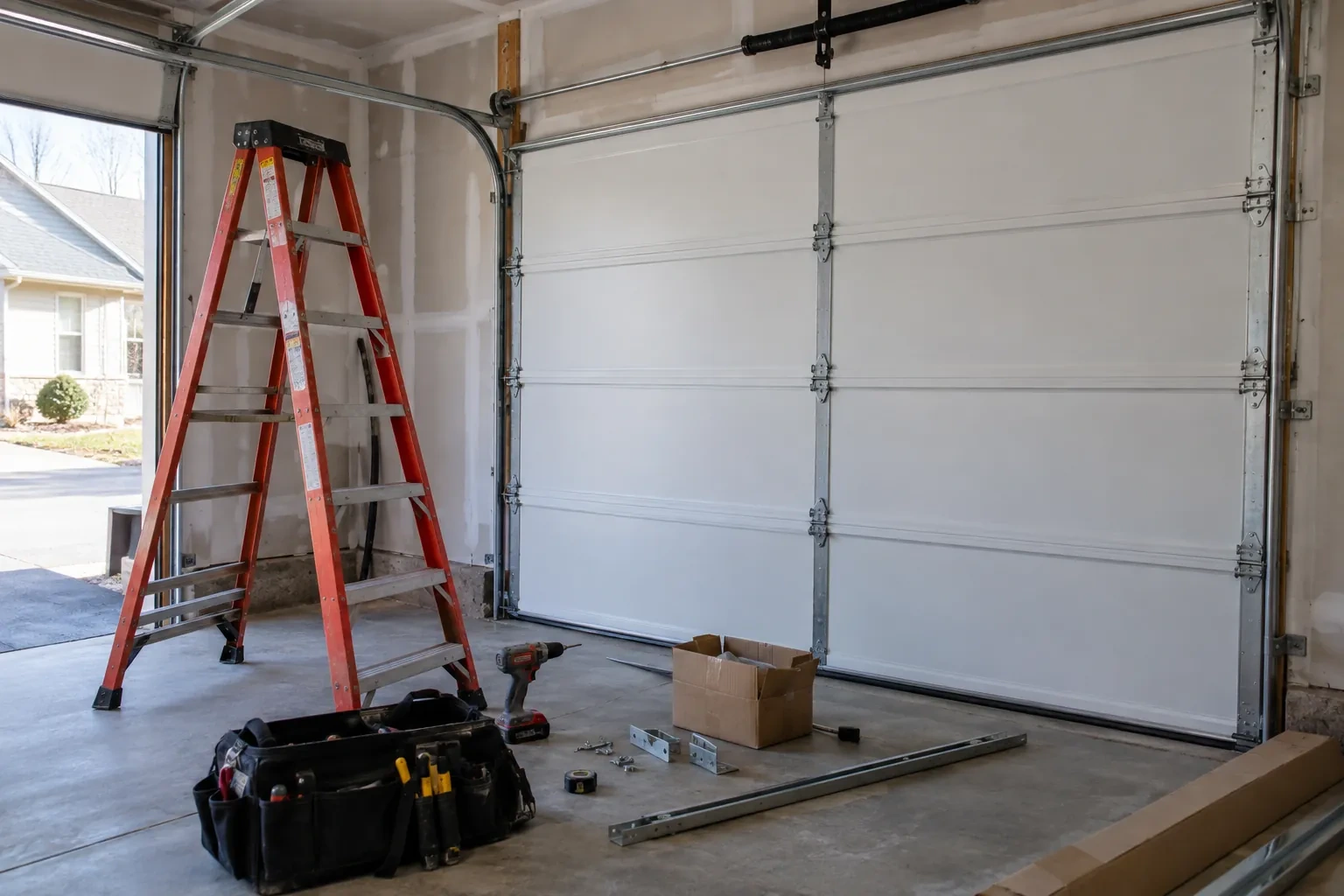
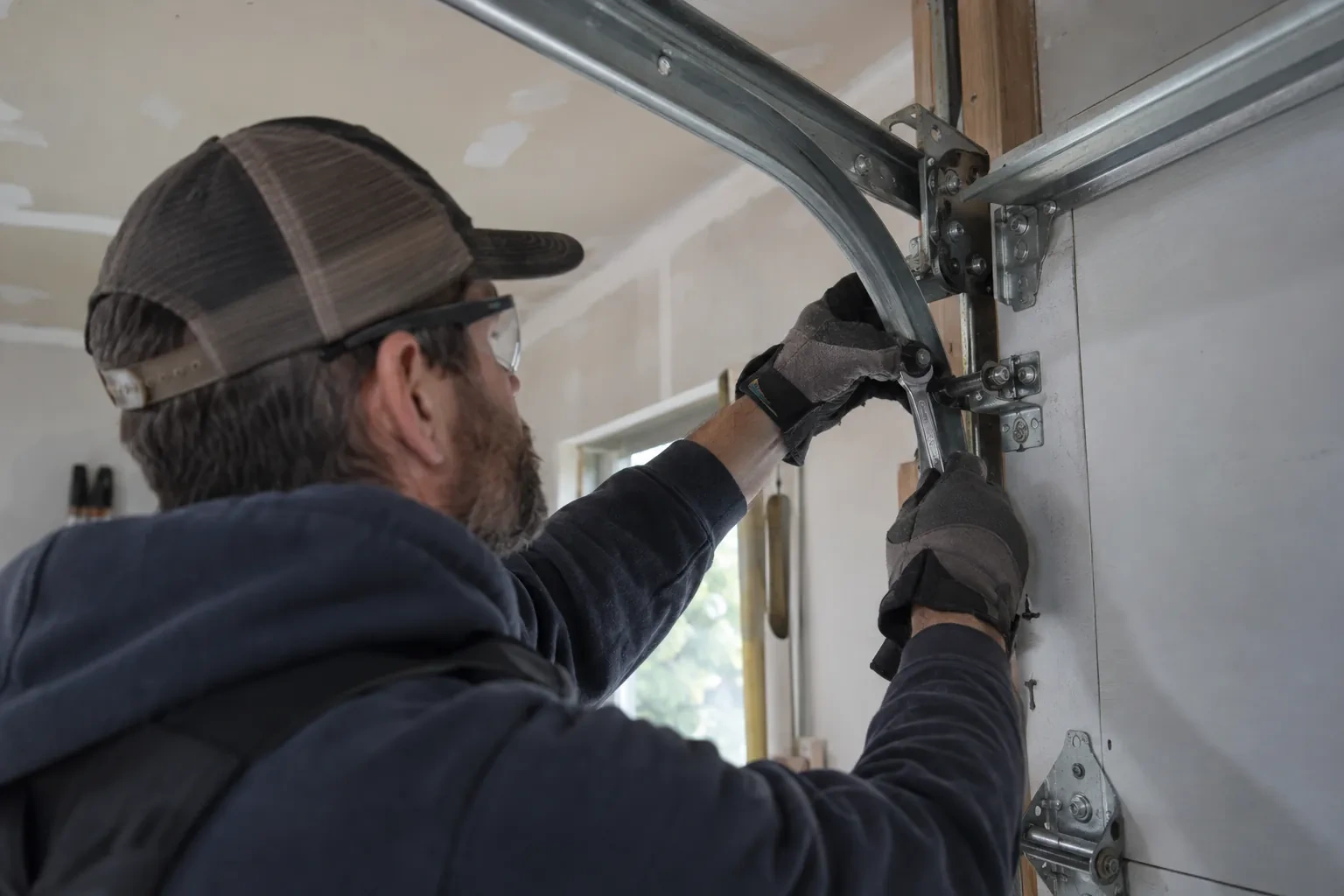
The technician wants the reason as much as the symptom. A door that is out of balance is dragged by the opener, and each hinge takes a share of that force many times a day. A vertical track that has shifted pinches the panels at the curve, and the hinge at that height flexes until it cracks. A bumper touch bends an edge hinge in a way that shows up as rubbing panel edges. Vibration alone works screws loose over the years. You will be asked what the door was doing before the hinge failed, because a stiff, jerky or noisy door before the break points to the cause.
Hinge work after an impact
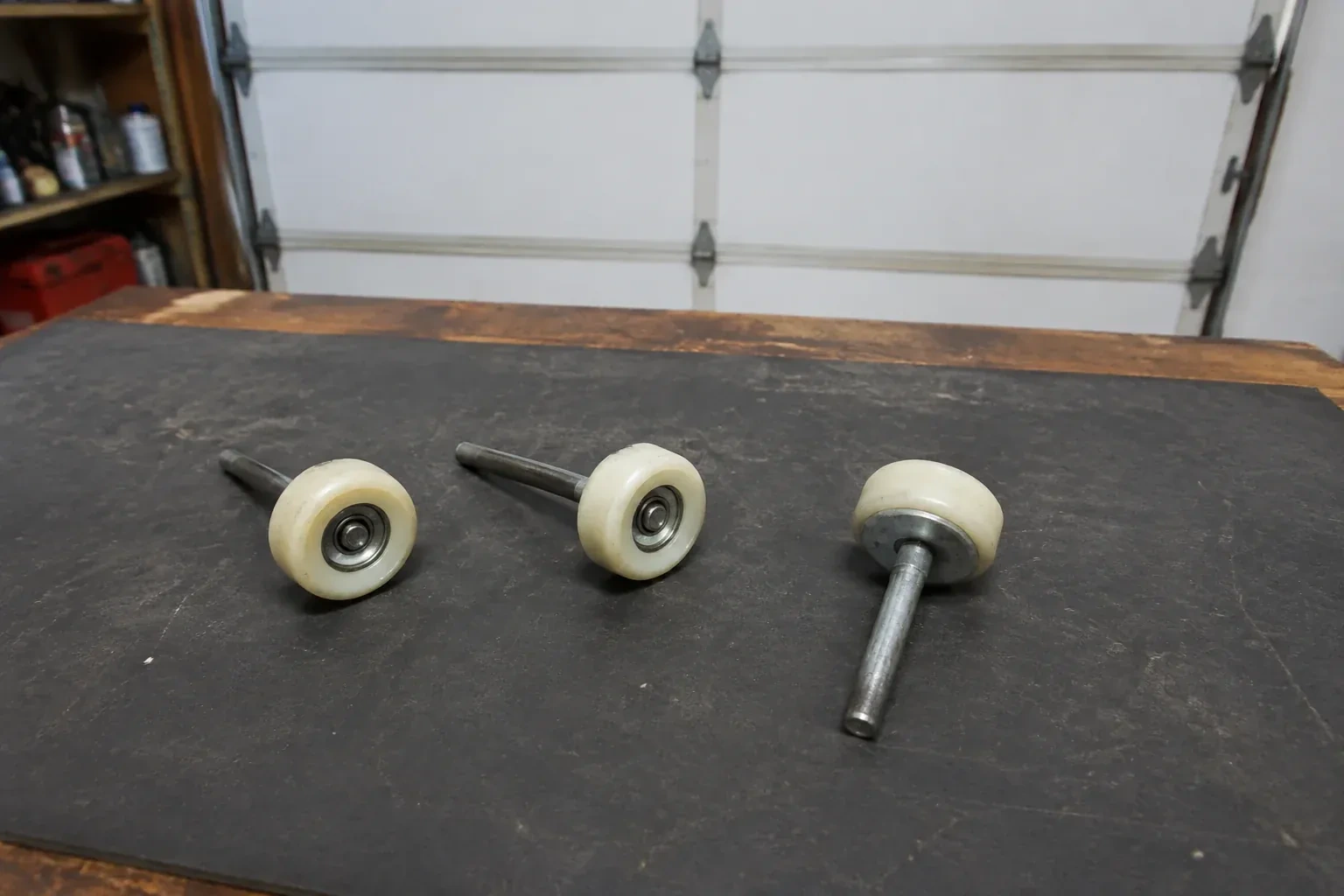
When a bumper or a bin has hit the door, the hinge is often bent along with the stile behind it. The technician removes the damaged hinge, straightens the stile with a dolly or fits a support plate where the steel has creased, and checks that the panel edges no longer touch when the joint flexes. A strut is added or straightened if the panel has bowed. The new edge hinge goes on with its roller, and the door is run through the curve by hand to confirm the panels turn without rubbing. Where a section itself is buckled, that is discussed as a separate decision.
Learning the door's new sound
A well-hinged door has a sound, a steady rumble with no clicks, and it is worth getting to know it. A new pop or click at a fixed height points at a hinge or roller at that joint. A grinding note from one end suggests a roller bearing. A rattle when the door settles onto the floor is often a loose centre hinge screw. Because you now know what the door sounds like when everything is tight, a change stands out early, while it is a screw or a single hinge rather than a bent panel. A phone recording of the healthy door is a handy reference.
Garage Door Hinge Replacement
In the van
Carriage bolts, nuts and washers
Track clamps or locking pliers
Centre hinges
Flashlight and level
Hinge support plates
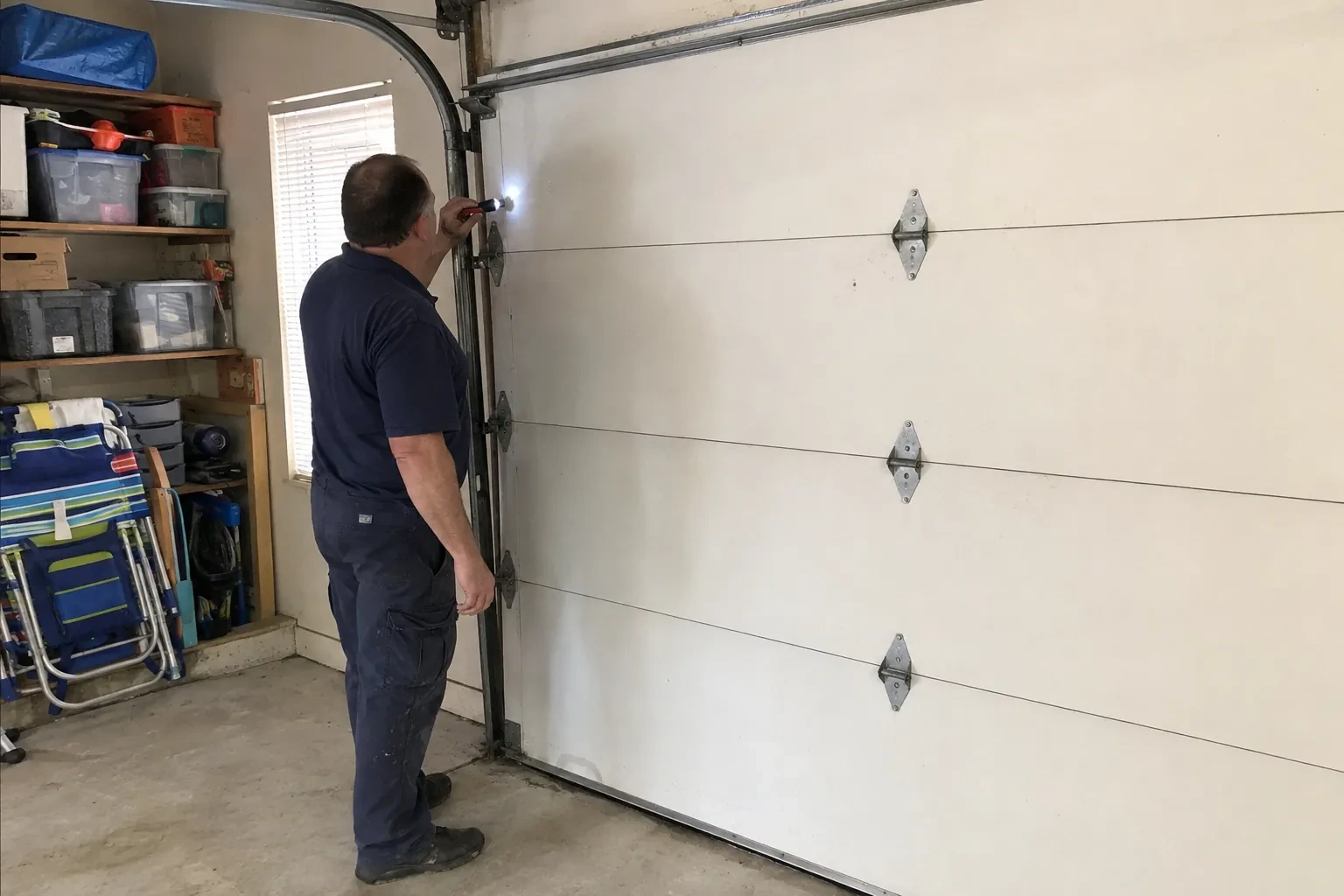
Garage Door Hinge Replacement
What affects the quote
Gauge and grade of the replacement
Standard 14-gauge hinges are priced differently from heavy 11-gauge parts, and moving a heavy insulated door up a gauge is an upgrade named as its own line in the quote.
Track or balance problems found
If the inspection shows a track out of line or a door out of balance behind the hinge failure, correcting it is explained and priced on its own alongside the hinge work.
Opener adjustment afterwards
A door that folds freely again sometimes needs the opener's force and travel settings reset and its reversal retested. That adjustment is named when it is needed.
What to have ready
- Is the door steel, wood or insulated steel?
- Is the door closed, open or stuck partway right now?
- Is a roller leaning or partly out of the track anywhere?
Garage Door Hinge Replacement: questions
QuestionsWhat are the hinges made of?
Stamped galvanized steel, formed into two leaves joined by a pin or a rolled tube. The zinc coating is what resists rust in a garage that sees wet cars and salt, and it is why a scratched or bent hinge starts to brown at the damaged spot. Edge hinges include a tube that holds the roller stem. Thickness is given as a gauge, most residential hinges being 14 or 18.
What happens during a hinge replacement visit?
The opener is disconnected and the door left closed. The technician inspects every hinge, roller and screw hole and explains what was found. Worn hinges are then changed one at a time with parts of the same number and gauge, tired holes are re-anchored, and rollers are renewed where needed. The door is run by hand to check the panels fold cleanly and the fit against the jambs, balance is tested, and the opener is reconnected and its safety reversal tested.
What gauge of hinge does my door need?
Gauge runs backwards: a larger number means thinner steel. Light single doors often come with 18-gauge hinges, 14-gauge is the heavier standard for most residential doors, and 11-gauge is commercial stock. A heavy insulated double door, a door used many times a day, or a door whose hinges keep cracking benefits from the thicker option. The technician matches or improves on what was fitted, provided the width and hole pattern suit the stiles.
Related services
- Garage Door Track Repair or ReplacementThe garage floor has settled at one corner, and the door now scrapes the concrete on that side while daylight shows at the other.
- Garage Door Cable ReplacementThe cable has wrapped itself around the shaft above the door instead of sitting on its drum.
- Torsion Spring ReplacementYou heard a sharp bang from the garage, and now the opener hums for a second and gives up.