Springs · Glen Morris
Garage Door Hinge Replacement in Glen Morris
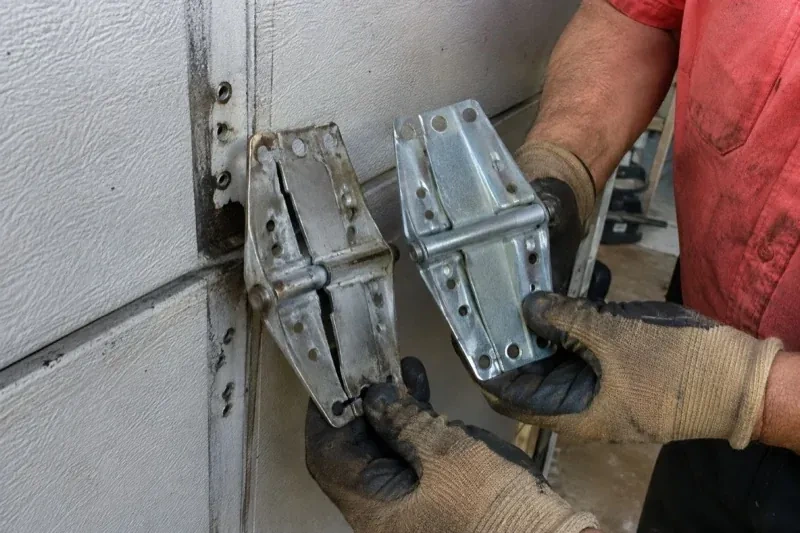
Pressing a hand against one of the middle hinges makes it rock on the panel.
In plain words
Winter puts the lowest hinges through the most. Slush and road salt land on the bottom two joints, and the salt eats into the galvanizing where the leaf meets the pin. A bottom seal frozen to the slab is the other winter classic: the opener pulls on the top panel, the door stays put, and the hinges and top fixtures take a wrench they were never built for. Hinge replacement puts new galvanized steel on the worn joints, straightens or renews anything bent in the tug, and ends with two habits, a clear threshold and a wipe of the low hardware, that keep the new set sound.
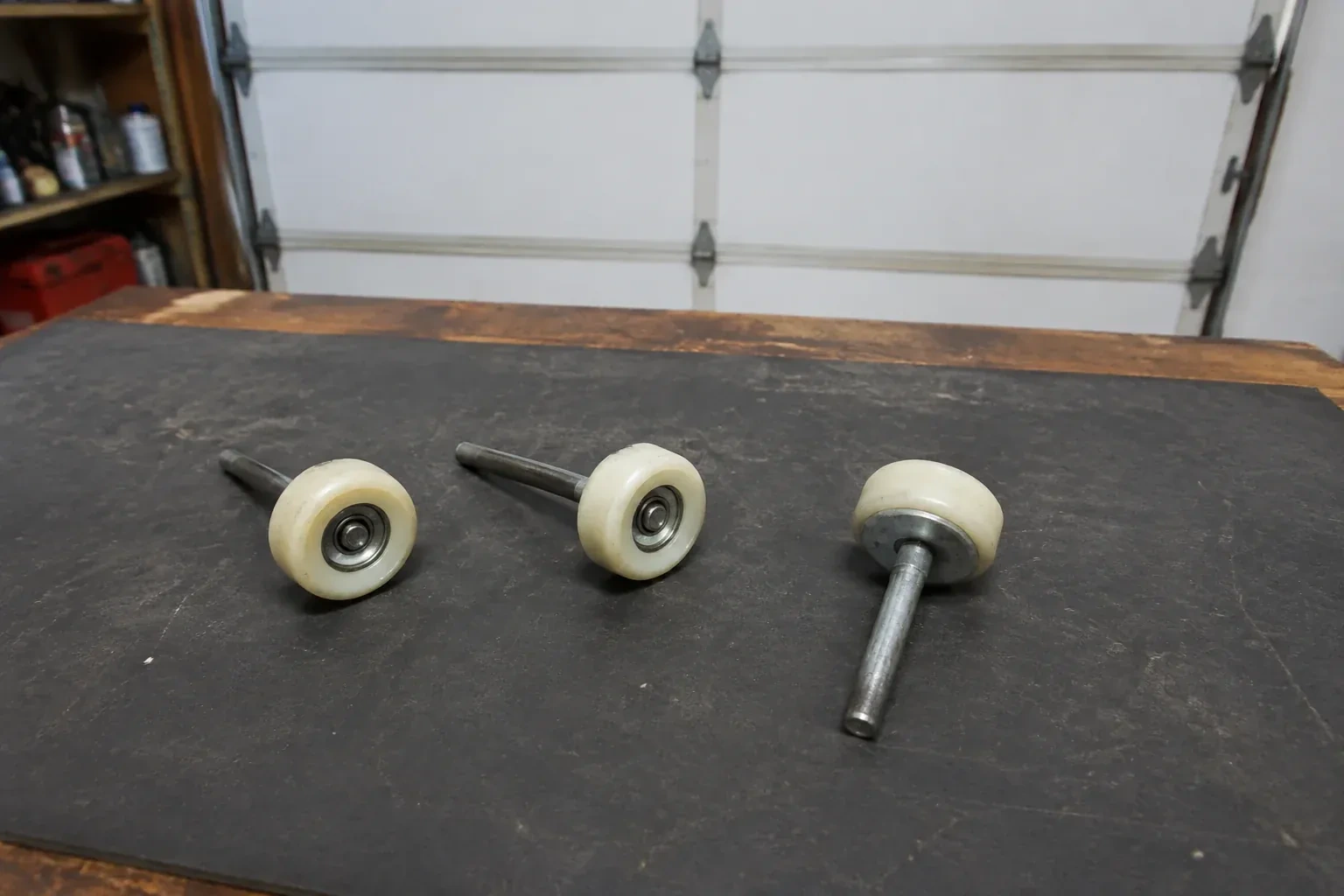
How the visit goesThe roller at the top of the second panel is leaning outward and only half of the wheel is still in the track. Behind it, the hinge that should hold it flat against the door has a screw missing and another hanging by a thread.
Garage Door Hinge Replacement
How the visit goes
How the door meets the jambs
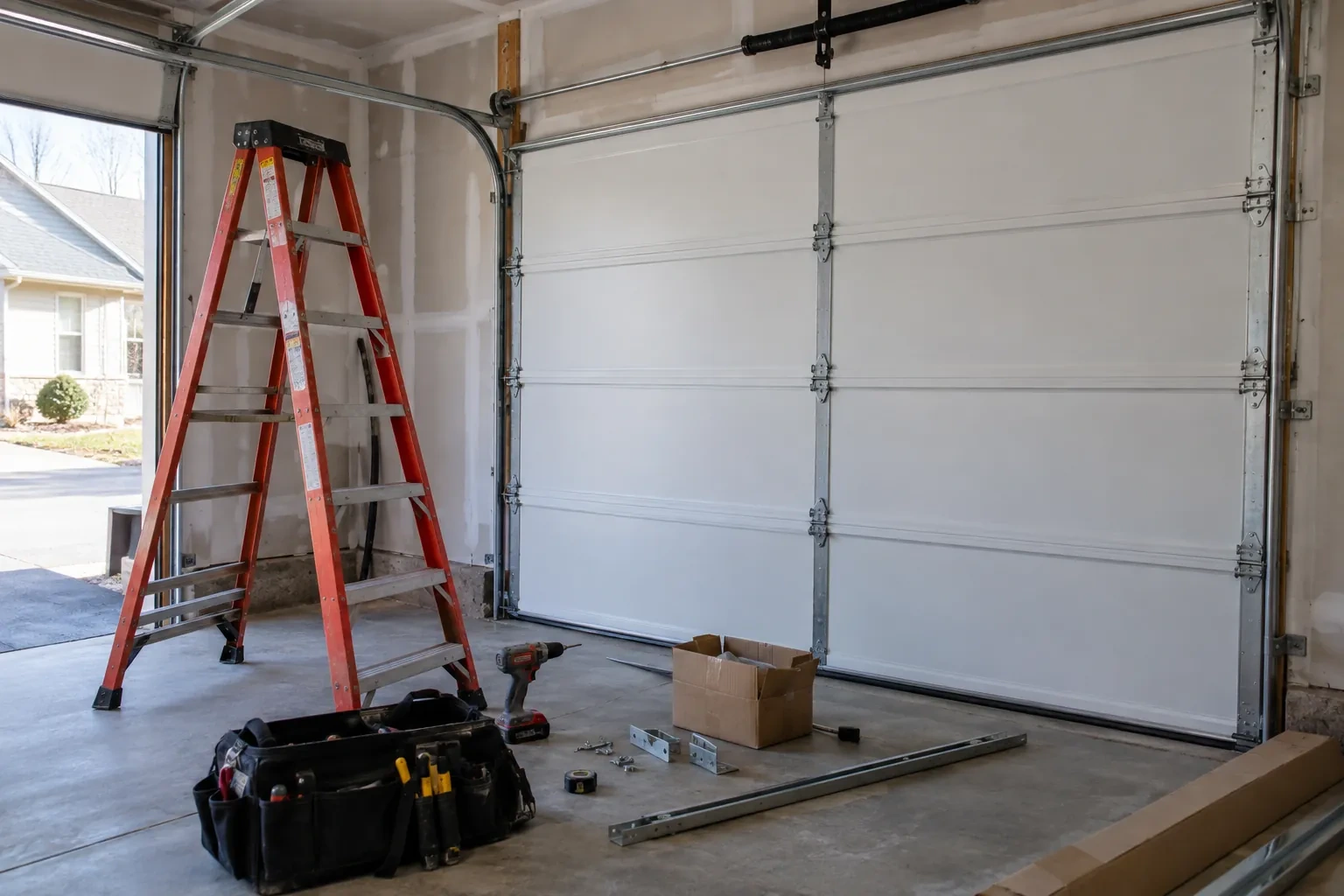
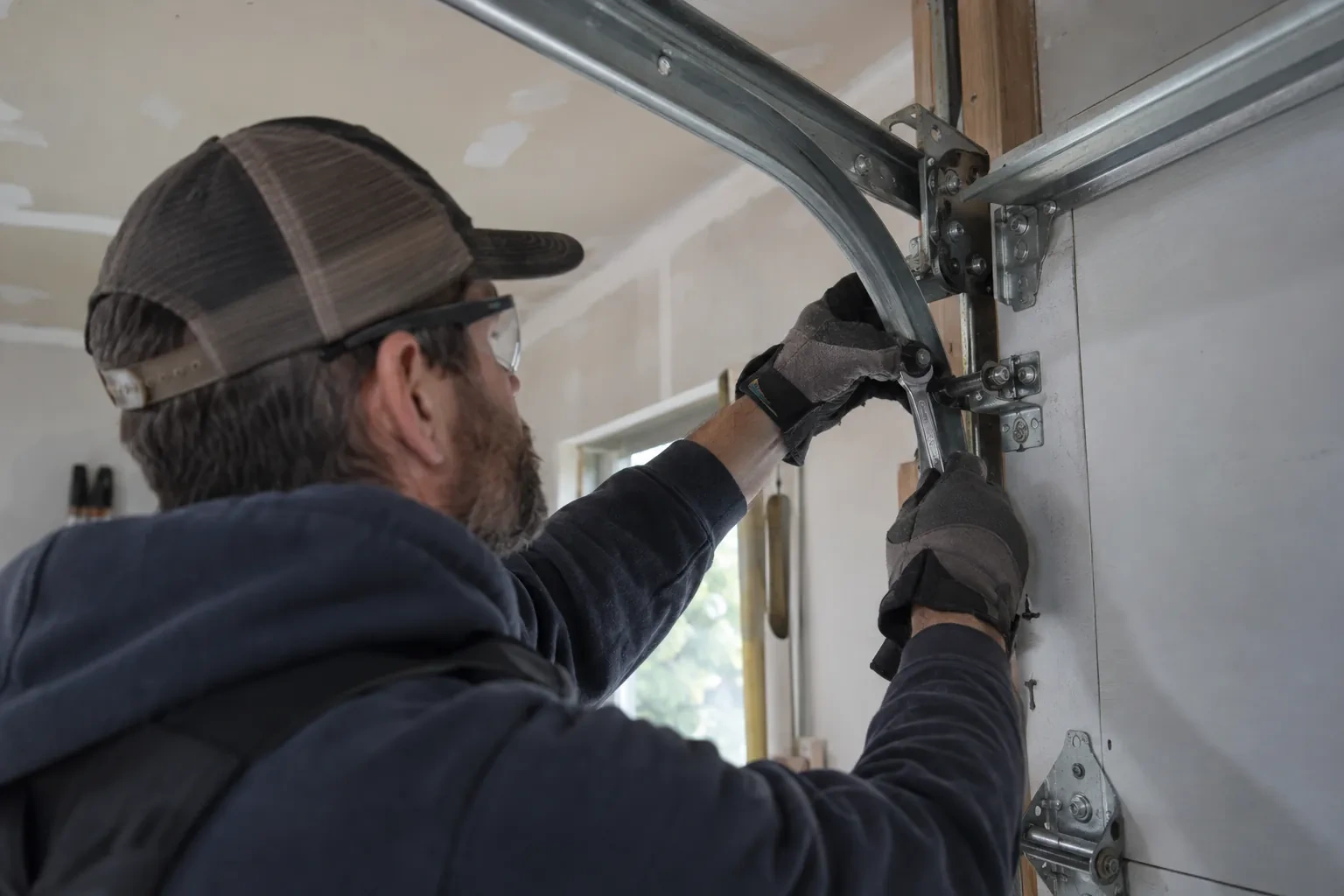
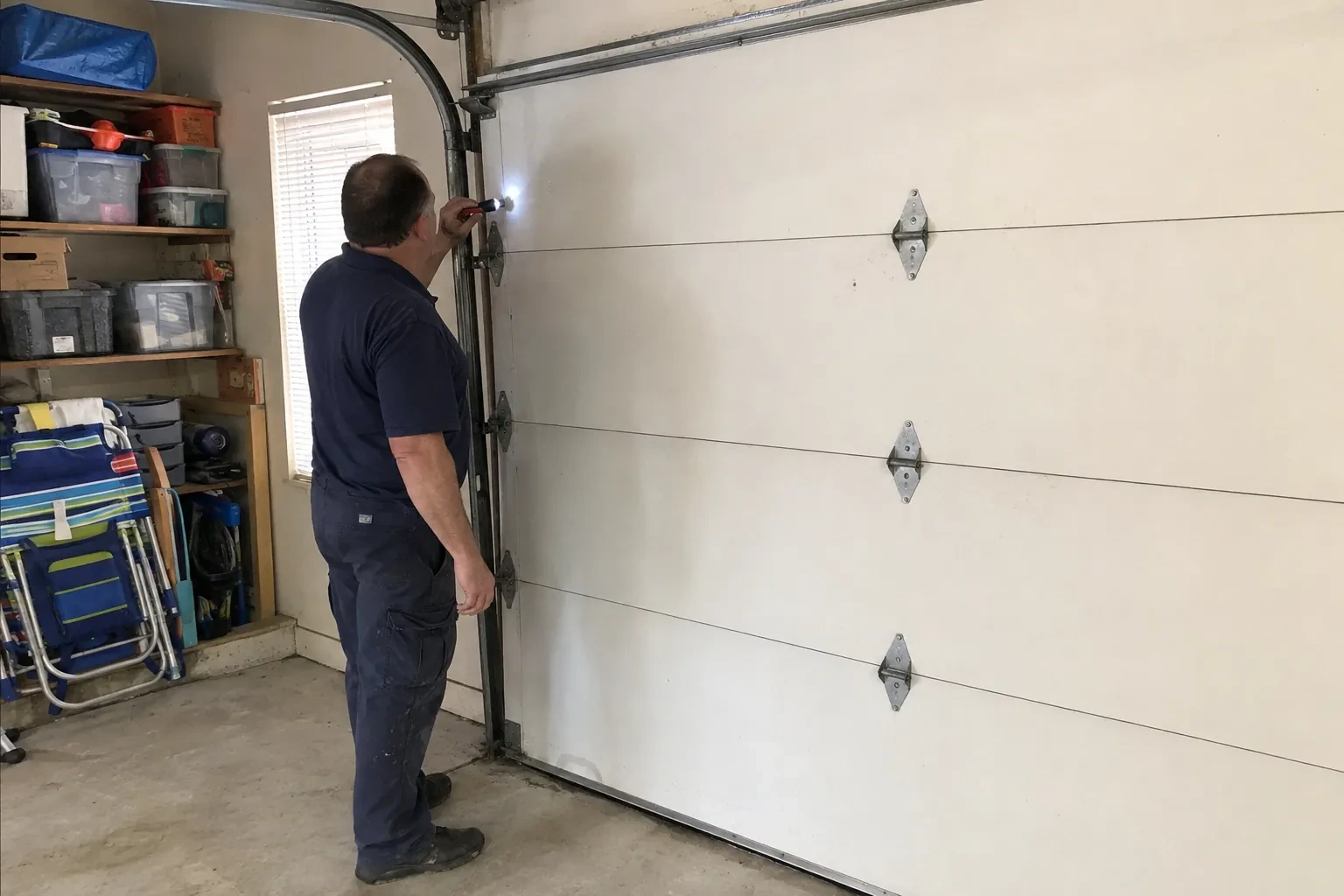
With the door still closed, the technician checks how it sits against the opening: does the door press evenly against the jambs on both sides, is there daylight at one edge, and do the panels line up flush with each other? Then the vertical tracks are checked for plumb, spacing from the door face and secure brackets, and the curve is examined for a smooth run. This matters because hinge numbers and track angle work together; a hinge of the wrong number, or a track that has crept, shows up here before the door moves. It also gives a baseline to compare against once the new hinges are on.
The right number, gauge and pattern
Every replacement hinge is matched three ways. The number matches the joint, read from the old hinge or counted from the floor, so the roller sits at the correct offset. The gauge matches or improves on the original: 18 for a light door, 14 for the heavier residential standard, and thicker still where a heavy insulated door or heavy use calls for it. The width and hole pattern match the stile, since a hinge from one maker may not line up with another's panels. Where the door has a mix of numbers from earlier repairs, the technician corrects them so all edge hinges follow the proper sequence.
Keeping salt off the low hinges
The two lowest joints live in the wettest part of the garage. Through winter, push slush away from the inside of the door rather than letting it sit against the bottom panels, and when a mild day comes wipe the road salt off the lower hinges, brackets and rollers with a damp cloth followed by a dry one. A light mist of silicone on the low knuckles in late autumn helps meltwater run off. Clear the ridge of ice that forms at the threshold before running the door, so the opener is never pulling against a panel frozen to the slab. These habits protect exactly the hinges that fail first here.
Garage Door Hinge Replacement
In the van
Carriage bolts, nuts and washers
Track clamps or locking pliers
Centre hinges
Flashlight and level
Hinge support plates
Garage Door Hinge Replacement
What affects the quote
Condition of the mounting holes
Stripped or torn holes need a larger screw, a through-bolt with nut and washer, or a backer plate. That extra anchoring is small but is quoted separately from the hinge itself.
Damage to the stile or panel
After an impact, straightening a stile, fitting a support plate or adding a strut comes with the hinge work and is quoted as separate items so you can see each one.
Corrosion and seized fasteners
Screws rusted solid take time to drill out, and heavily corroded hinges on the lower joints are replaced rather than reused, which shows in the parts list.
What to have ready
- Is the loose or broken hinge at the edge of the door or in the middle?
- Has a car, bin or anything else bumped the door recently?
- Where does the pop, click or gap appear, and roughly how high up?
Garage Door Hinge Replacement: questions
QuestionsWhat are the hinges made of?
Stamped galvanized steel, formed into two leaves joined by a pin or a rolled tube. The zinc coating is what resists rust in a garage that sees wet cars and salt, and it is why a scratched or bent hinge starts to brown at the damaged spot. Edge hinges include a tube that holds the roller stem. Thickness is given as a gauge, most residential hinges being 14 or 18.
What happens during a hinge replacement visit?
The opener is disconnected and the door left closed. The technician inspects every hinge, roller and screw hole and explains what was found. Worn hinges are then changed one at a time with parts of the same number and gauge, tired holes are re-anchored, and rollers are renewed where needed. The door is run by hand to check the panels fold cleanly and the fit against the jambs, balance is tested, and the opener is reconnected and its safety reversal tested.
What gauge of hinge does my door need?
Gauge runs backwards: a larger number means thinner steel. Light single doors often come with 18-gauge hinges, 14-gauge is the heavier standard for most residential doors, and 11-gauge is commercial stock. A heavy insulated double door, a door used many times a day, or a door whose hinges keep cracking benefits from the thicker option. The technician matches or improves on what was fitted, provided the width and hole pattern suit the stiles.
Related services
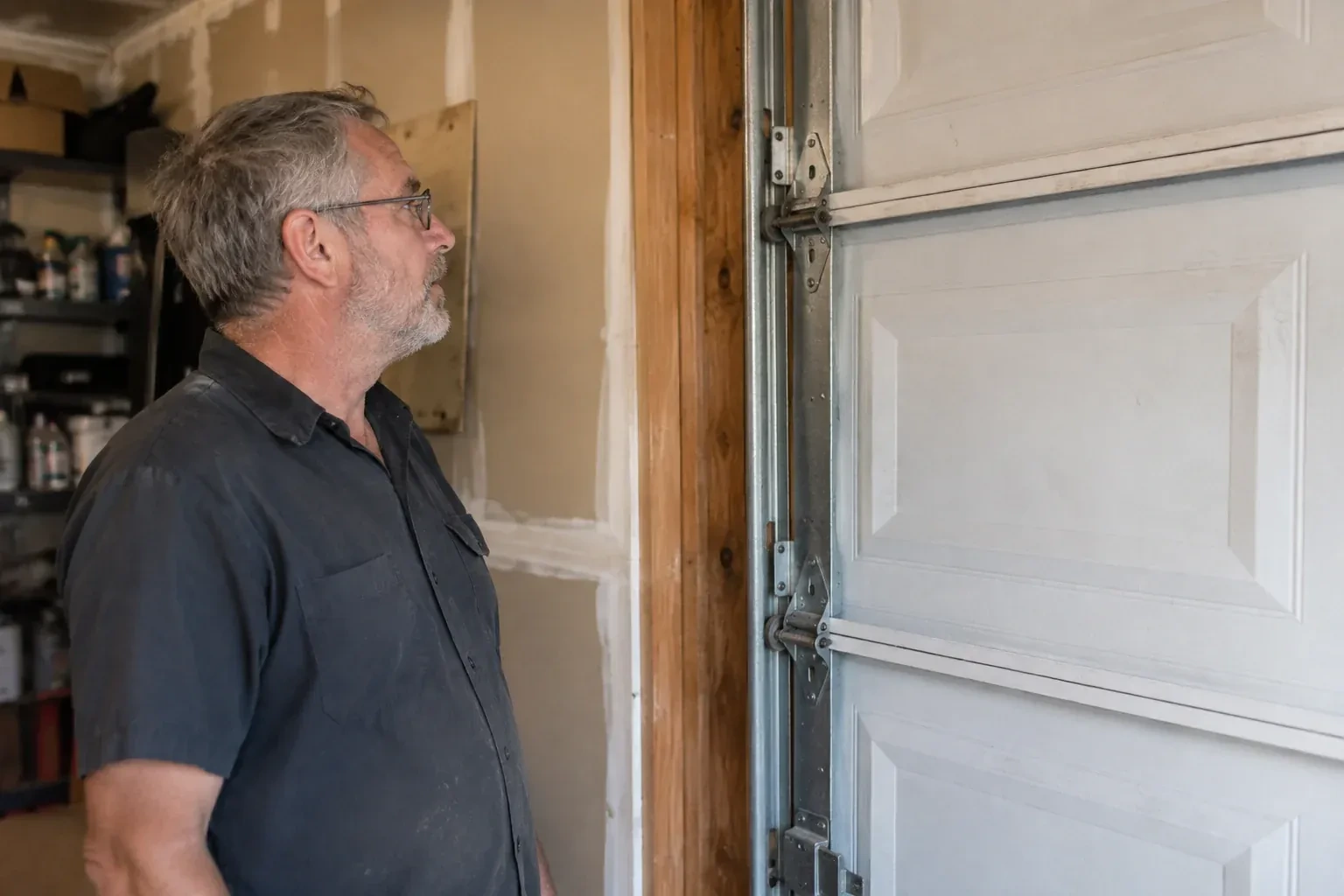
- Garage Door Track Repair or ReplacementThe garage floor has settled at one corner, and the door now scrapes the concrete on that side while daylight shows at the other.
- Garage Door Cable ReplacementThe cable has wrapped itself around the shaft above the door instead of sitting on its drum.
- Torsion Spring ReplacementYou heard a sharp bang from the garage, and now the opener hums for a second and gives up.