New Doors · St. George
High-Lift Garage Door Conversion in St. George
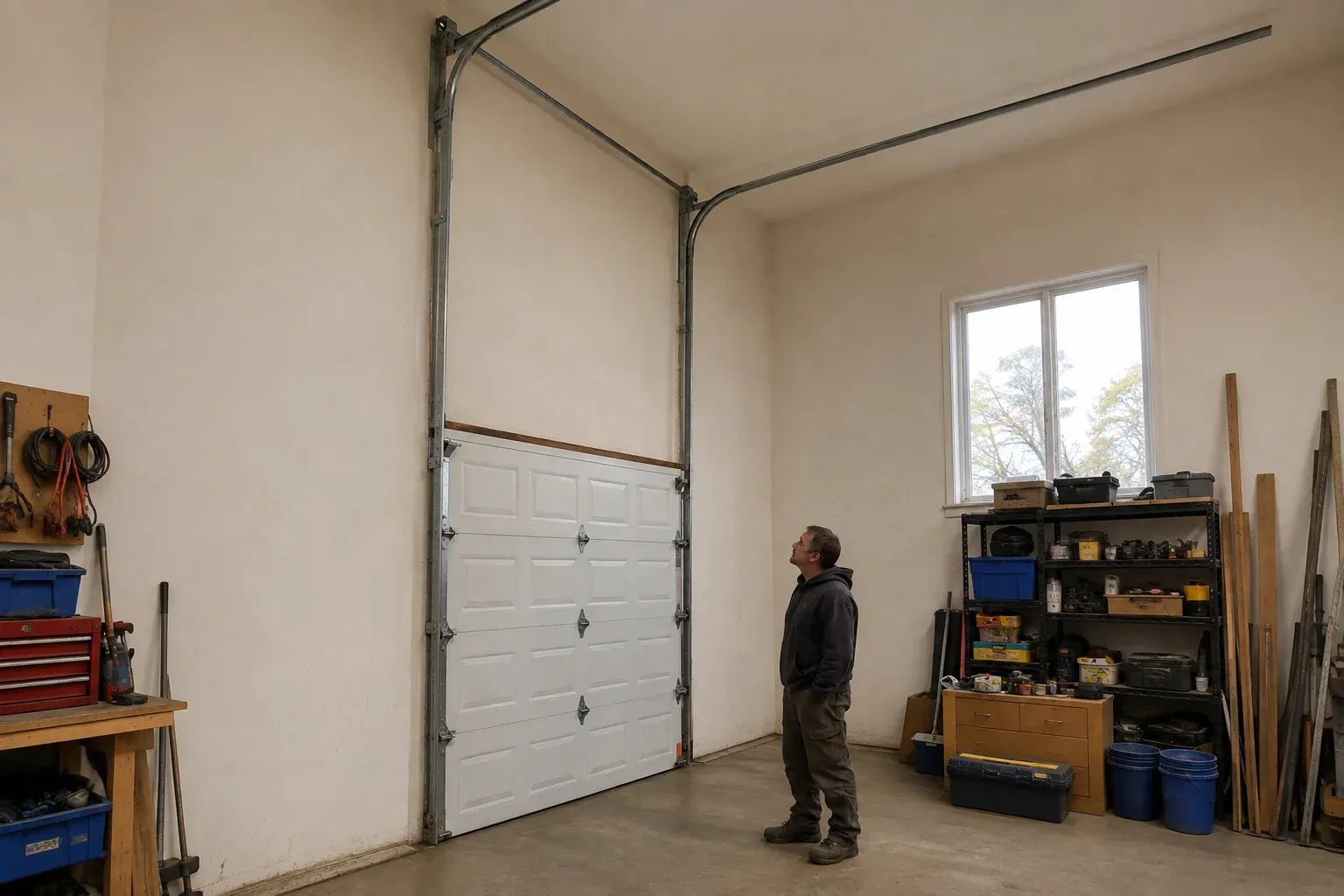
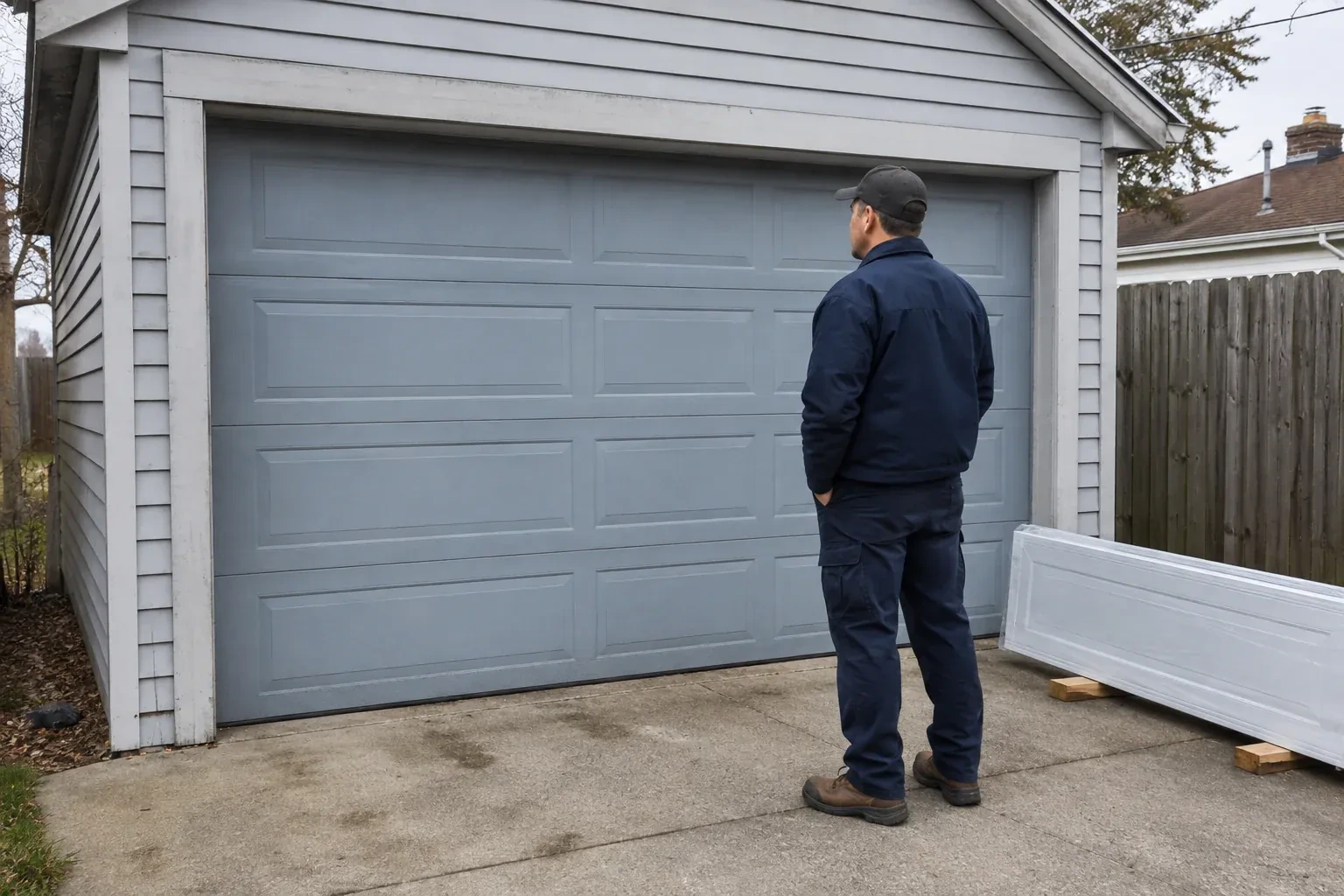
A garage project has reached the measurement stage, and overhead clearance is the deciding detail.
In plain words
A vehicle lift and an overhead door can share one bay when their clear zones are designed together. The technician records the lift height, vehicle profile and door travel, then calculates how far the panels can rise before turning. High-lift track, contoured cable drums, longer cables and correctly selected springs guide and balance that new movement. The opener may also move away from the centre ceiling line. Full-cycle checks confirm that the door, vehicle area and building features remain separated through operation.
How the visit goesThe door works well, although the open panels sit far beneath a sloped or raised ceiling. You are exploring whether the track, counterbalance and operator can be redesigned to follow the room more closely.
High-Lift Garage Door Conversion
How the visit goes
Map every overhead obstruction
A laser and tape are used to build a three-dimensional picture of the bay. Beams, bulkheads, ducts, pipes, lights, attic access, ceiling slopes and roof framing all affect where tracks and panels can travel. Sideroom and backroom matter alongside headroom, since the raised transition still needs space behind the opening. The map also reserves access around springs, bearings and the operator. With those boundaries recorded, the proposed route can weave through the available volume without trading new clearance for a conflict elsewhere.
Install the calculated spring assembly
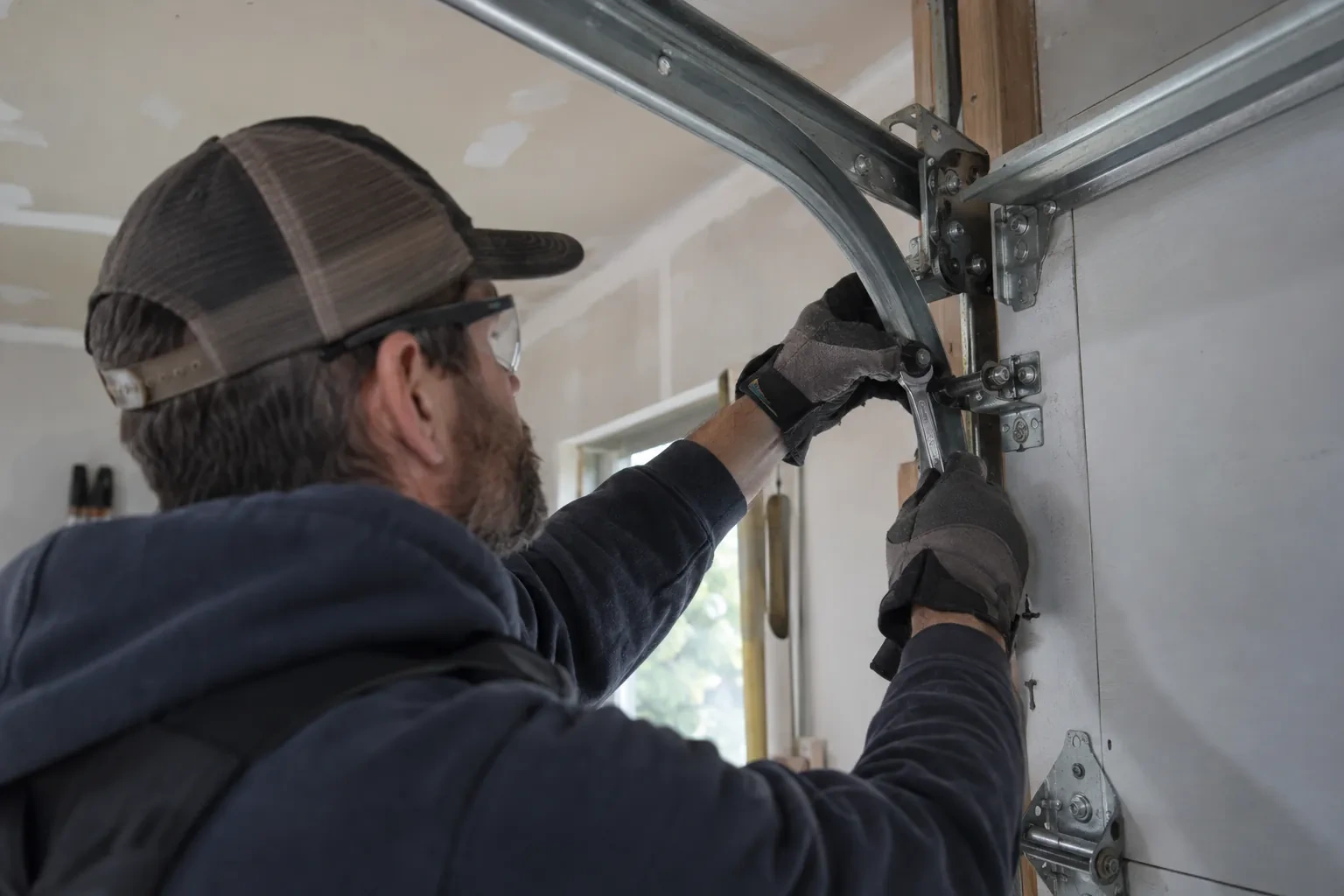
Torsion springs are chosen from the measured door weight, high-lift dimension, drum profile and system layout. The shaft, centre support, end bearings, stationary cones and winding hardware are assembled in their planned locations with room left for inspection. Trained technicians apply spring tension using controlled tools and the design information for that door. Initial settings are only the starting point; the final adjustment follows manual balance observations. This method connects stored spring force to the finished geometry instead of carrying over assumptions from the former standard-lift arrangement.
Simple signs that invite a service check
The handover gives you a reference for normal operation: level travel, consistent cable winding, rollers centred in track and a smooth transition from vertical to horizontal. Arrange a check if the door begins leaning, a cable looks slack or frayed, a roller approaches a track edge, or the operator repeatedly changes sound. Leaving the door in a stable position and keeping the area clear supports an orderly visit. Early observation helps a technician focus on the changed component while the documented conversion remains easy to trace.
High-Lift Garage Door Conversion
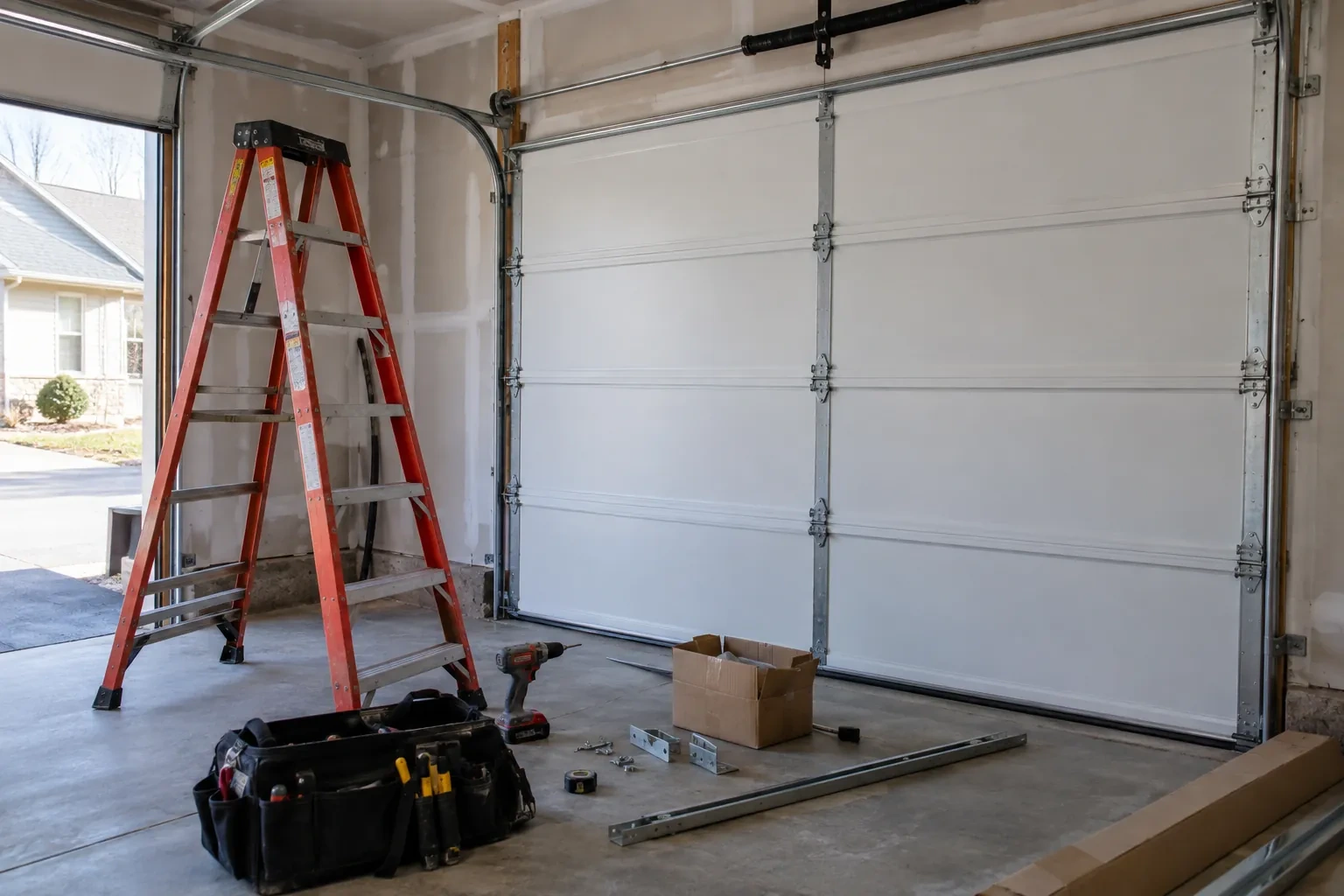
In the van
Track and flag brackets
Compatible operator hardware
End bearing plates
Centre bearing support
Transition track sections
High-Lift Garage Door Conversion
What affects the quote
Door size and actual weight
Panel construction, reinforcement, glazing and added finishes influence the measured load used to select drums, cables, torsion springs and shaft components.
Selected high-lift dimension
A modest rise and a layout using most of a tall wall require different track lengths, cable travel, drum geometry, spring design and access planning.
Framing and attachment readiness
Clear, suitable support points simplify installation; missing blocking, concealed conditions or structural questions create preparatory work and coordination outside the basic hardware change.
What to have ready
- What clear height do you need beneath the fully open door?
- What are the garage door opening width and height?
- How much wall height is available above the door header?
High-Lift Garage Door Conversion: questions
QuestionsWhat measurements are taken before a quote?
Measurements include finished opening width and height, headroom, sideroom, backroom, ceiling elevation, obstruction locations and the desired clear zone. The technician also records door dimensions and weight information, track and shaft positions, spring and drum details, framing or attachment conditions, and opener placement. Photos and equipment plans help connect those measurements to the intended use.
Does cold weather affect a high-lift system?
Cold, moisture and road salt can influence metal surfaces, seals and lubrication just as they do on other garage doors. The taller track path also makes unobstructed movement and correct cable winding important to observe. Follow the installed door and opener manuals for seasonal care, keep lower hardware clean, and arrange service when movement or sound changes noticeably.
Why are new cable drums usually part of the project?
A high-lift door changes how cable must wind as the panels move vertically and then turn. High-lift drums use a contoured groove profile to manage that changing leverage and help balance the door through its travel. Drum selection is coordinated with door weight, lift dimension, cable length, shaft and spring design rather than chosen as an isolated hardware swap.
Related services
- Insulated Steel Garage Door InstallationA refreshed exterior has made the faded garage door stand out.
- Wind-Rated Garage Door ReplacementYou are combining two narrow garage bays into one broad opening.
- Carriage-House Garage Door InstallationYour garage door works, yet its broad plain panels feel disconnected from the brick, gables and entry details around them.