Springs · Brant
Garage Door Roller Replacement
The door is the one the builder installed and has never had a part changed.
In plain words
A garage door opener is designed to guide a balanced door, not to haul a rough one. Rollers that bind, wobble or grind add resistance across the whole travel, and the opener answers by working harder, running hotter and tripping its force limit or reversing partway. Replacing worn rollers with a smooth-running set takes that load away, which is why the opener often sounds calmer after the same visit. The technician confirms the door holds its own weight with the opener released, then checks the opener's force and reversal settings once the new rollers are in.
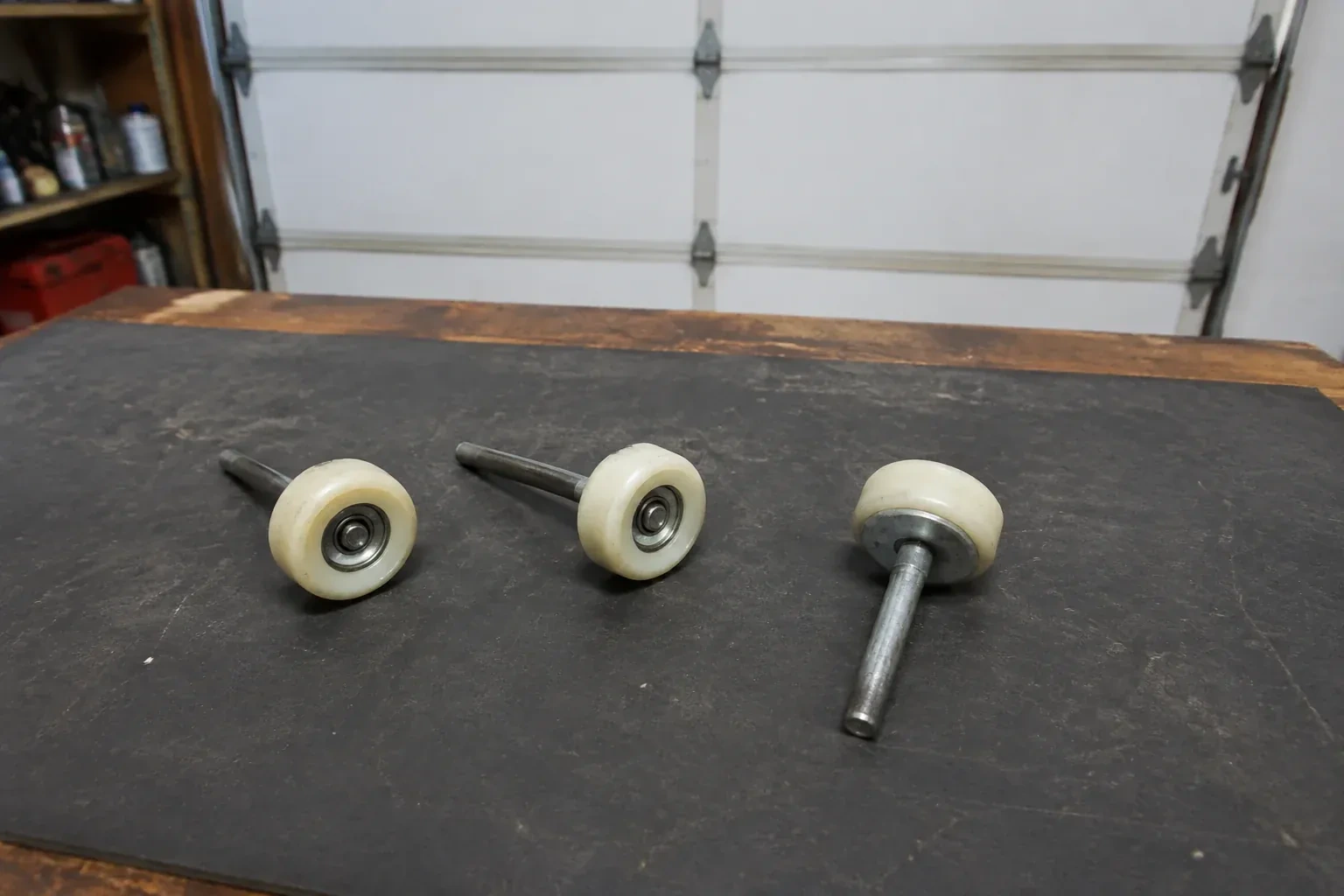
How the visit goesNew springs went in last year and the door balances well, yet it still clicks along the ceiling track like a train over rail joints. The wheels are the originals, worn to an oval, and the noise follows them from one end of the travel to the other.
Garage Door Roller Replacement
How the visit goes
Does the door hold its own weight?
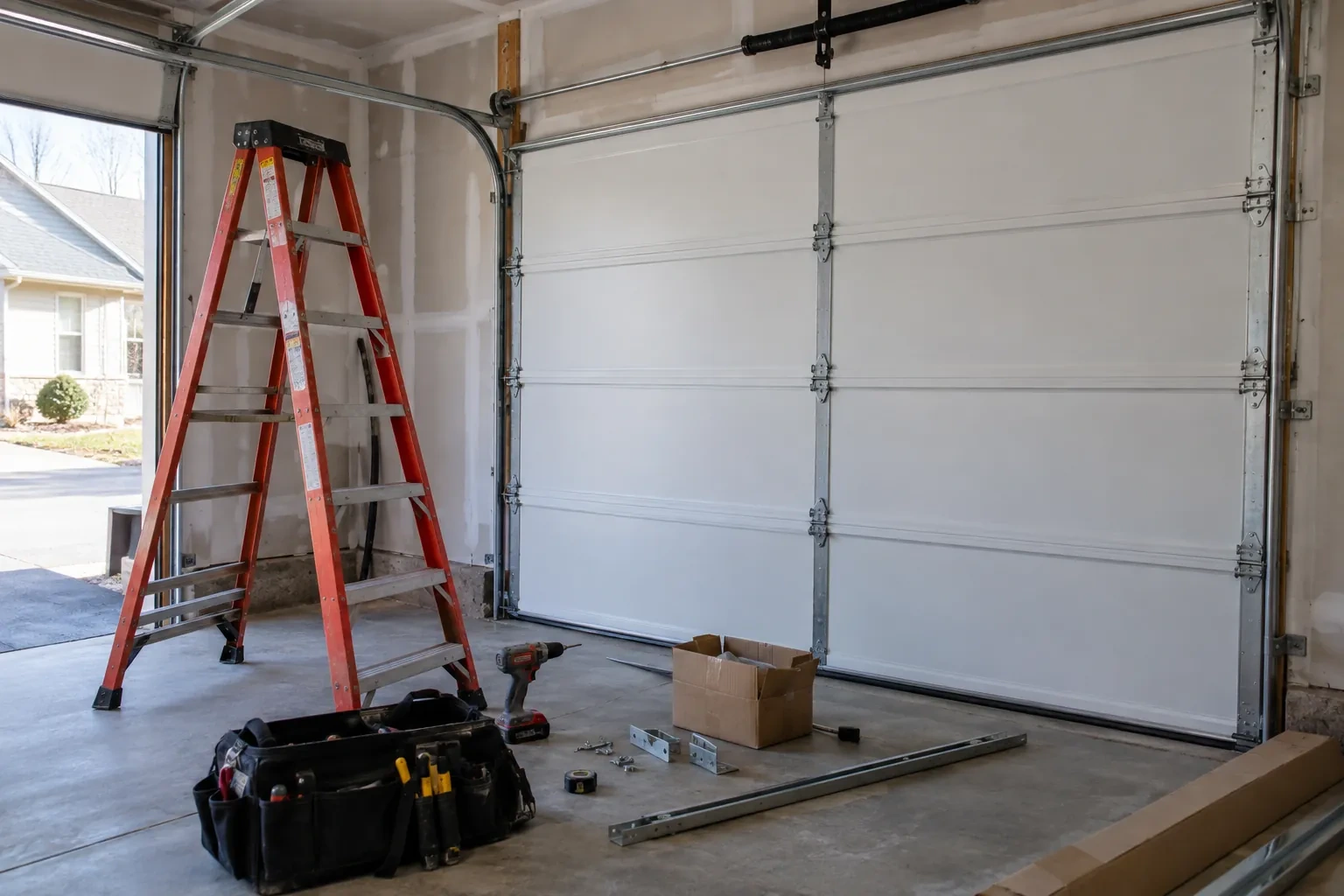
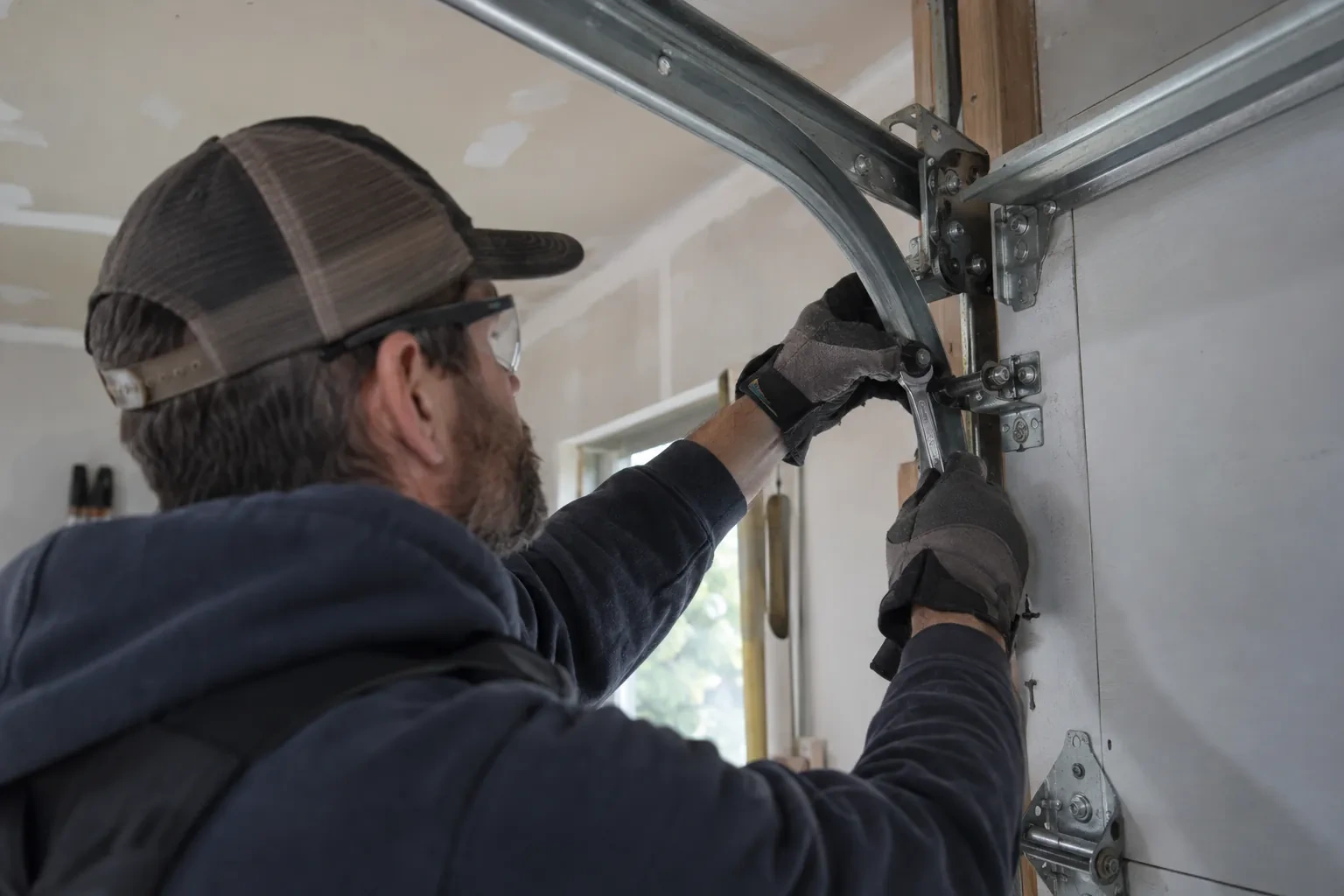
With the opener released, the technician lifts the door to knee height and then to halfway and lets go. A balanced door stays where it is put; one that drifts down or climbs is telling you the springs are out of adjustment. This check comes before roller work for a practical reason: an unbalanced door leans on its rollers and hinges with weight the springs should be carrying, and new rollers fitted to such a door wear early. If the balance is off, the technician explains what the spring system needs so you can decide whether to have it corrected in the same visit.
Fitting a matched set
The new rollers go in as one set of one type, with the same wheel material, stem length, bearing count and load rating at every position where the hinges allow it. Mixing a couple of new nylon wheels among old steel ones leaves the door running unevenly and sounding different from side to side, so even when only two wheels looked worn, the whole set is normally changed. Where a heavier door needs seven- or ten-inch stems at the double hinges, those positions get long-stem rollers and the single-hinge positions get standard ones, all from the same range so the wheels ride at the same height in the track.
A record of what was fitted
You should know what is on your door. The technician leaves you with the roller type and material, wheel size, stem length by position, bearing count and load rating, along with any hinges, fixtures or brackets replaced and any track adjustment made. Keep this with the owner's manual and the date of the last spring replacement. It answers the questions that come up later, such as which stem length to order if a single wheel is ever damaged, and it lets a future technician see at a glance what the door carries and when it went in.
Garage Door Roller Replacement
In the van
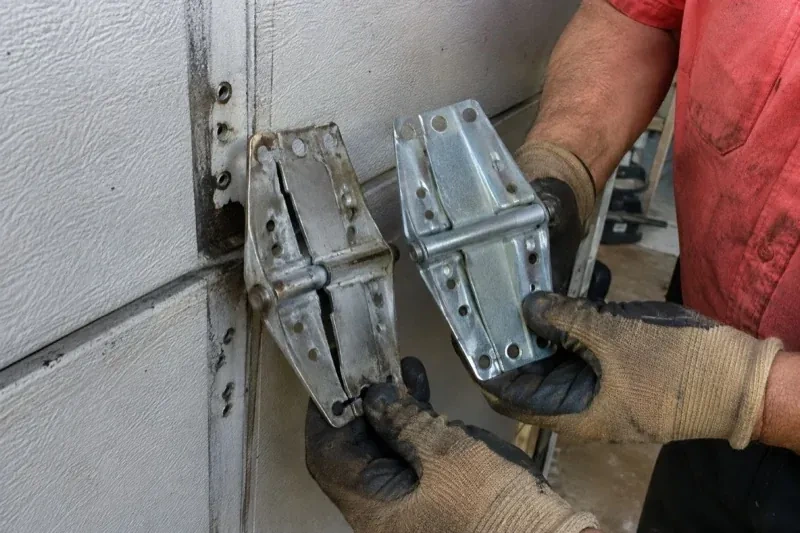
Replacement numbered hinges
1-1/2 inch reversal test block
Sealed-bearing nylon rollers
Jamb bracket fasteners
Steel ball-bearing rollers
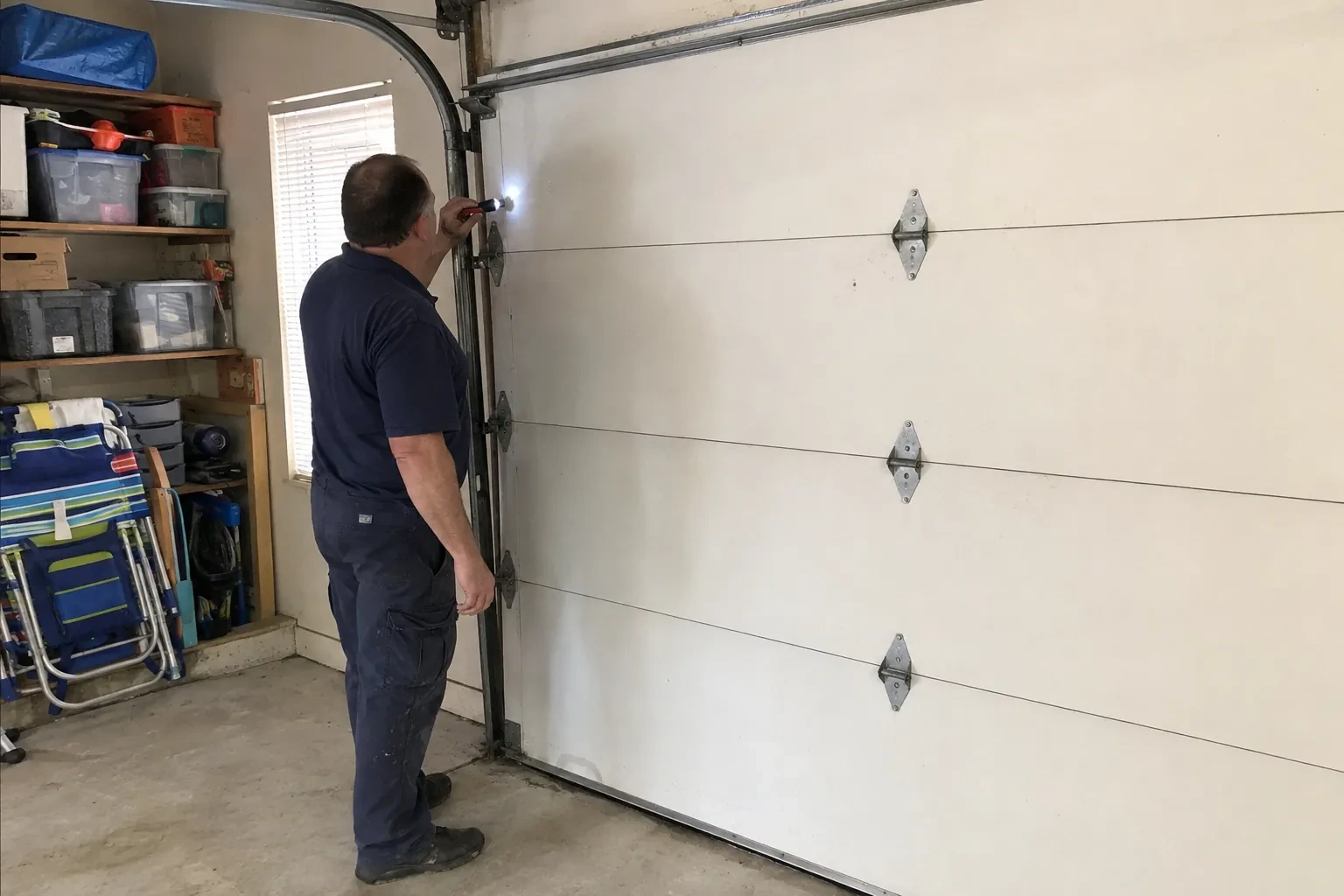
Garage Door Roller Replacement
What affects the quote
Residential or commercial track
Three-inch commercial track takes larger, heavier rollers and usually a heavier door behind them, and both the parts and the method of securing the door differ from a residential job.
Top fixtures and bottom brackets
A top fixture that no longer adjusts, or a bottom bracket that has corroded or bent, is changed while the door is secured, and the quote names each piece.
Stem length and double hinges
Doors with two hinges stacked at each end need long-stem rollers at those positions. Those cost more than standard four-inch stems and are counted separately in the quote.
What to have ready
- Are there two hinges stacked at the ends of each section, or one?
- When were the springs last replaced, if you know?
- Does the door stay put at halfway when the opener is released?
Garage Door Roller Replacement: questions
QuestionsWhat is the difference between two-inch and three-inch rollers?
The figure is the wheel diameter, and it has to match the track. Residential sectional doors run on two-inch track and take a two-inch wheel; commercial doors can run on either two-inch or three-inch track, so the wheel is matched to what is actually installed. Wheel size has little to do with noise, which comes from the wheel material and bearings. The technician measures the track and the existing wheel before ordering so the set fits, since a mismatched wheel either jams in the channel or rattles around in it.
Can worn rollers make the door come off its track?
Yes, and it is one of the main reasons to replace them before they fail. A wheel worn oval, a bent stem, or a short stem sitting loose in a double hinge lets a section drift until the wheel climbs onto the track lip; from there a bump or a gust can carry it out entirely. A door hanging crooked is a far larger repair than a set of rollers. Fresh, correctly sized rollers seated in a squared track are what keep the door where it belongs.
What can I do before the technician arrives?
Move vehicles out of the garage and clear anything stored against the walls near the tracks so both sides are reachable from floor to ceiling. If it is safe to do so, note where in the travel the noise or hesitation happens and whether any wheel looks chipped, crooked or riding on the track edge. Have the door's make and the date of any spring work handy if you know them. Leave the door as it is; there is no need to lubricate or adjust anything first.
Related services
- Garage Door Track Repair or ReplacementThe garage floor has settled at one corner, and the door now scrapes the concrete on that side while daylight shows at the other.
- Garage Door Cable ReplacementThe cable has wrapped itself around the shaft above the door instead of sitting on its drum.
- Torsion Spring ReplacementYou heard a sharp bang from the garage, and now the opener hums for a second and gives up.