Garage Doors in Onondaga, OntarioAn old opener,brought up to date.
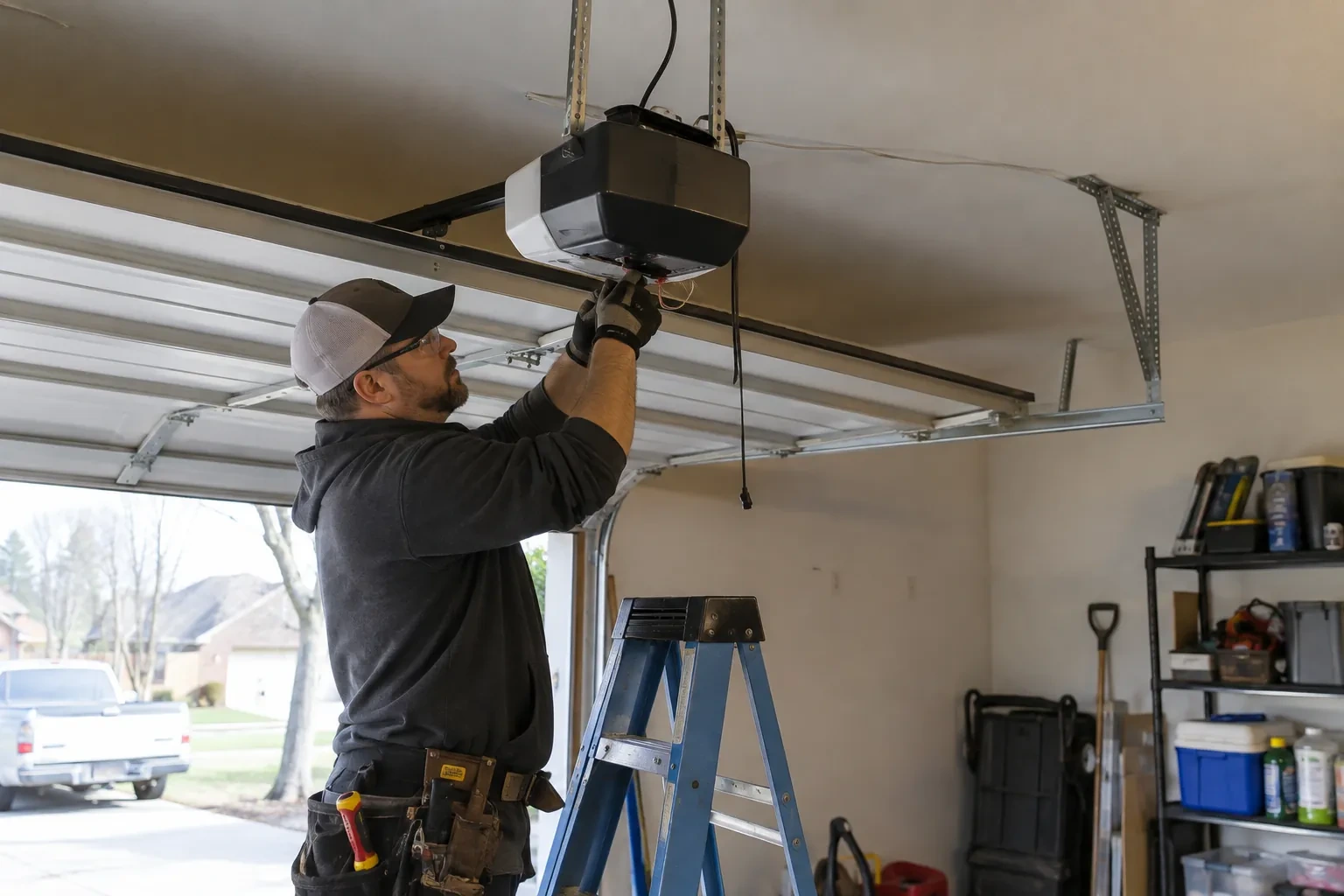
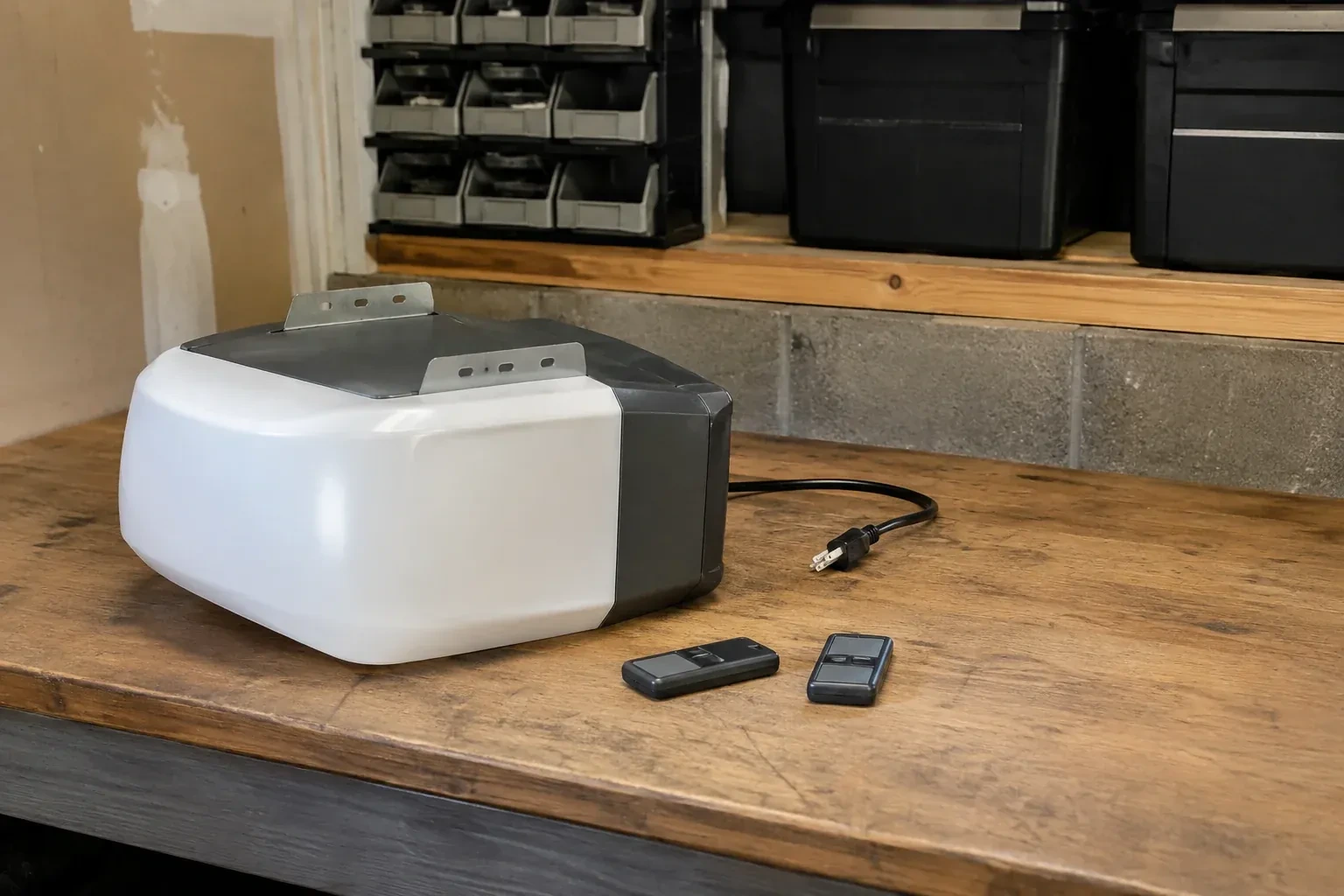
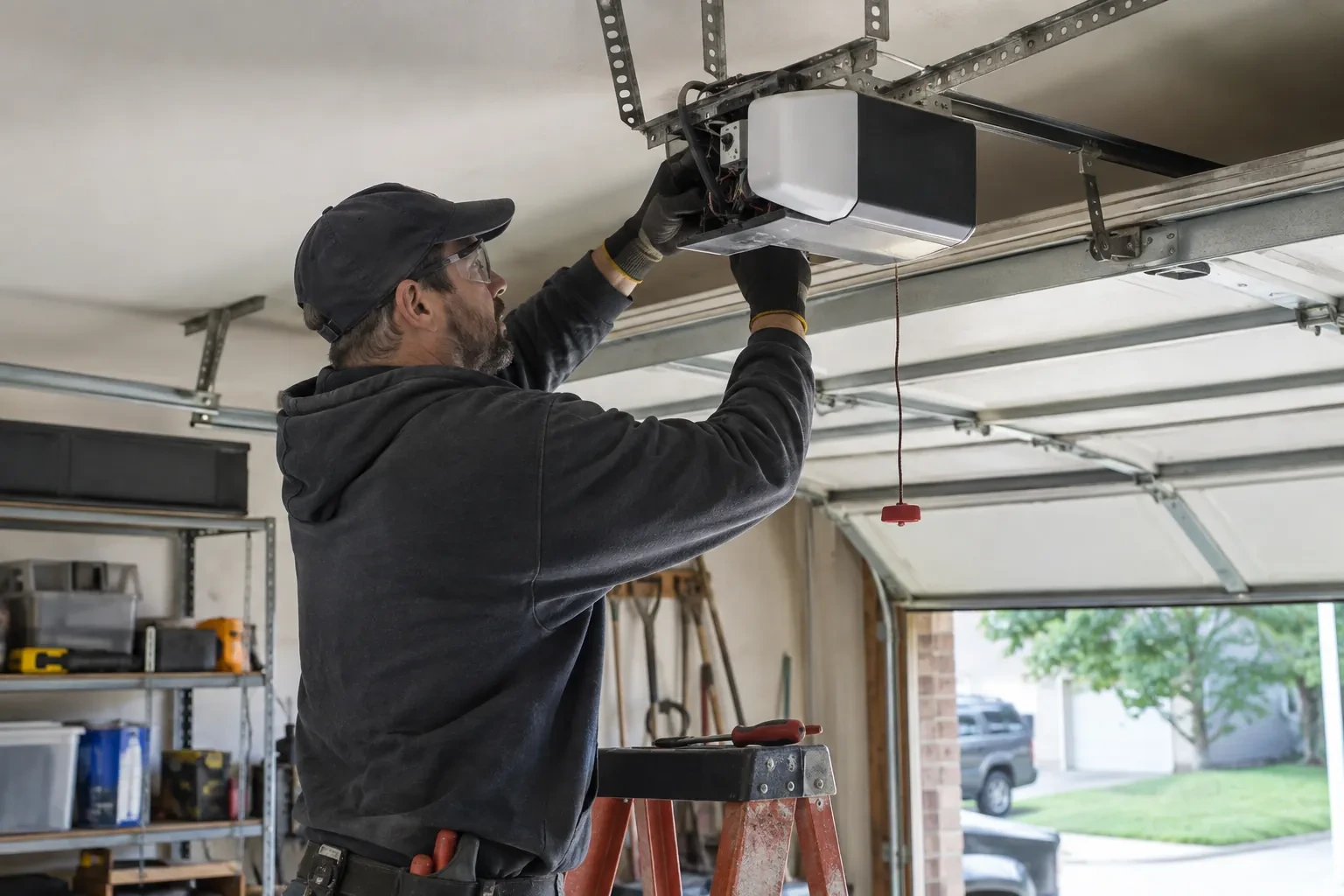
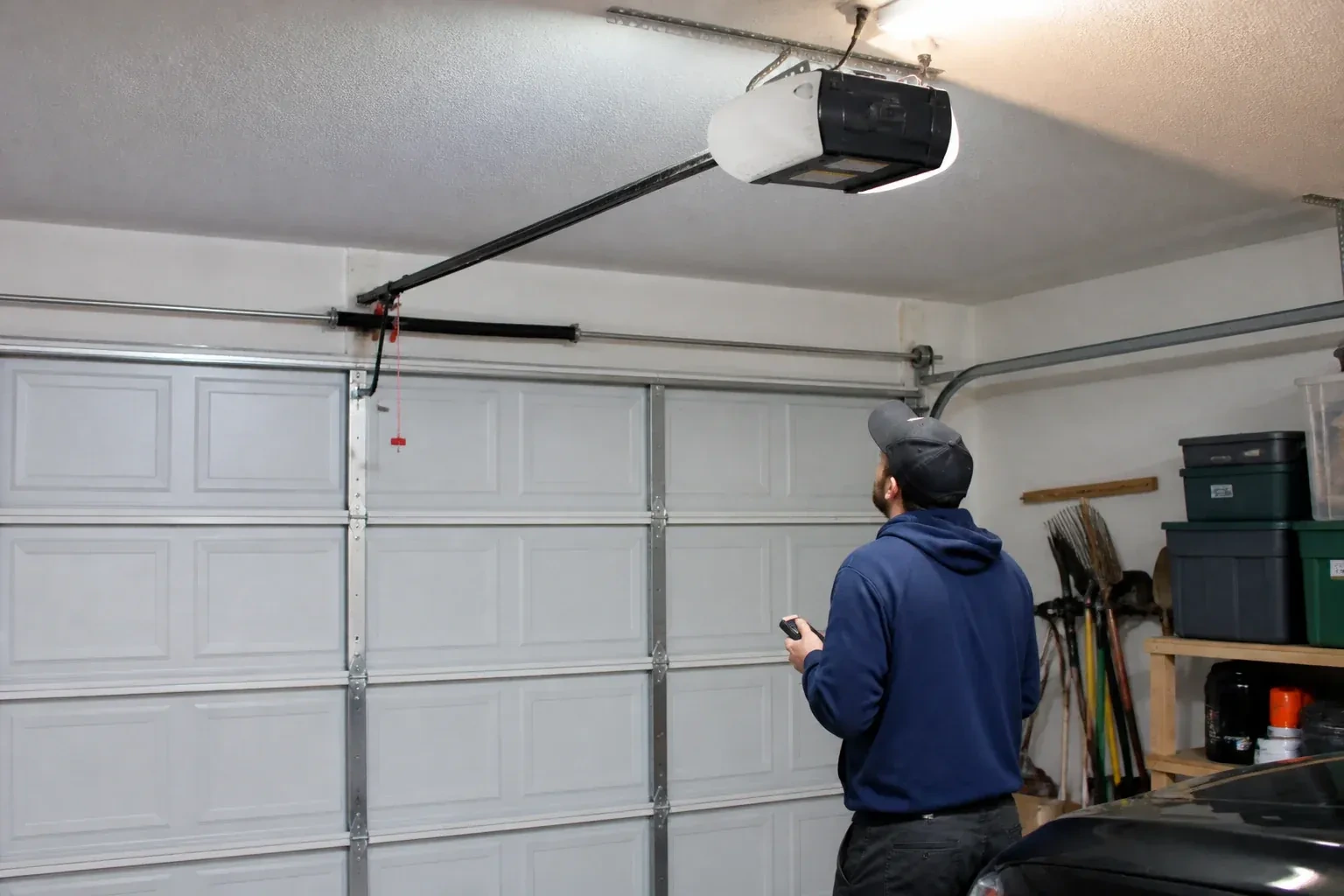
Many openers still running in Onondaga predate photo-eyes and rolling-code remotes. Replacing one brings a quieter motor, a battery backup for power cuts, sensors that stop the door for a child or a pet, and remotes that cannot be copied from the driveway, all installed and tested in a single visit. Calls from Langford, Medina Corners, Middleport, Sixty-Nine Corners and Stoneridge are covered too.
Many openers still running in Onondaga predate photo-eyes and rolling-code remotes. Replacing one brings a quieter motor, a battery backup for power cuts, sensors that stop the door for a child or a pet, and remotes that cannot be copied from the driveway, all installed and tested in a single visit. Calls from Langford, Medina Corners, Middleport, Sixty-Nine Corners and Stoneridge are covered too.
The garage door people.
We work in Onondaga the way a good tradesman works on his own house: replace parts in matched pairs so wear stays even, use the spring size the door actually needs rather than the closest one on the shelf, and tidy the garage before leaving. Small habits like these are why doors stay fixed.
For families in Onondaga, a garage door is about getting in and out of the house without fuss and about children and pets being safe around it. We pay attention to both. Every visit checks the balance, the photo eyes and the reversing force along with the repair itself, and the technician explains how the safety features work and how to test them yourself.
15years in business
24/7open every day
Told before touched. Nothing is adjusted or replaced until you have heard what we found and agreed with the plan for it.
Neat work, neat exit. New parts fitted cleanly, old ones removed, the floor and door wiped down. The garage is yours again the moment we leave.
Room to choose. We give you the practical picture and step back. Repair now, plan a replacement, or wait and watch: your call.
Request a tune-up for your garage door in Onondaga.
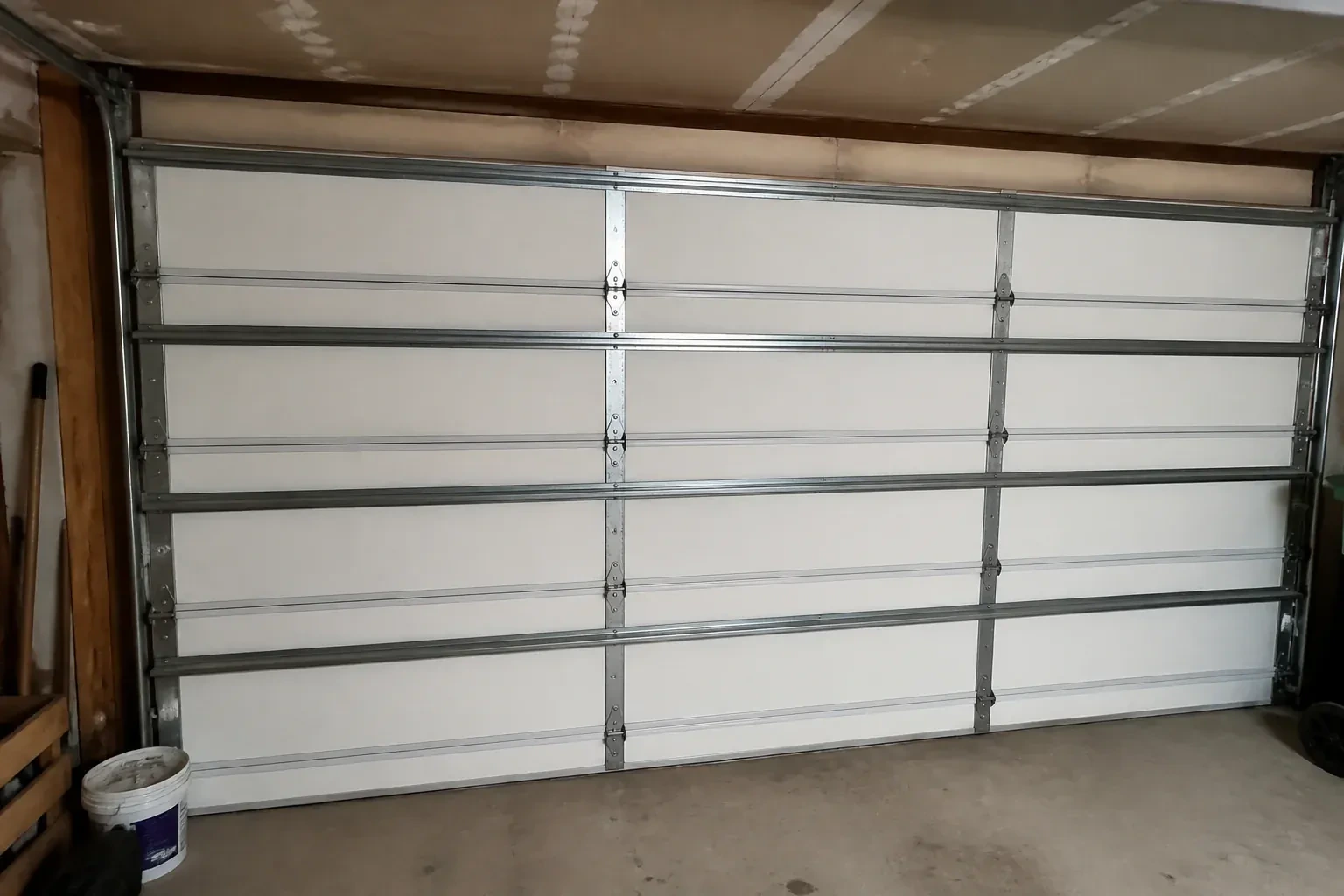
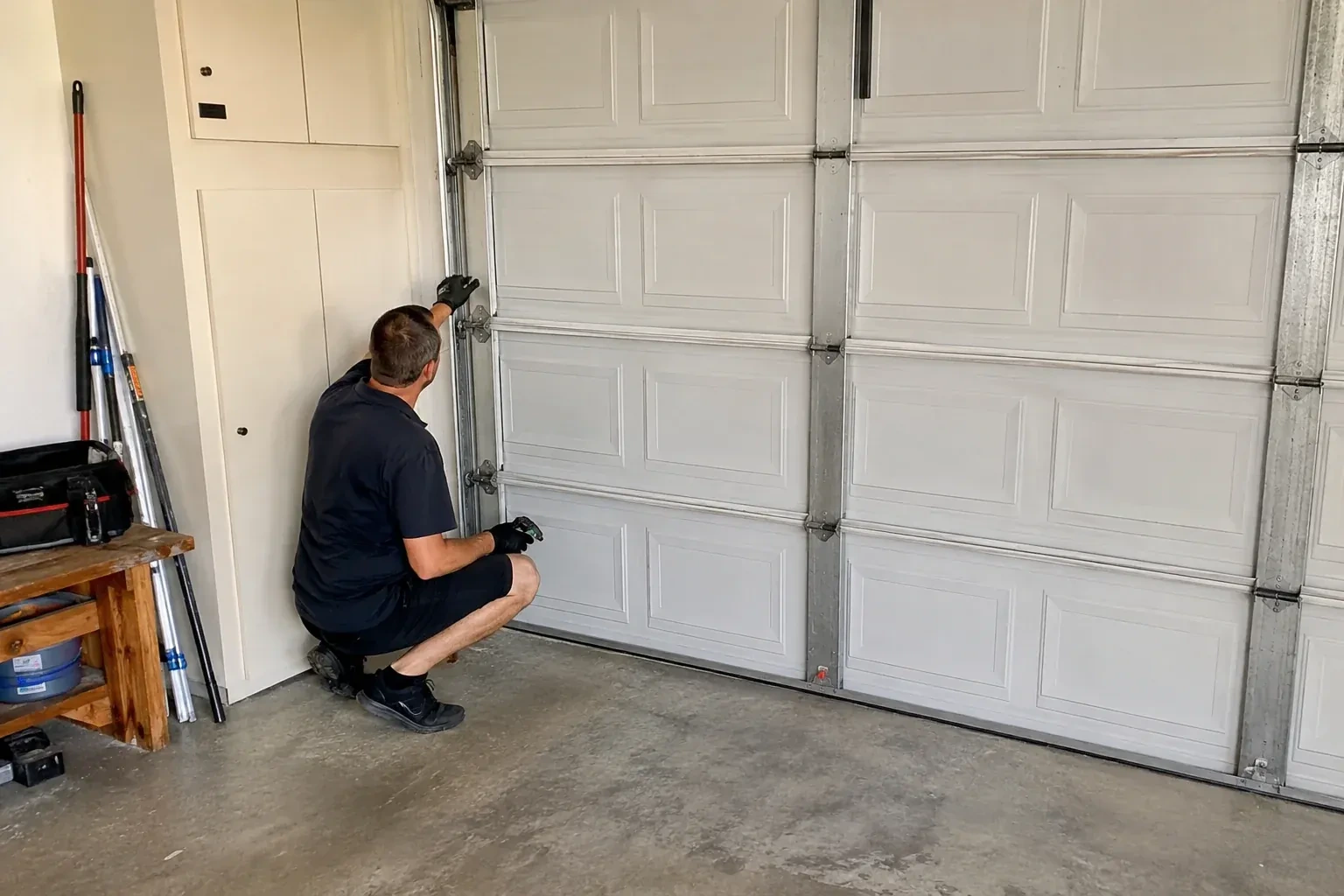
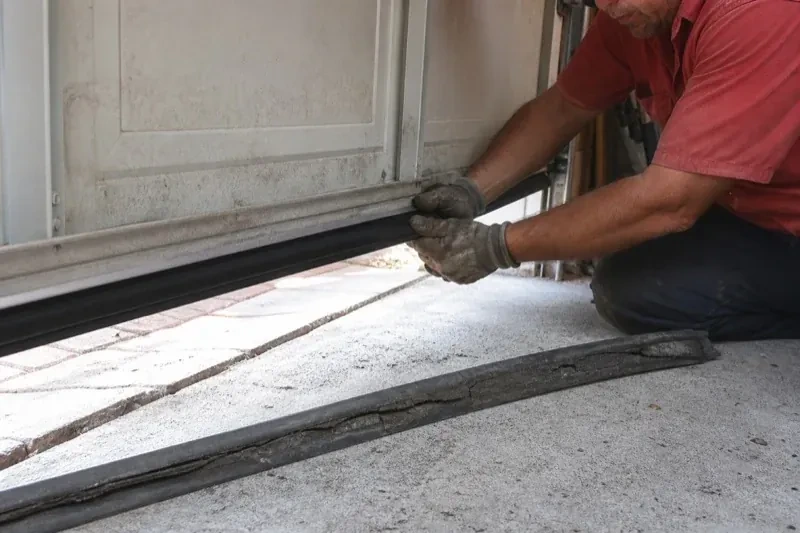
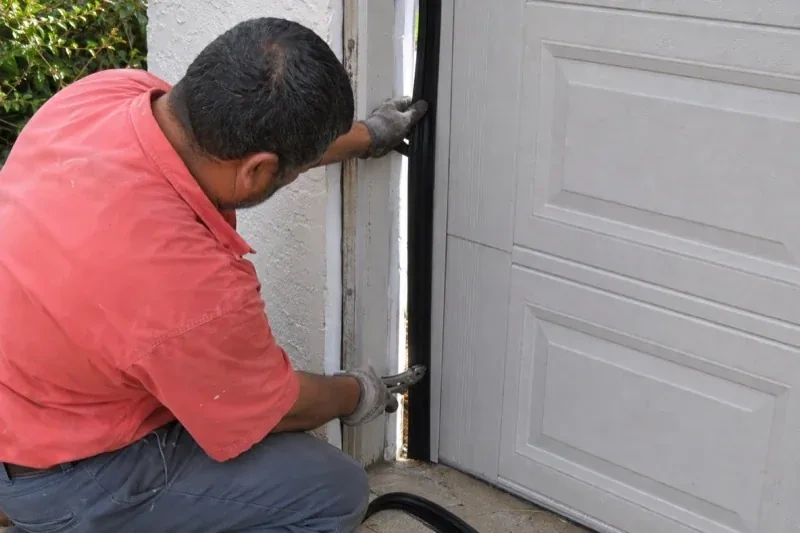
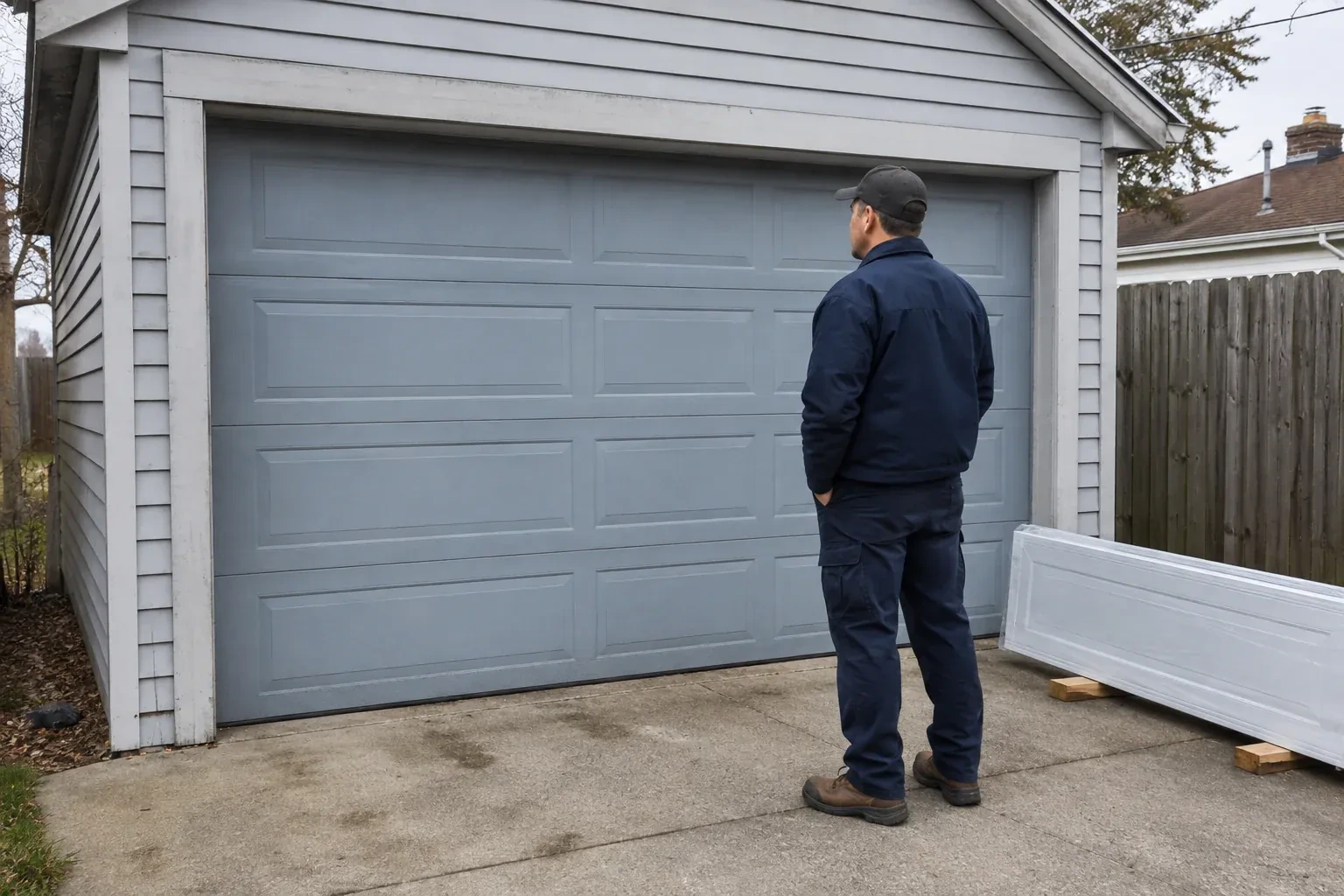
We think of garage door work in Onondaga as keeping a heavy moving object safe and smooth. That covers spring and cable work, tracks and rollers, opener force and sensor settings, seals against the weather, and complete door replacement when a repair no longer makes sense.
About 50% of homes in Brant were built in 1980 or earlier, according to the 2021 Census.
Older homes
Older garages tend to have lower headroom and narrower single openings, so replacement doors and openers are chosen to fit the space rather than the other way round. Measuring the header, side room and ceiling depth is the first step on every one of these visits.
Single-detached houses make up about 81% of homes in Brant (2021 Census).
Mostly houses
In neighbourhoods of detached homes the garage door usually faces the street and takes up much of the front of the house, so its condition shapes how the whole property looks. A straight, quiet, well-finished door is as much a part of the curb appeal as the front door.
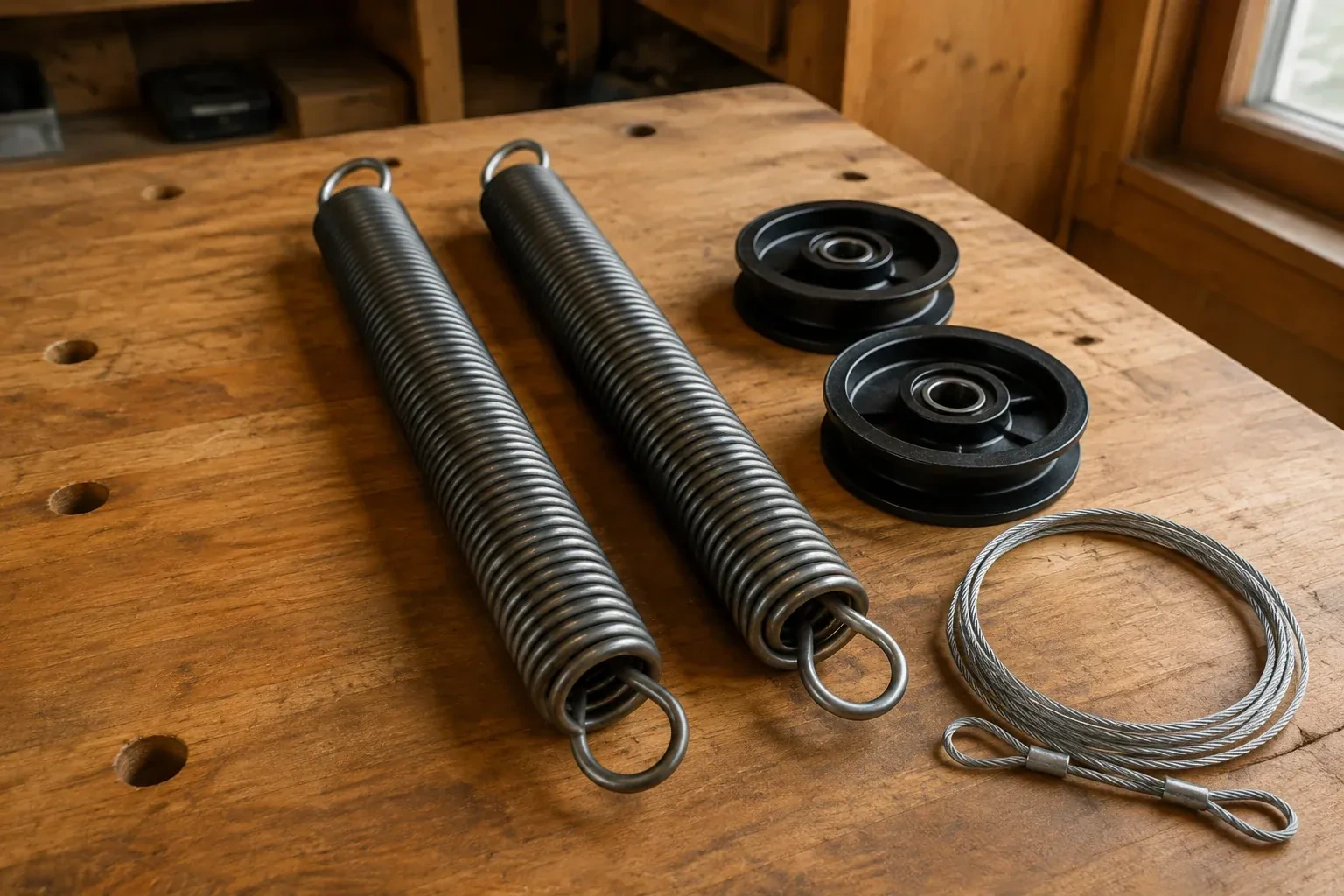
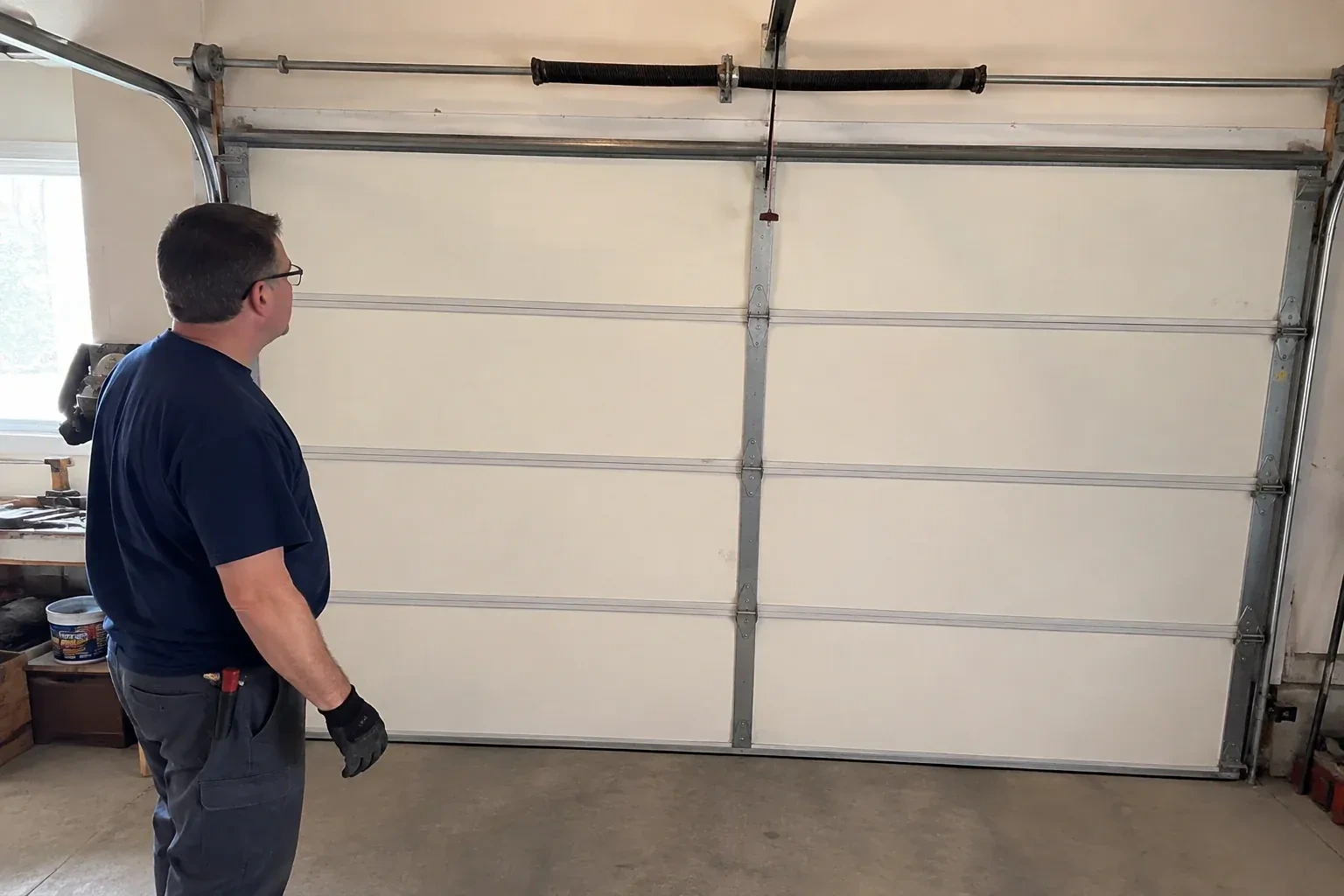
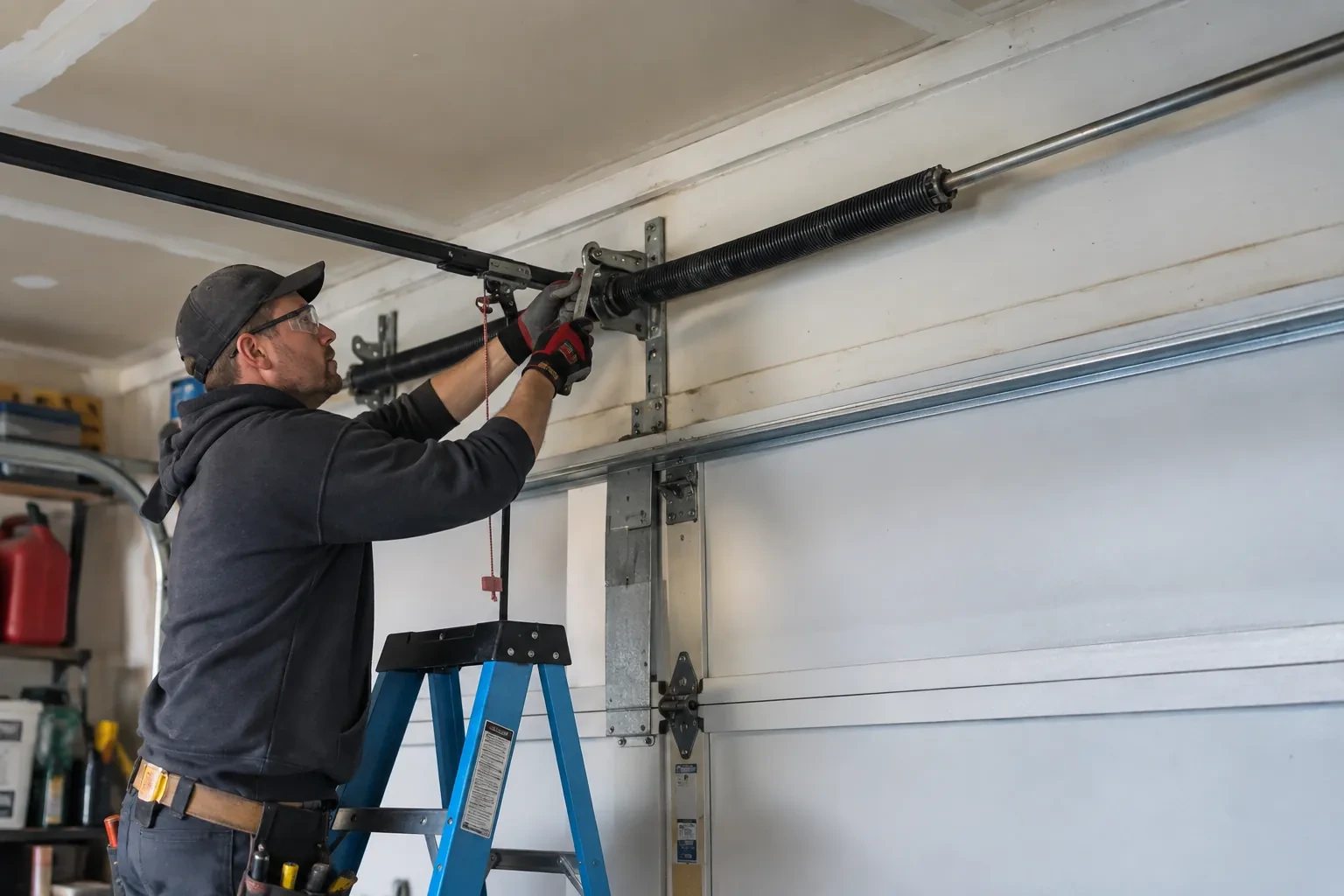
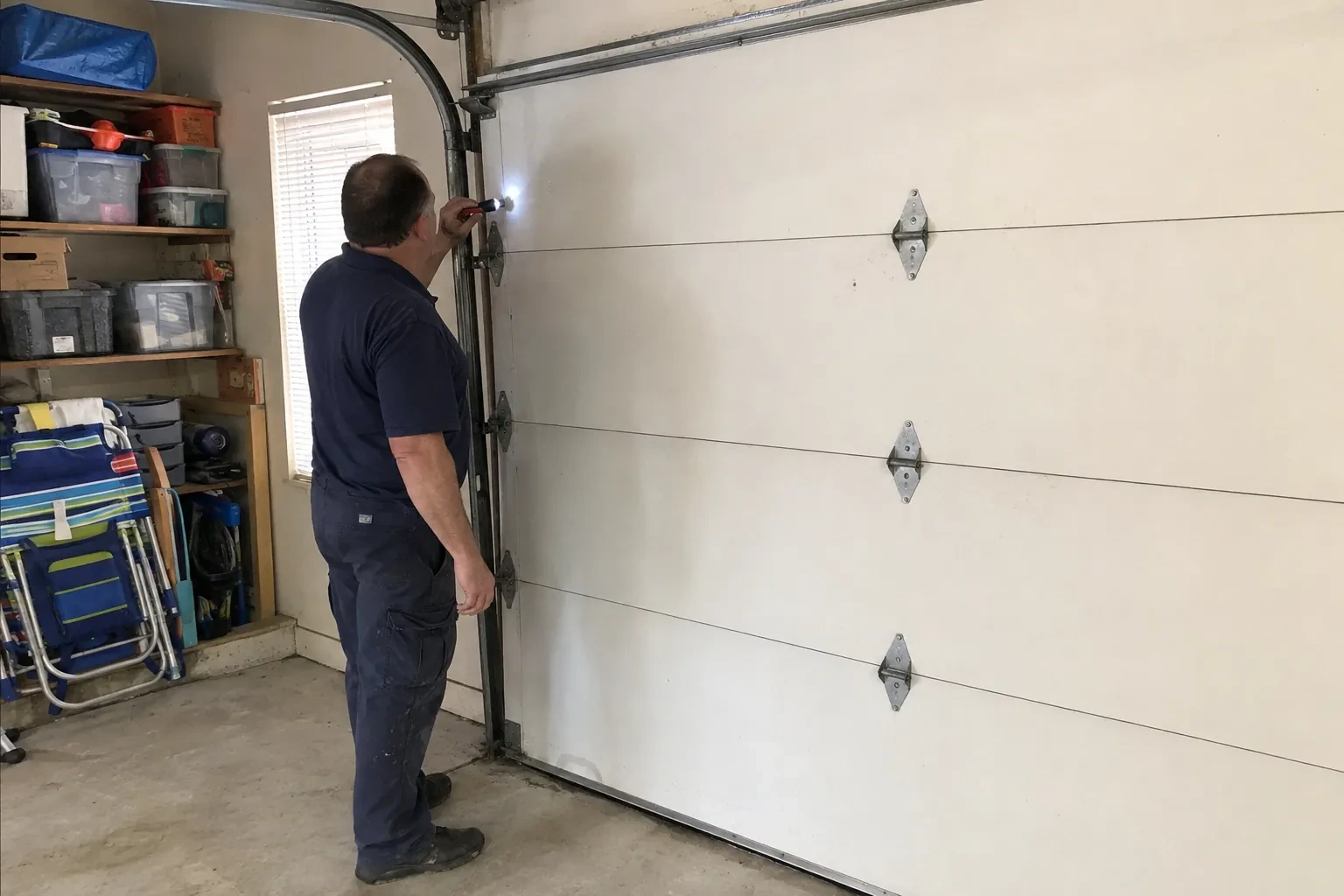
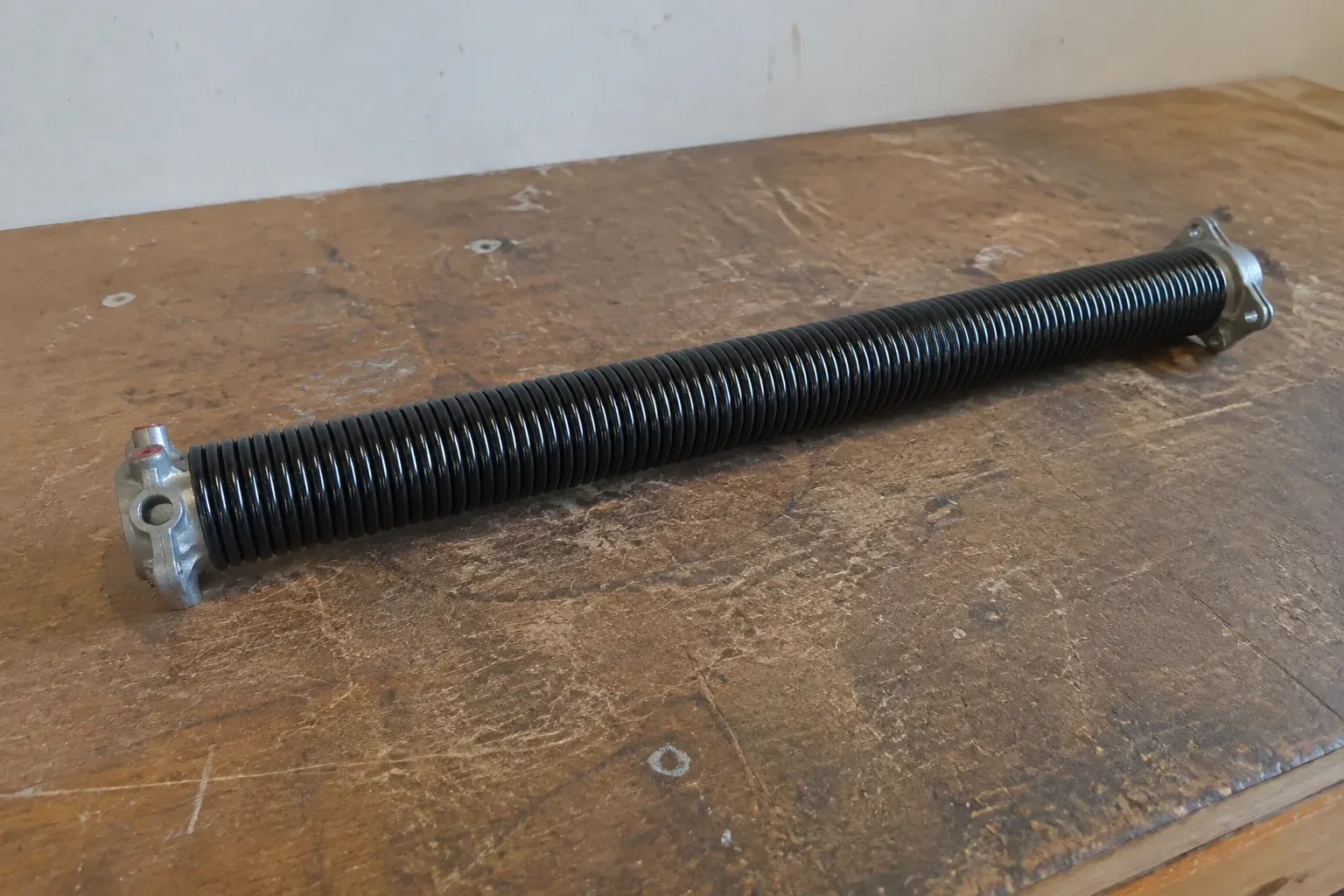
A spring can look fine and still be finished. Coils that have lost their gap, rust pitting along the wire and a door that needs a shove to start moving are all signs. Inspection is part of every hardware visit.
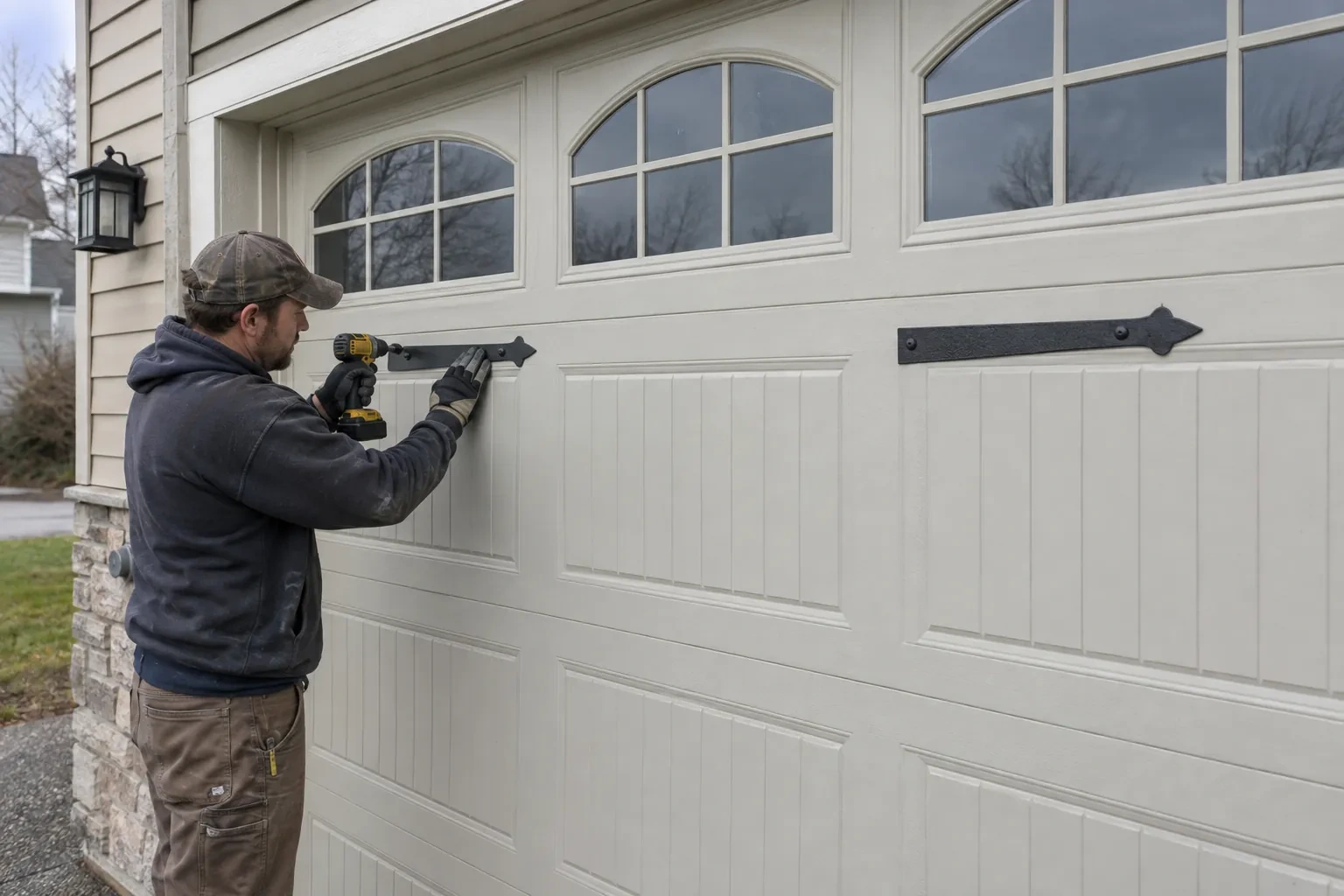
Carriage-house doors give a home the look of swinging doors while opening overhead like any sectional. They come in steel, composite and wood, and we install them with the trim and hardware that complete the effect.
The door opens about a third of the way and stops. Turning the limit screw on the head has made no difference, and the trolley seems to sit in the wrong place along the rail when the door is fully closed.
After the power came back you pulled the red cord to get the car out. Since reconnecting, the door stops short of the floor, and no amount of turning the limit adjustment brings it the rest of the way down.
Press the button and the motor hums, but the door stays exactly where it is. Under the housing there is a dusting of white plastic shavings, the sign of a stripped drive gear, and this is the second time it has happened.
Someone backed the car in a little too far, a bin or a bicycle brushed the track, and since then the door starts to close and comes back up. One sensor now sits at a slightly different angle from the other.
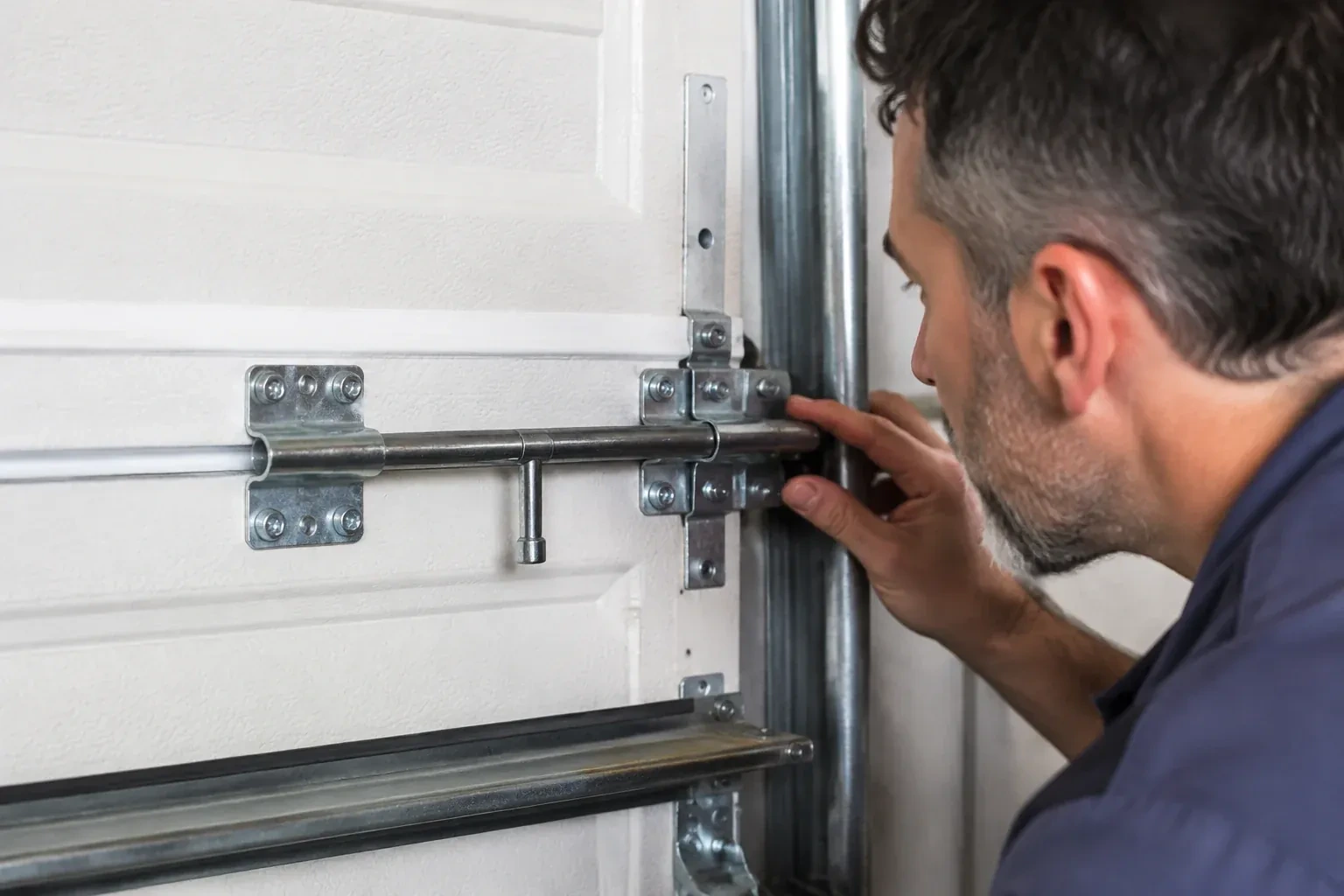
Your garage is detached and has no side door. The remote is dead, the keypad is dead, and the small round lock in the top panel is meant to be your way in.
Which fix fits?
You moved in a few months ago and have no idea when the garage door was last looked at.
WhyChanging from two single doors to one double door affects more than curb appeal.
An entrance. Not an afterthought.
1/10Garage Door Tune-Up
You moved in a few months ago and have no idea when the garage door was last looked at. The previous owners left the remotes on the counter and no paperwork, and the door works, but it works loudly and unevenly.
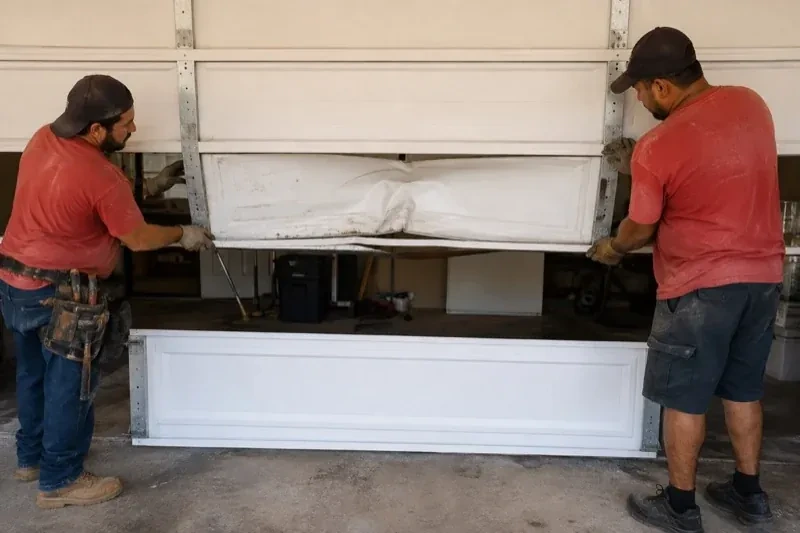
The top section has developed a bend where the opener arm pulls on it. On the way up it flexes visibly, the door hesitates near the top of its travel, and daylight shows through the joint below it when the door is closed.
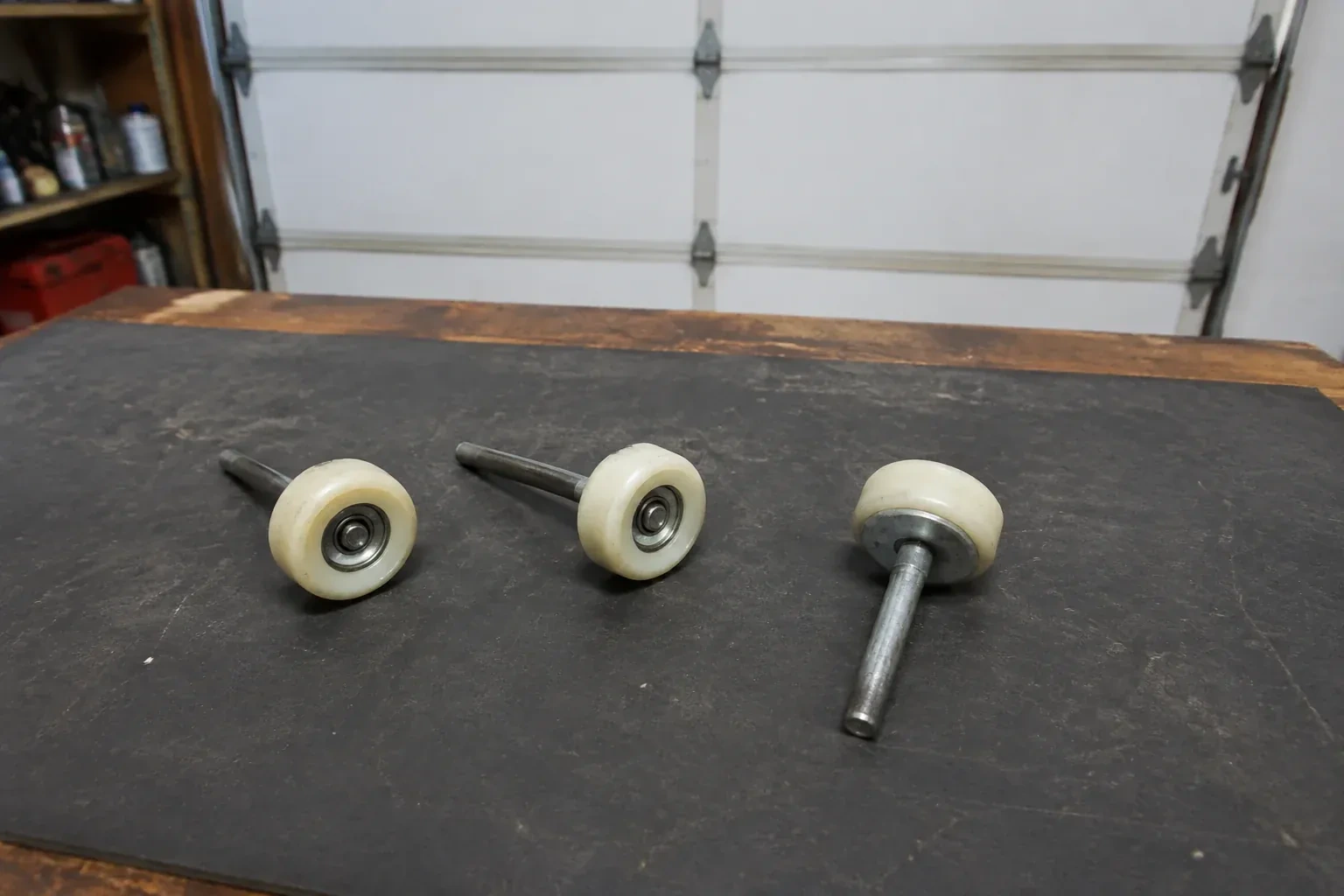
The door is the one the builder installed and has never had a part changed. It works, but it clatters, the wheels are hard white plastic with no bearings in them, and the opener sounds like it is labouring more each season.
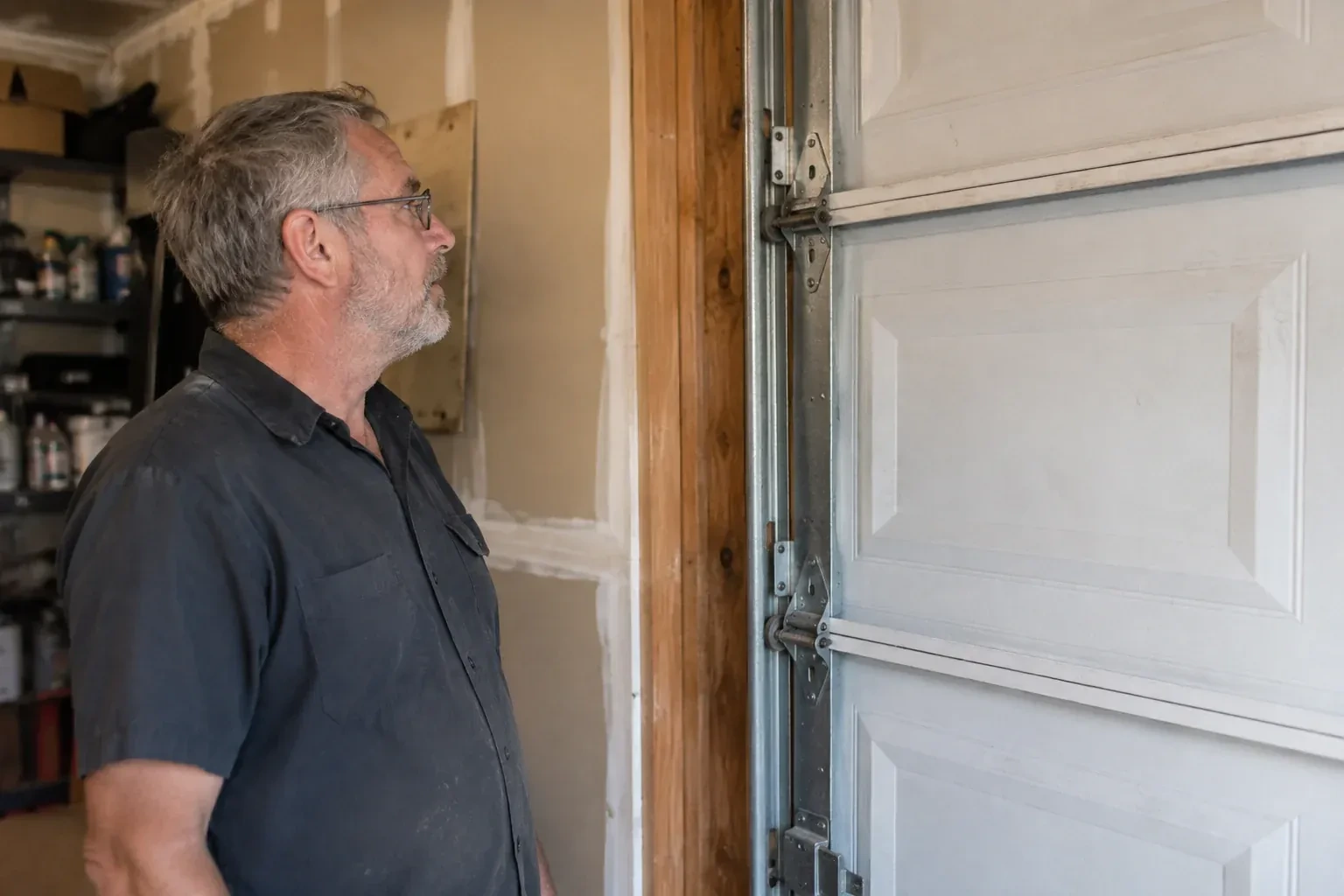
Halfway up, the door lurches and one roller rides onto the lip of the channel. Near the curve the track looks wider than the rest, and the door hesitates in the same place on the way down.
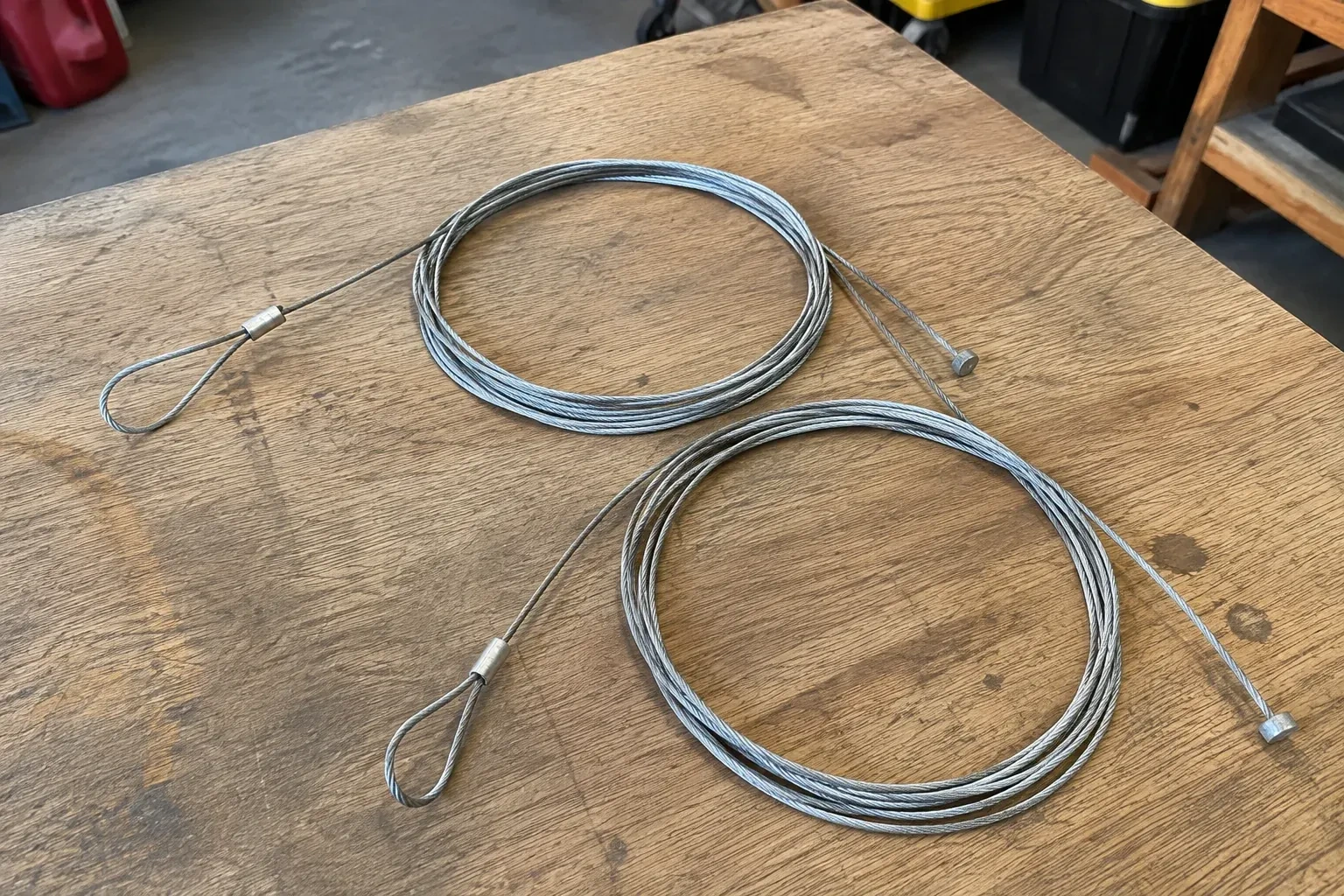
Standing inside with the door closed, you notice the cable on the right side near the floor has gone fuzzy. A handful of broken wires stick out like a bottle brush and the steel underneath is brown.
You pulled the red cord to open the door during a power cut and it barely moved. Lifting it took your whole weight, and when you let go it came down hard. It used to float up with one hand.
After the power came back you pulled the red cord to get the car out. Since reconnecting, the door stops short of the floor, and no amount of turning the limit adjustment brings it the rest of the way down.
During the ice storm the power was off for two days. You came home in the dark, found the door dead, and had to climb out of the car to pull the red cord in the cold. A door that keeps working through an outage is now on the list.
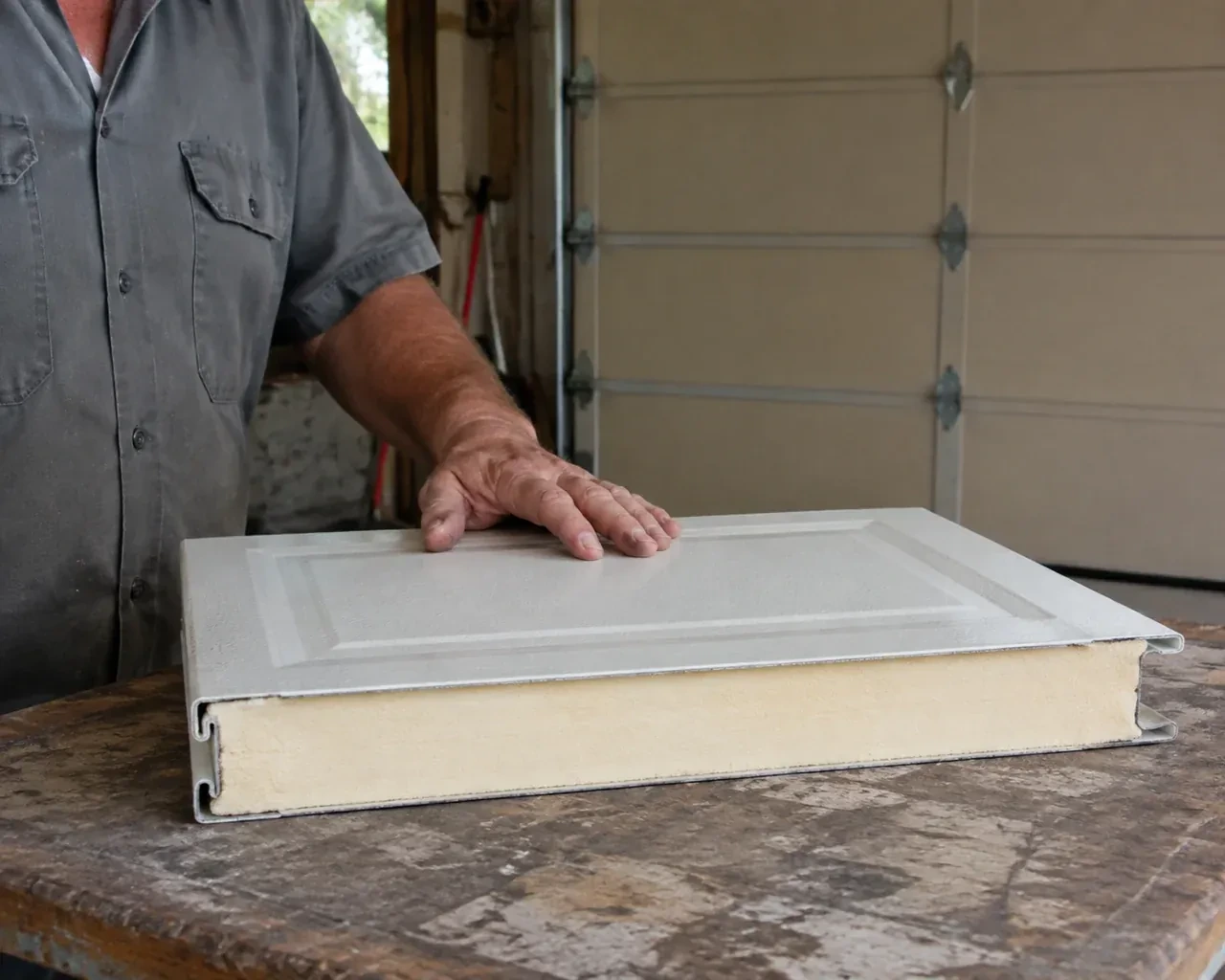
The opener strains as the heavy older door starts upward, and manual movement feels uneven. A new insulated assembly calls for counterbalance hardware matched to its actual weight and a compatibility check for the operator.
Strong gusts make the centre of your wide garage door bow inward and the rollers chatter in their tracks. Once the weather settles, the panels look straight again, but the movement has made you question how the opening is reinforced.
Usually, yes, and often dramatically. Most garage door noise comes from dry hinge pins, dry roller bearings and hardware that vibration has loosened, and those three are exactly what a tune-up addresses. Some noise comes from parts that have worn, such as a roller gone out of round or a chain that has stretched, and the technician tells you which sounds were settled by maintenance and which point to a part worth replacing, with a separate quote for that.
Why is the bottom section handled differently from the others?
The bottom section is where the lift cables attach, through the bottom brackets at each end, and those cables are under the full pull of the springs. Before the brackets come off, the springs have to be unwound or unhooked so the cables go slack. The bottom section also carries the seal retainer and astragal that meet the floor. After the new section is in, the springs are re-tensioned and the balance reset.
Can worn rollers make the door come off its track?
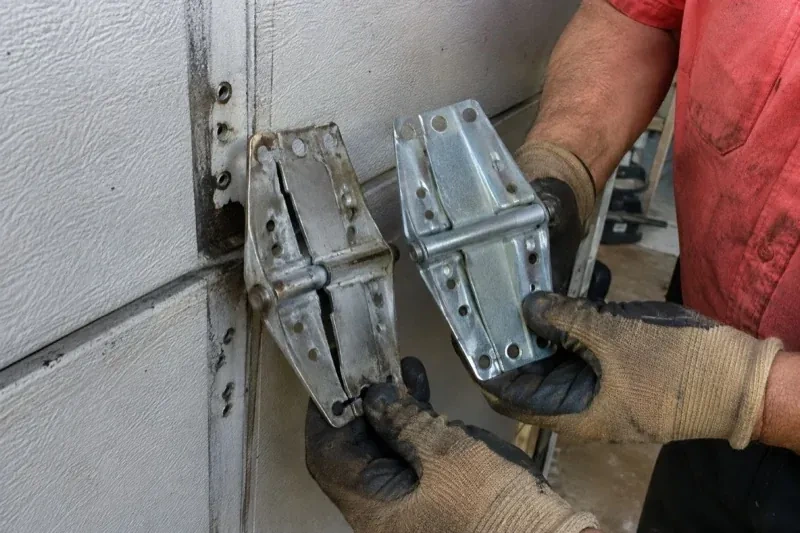
Yes, and it is one of the main reasons to replace them before they fail. A wheel worn oval, a bent stem, or a short stem sitting loose in a double hinge lets a section drift until the wheel climbs onto the track lip; from there a bump or a gust can carry it out entirely. A door hanging crooked is a far larger repair than a set of rollers. Fresh, correctly sized rollers seated in a squared track are what keep the door where it belongs.
Why is the horizontal track sagging?
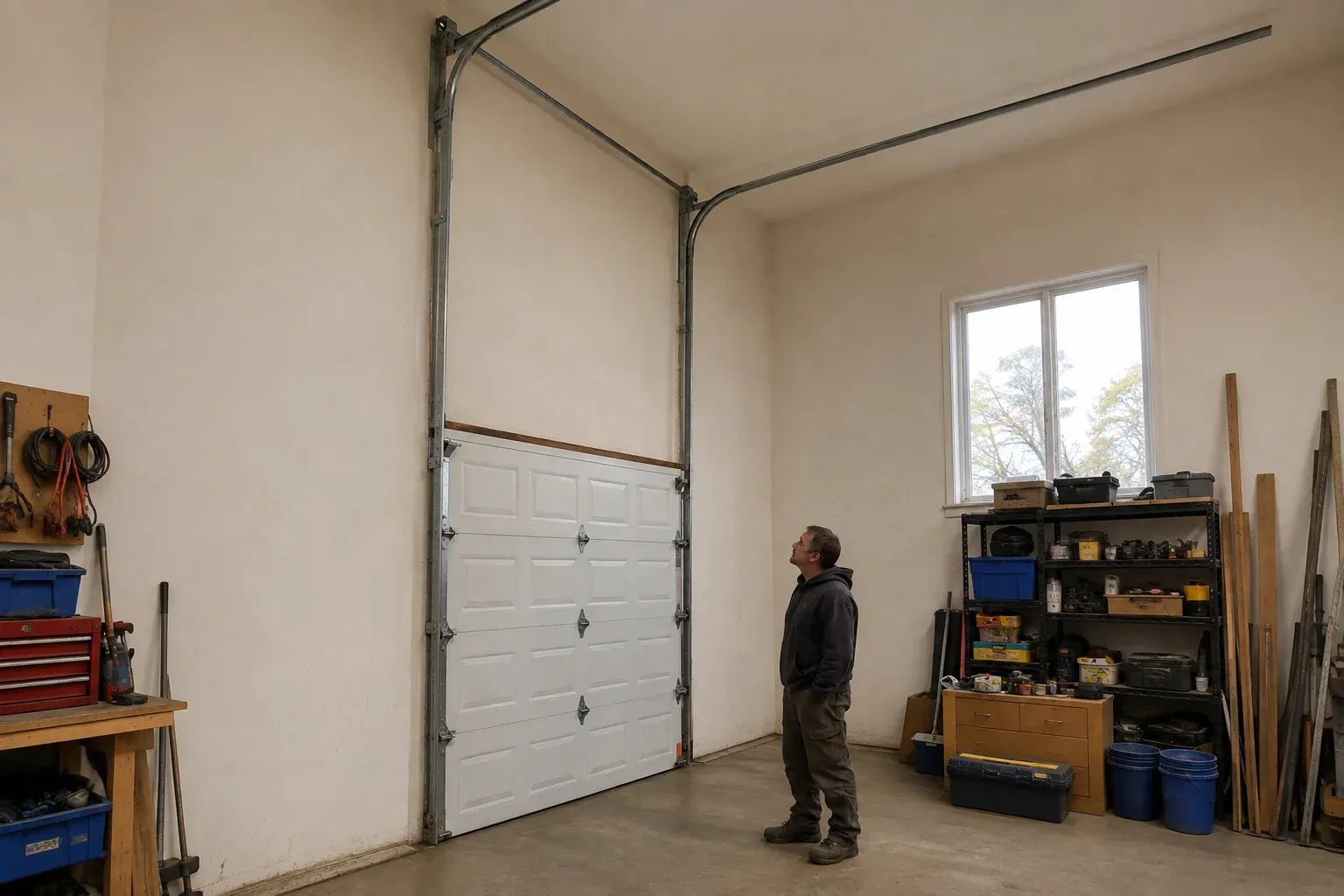
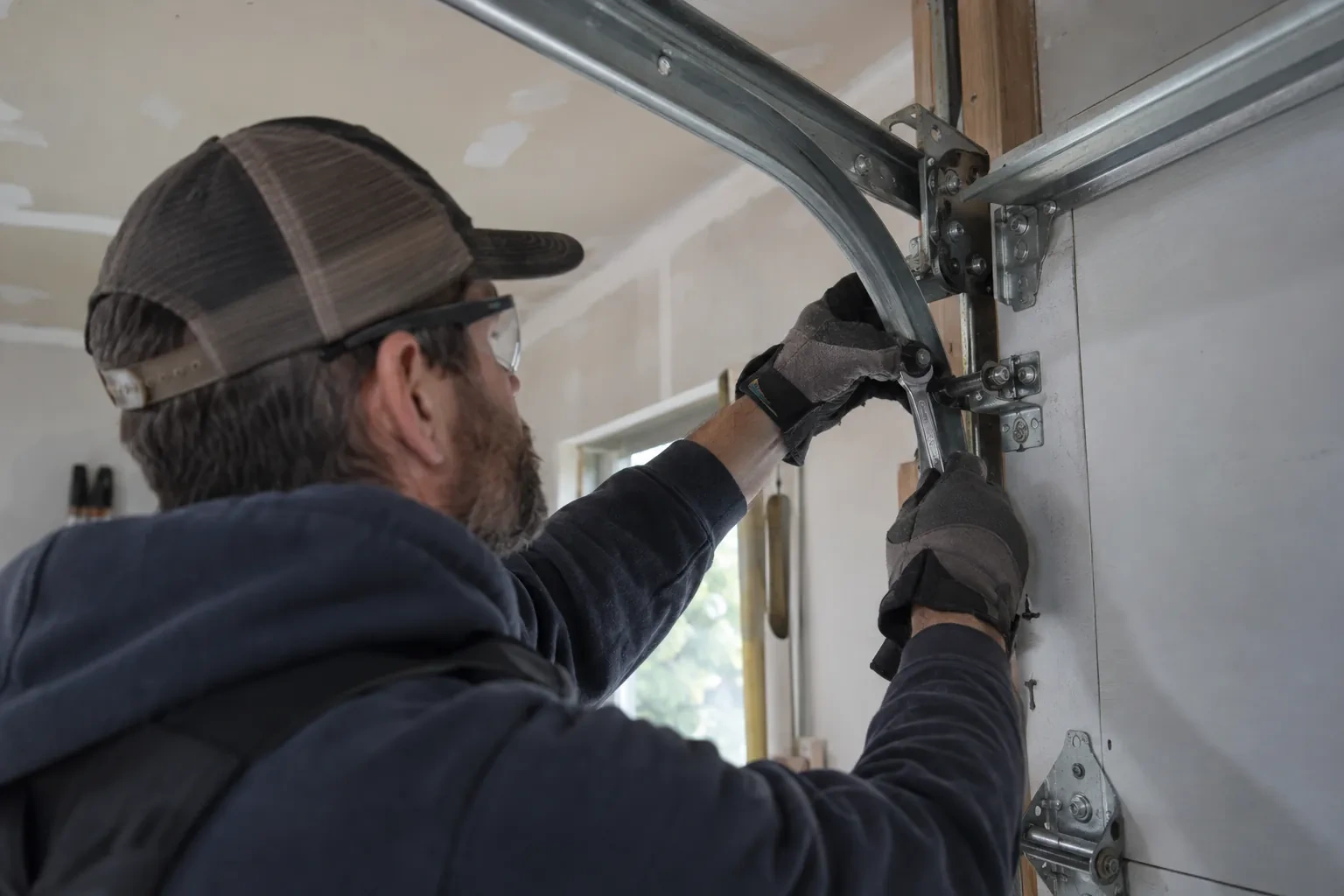
The horizontal run hangs from the ceiling on back hangs of perforated angle, and it sags when a hanger bends, its screws pull out of a joist, or it was only ever fixed into drywall. A sagging hanger droops that run out of level or its intended pitch. The fix is a straight or new hanger screwed into solid framing, with the run set to the manufacturer's specified pitch and matched to its partner; a door that drifts back toward the opening once raised is a separate, balance-related symptom.
Can a cable be too long or too short for the door?
Yes, and both cause trouble. A cable that is too long runs out of drum groove and starts a second layer over the first, which wears it and throws the balance off near the top of travel. A cable that is too short leaves the door hanging out of level or the drum without a secure wrap. The correct length comes from the door height, the drum and the lift type, so the technician measures rather than guesses.
Only one spring broke. Why replace both?
The two springs are the same age and have stretched the same number of times, so the one still hanging is close behind. There is also a balance reason: a door lifts level only when both sides pull equally, and a new spring beside a worn one lifts its corner first and twists the door. Fitting a matched pair sets both sides the same and avoids a second visit a few months on.
I pulled the red cord during a power cut. Could that have caused this?
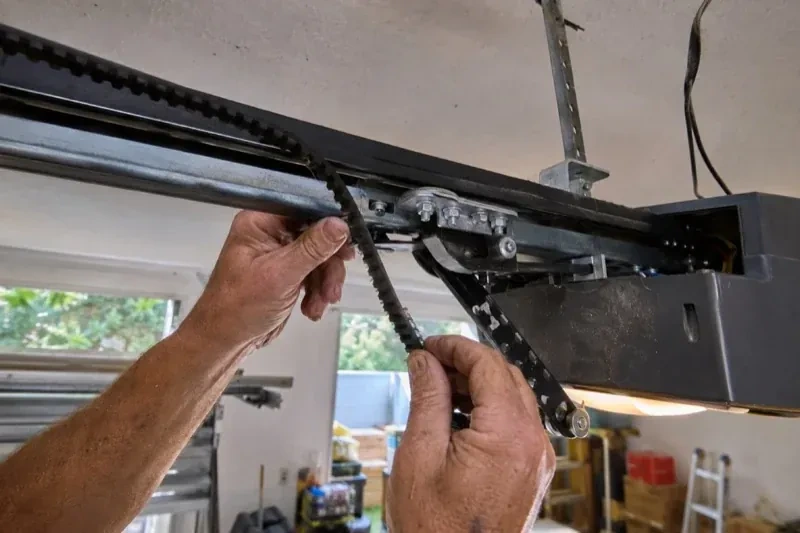
It can, if the door was open or out of balance when it was released. The release itself disconnects the trolley from the belt, so a falling door does not throw its weight onto the drive; the real risk is the door itself crashing down and damaging the tracks, hinges or panels. Nothing about the cord itself is harmful; it is designed to be used. The habit to keep is to release the door only when it is closed.
How do I test the safety reversal myself?
Two checks, once a month, each starting with the door fully open. For the first, set a scrap of 2x4 flat on the concrete where the door will land and press the close button; the moment it meets the wood it should climb back to the top. For the second, start the door closing and pass a broom or your arm across the low sensor beam; it should reverse just the same. Any hesitation means a small adjustment is due.
What safety checks are done after installation?
The installer first checks manual balance, cable tracking, roller travel, track supports, fasteners and the fully open and closed positions. If an operator is connected, complete powered cycles follow. Photo-eye response, contact reversal according to the operator instructions, wall controls and emergency release are demonstrated. The customer also receives guidance on safe gripping points and keeping clear of section joints.
What does wind-rated mean for a garage door?
It means a documented door configuration is designed and evaluated to resist stated inward and outward wind pressures at a particular size. The description covers the assembled system: sections, reinforcement, tracks, rollers, hinges, brackets, fasteners, and attachment details. Suitability still depends on matching that configuration to the opening and project criteria.
Request a visit
We work in Onondaga the way a good tradesman works on his own house: replace parts in matched pairs so wear stays even, use the spring size the door actually needs rather than the closest one on the shelf, and tidy the garage before leaving. Small habits like these are why doors stay fixed.