Openers · Onondaga
Garage Door Opener Replacement in Onondaga
Press the button and the motor hums, but the door stays exactly where it is.
In plain words
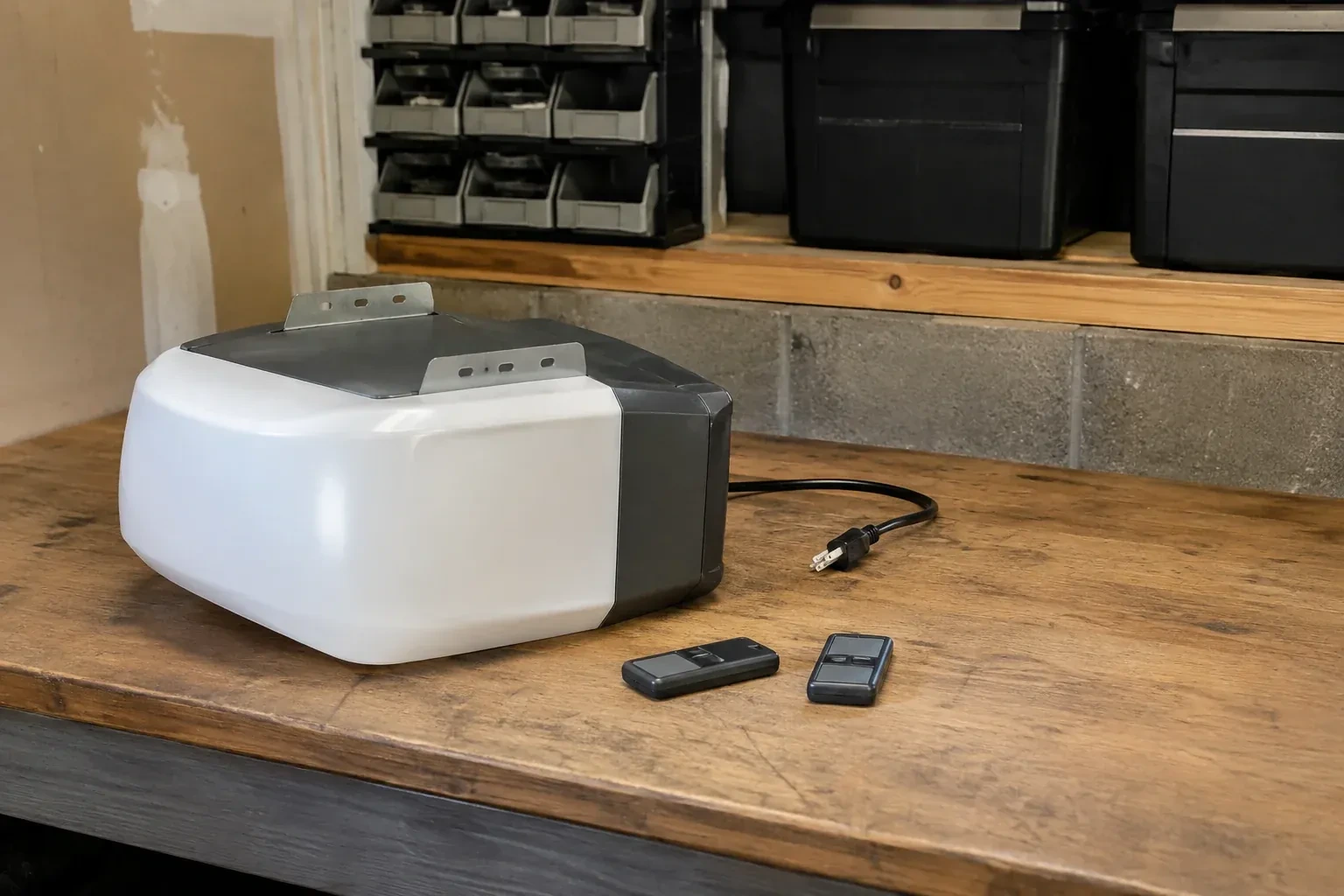
Choosing the drive is the decision that shapes daily life with the new opener. A chain drive is the familiar workhorse, sturdy and simple, with a little more sound. A belt drive runs on a reinforced rubber belt and is the answer for a garage under a bedroom. Direct-drive units move the motor itself along a stationary chain inside the rail and have very few moving parts. A wall-mount operator sits at the end of the torsion shaft and leaves the ceiling completely clear. The technician matches the drive to your door's weight, your ceiling, how close the garage sits to living space and how you use the door.
How the visit goesDuring the ice storm the power was off for two days. You came home in the dark, found the door dead, and had to climb out of the car to pull the red cord in the cold. A door that keeps working through an outage is now on the list.
Garage Door Opener Replacement
How the visit goes
The rest of the door hardware
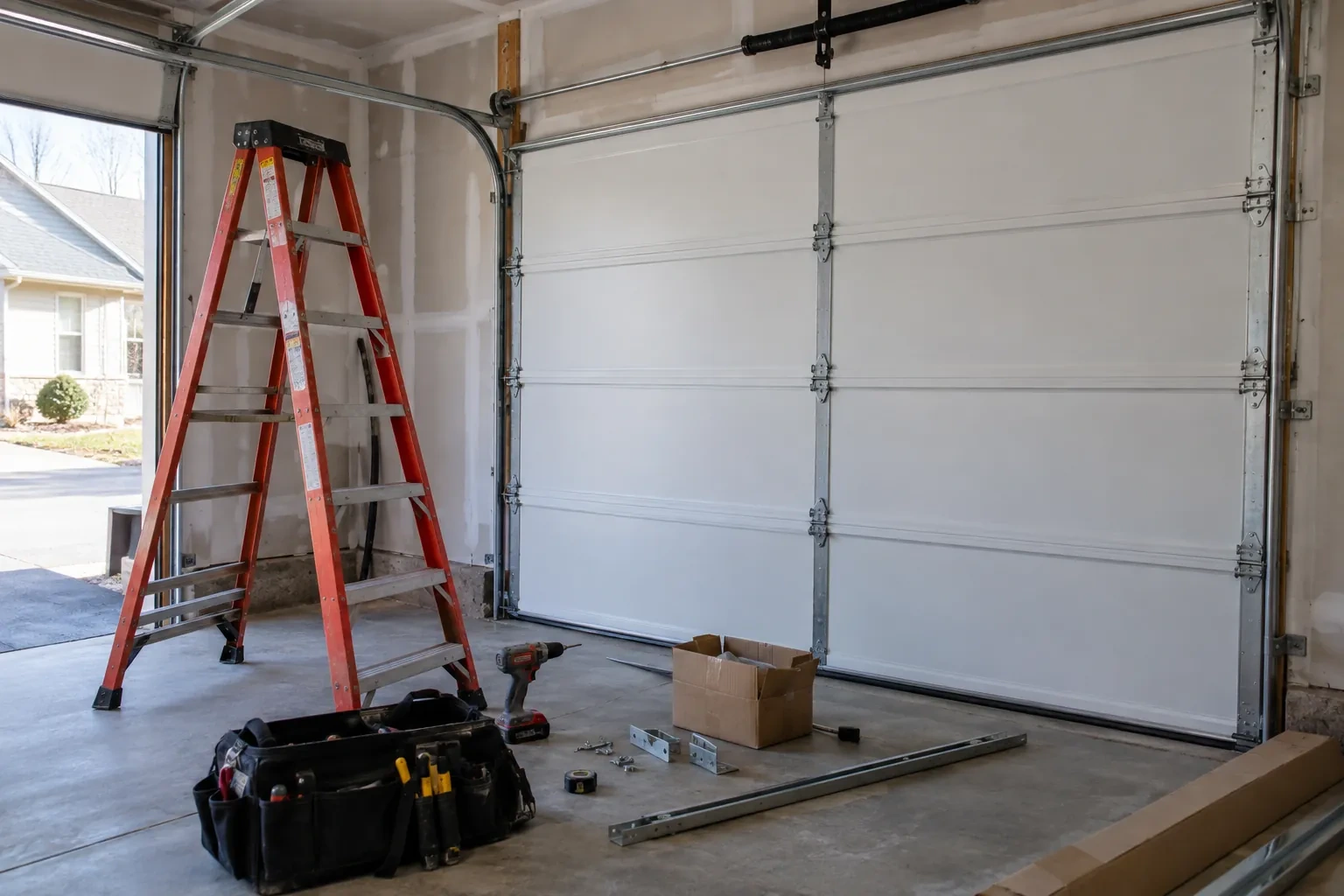
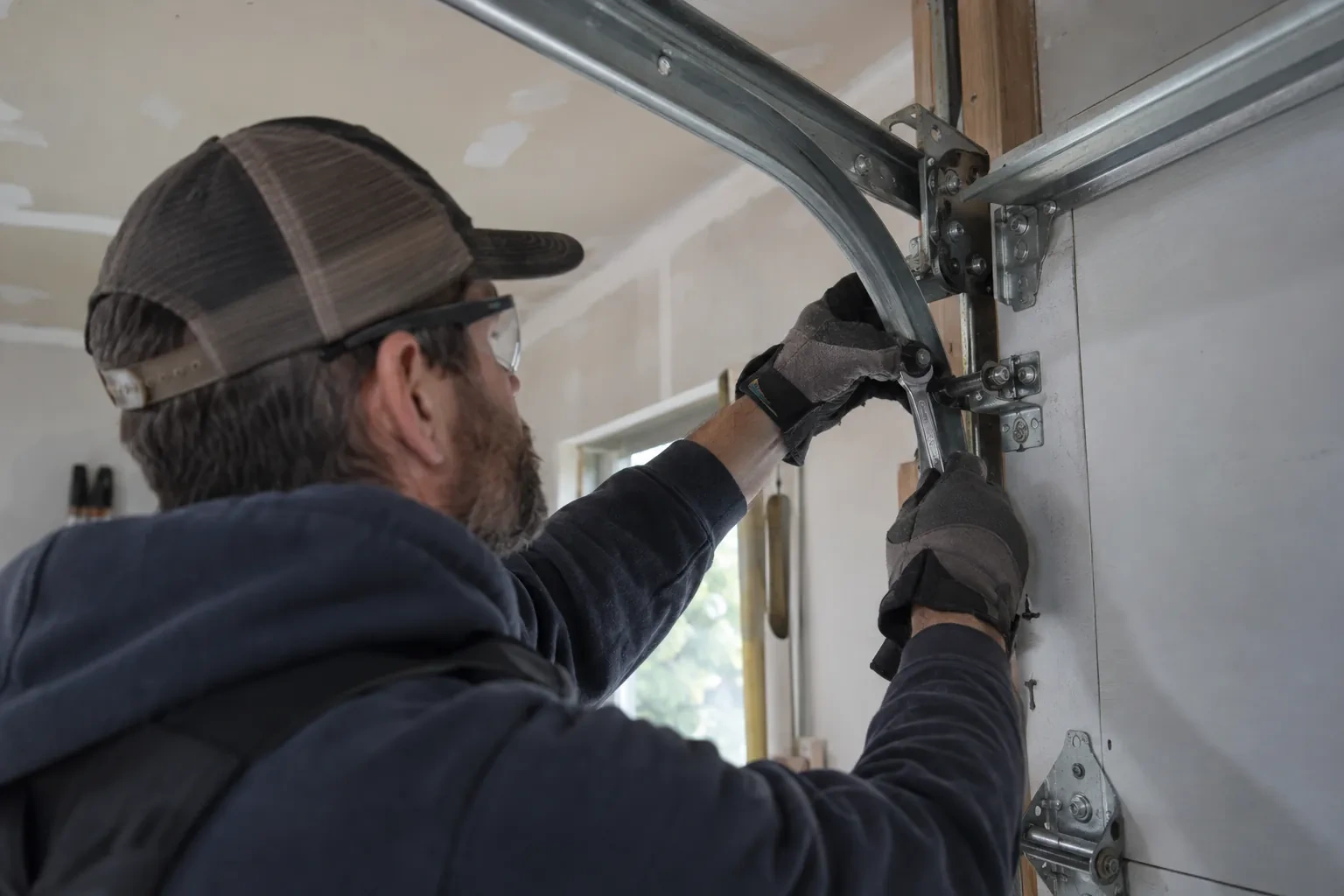
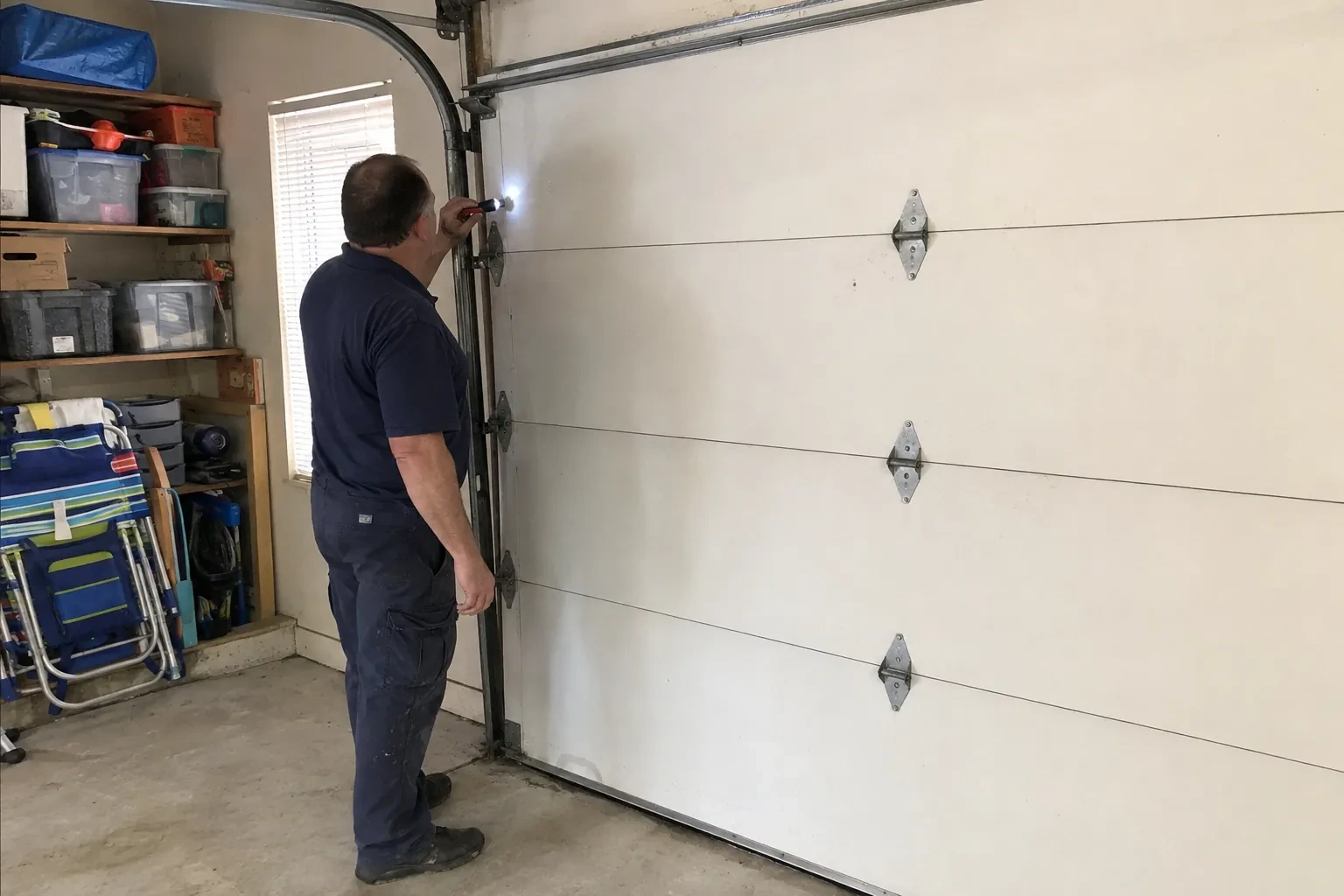
Because a new operator will run this door thousands of times, the technician gives the rest of the system a look while the door is disconnected. Rollers are checked for flat spots and worn bearings, hinges for cracks and loose fasteners, cables for fraying at the drums and bottom brackets, and track for dents, loose brackets or a misaligned curve. A door that rumbles or catches on the way up with the opener disconnected will do the same with a new one. Small hardware fixes agreed at this stage give the new operator a smooth door to work with and keep the finished result quiet.
Setting travel and force
With power on, the technician teaches the operator where the door starts and stops. Newer units run a learn cycle that measures the travel and the effort the door needs; others have open and close limit screws and force dials that are set by hand. The close limit is set so the bottom seal compresses gently against the floor without the door straining, and the open limit so the top section stops short of the header bracket. Force is set to the lightest level that moves the door reliably in the garage's normal temperature, which is what lets the operator notice an obstruction and reverse rather than push through it.
Ready for the next outage
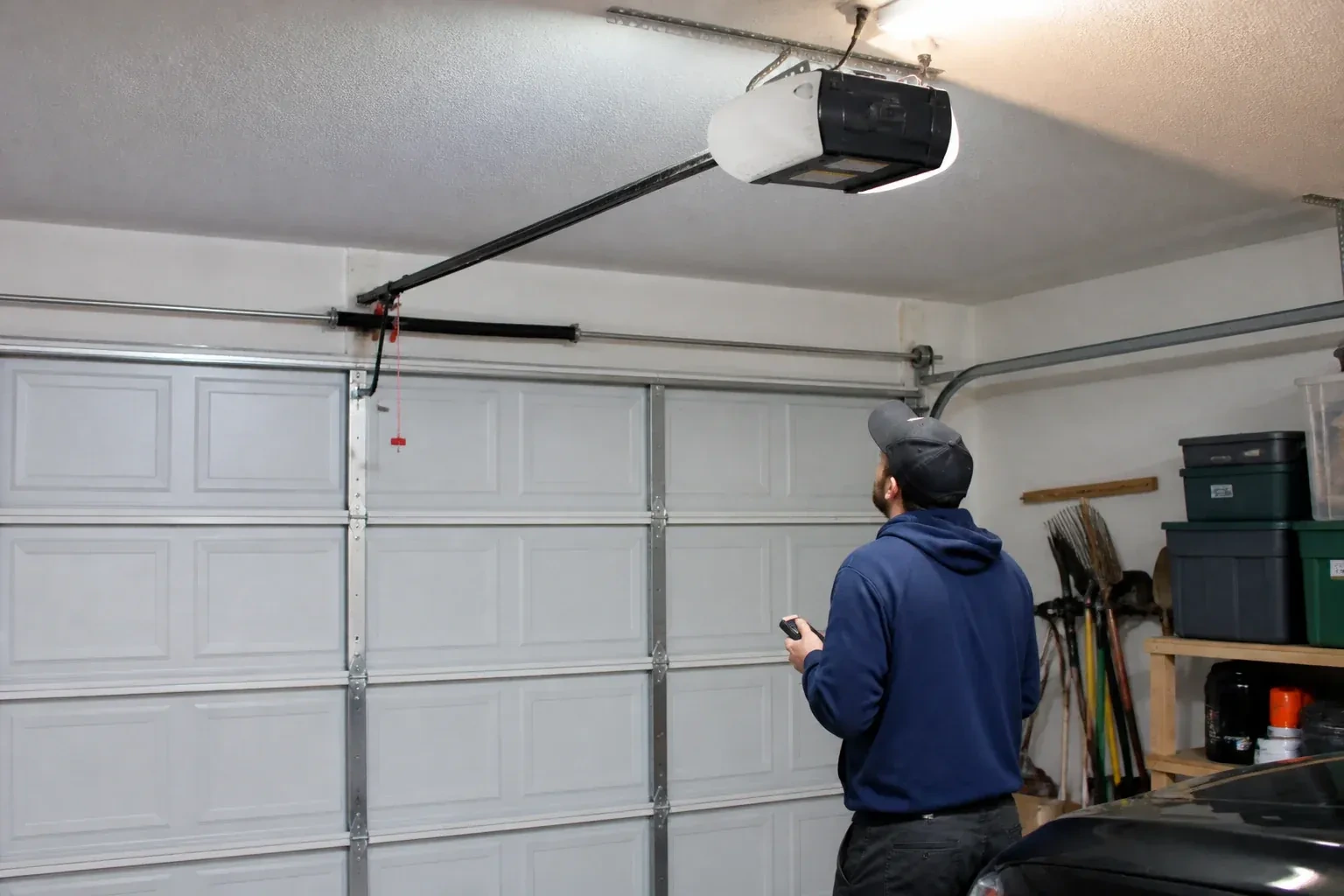
If you chose battery backup, the door keeps opening and closing on stored power when the lights go out, and the operator tells you with a beep or a light when the battery is low or due for renewal every few years. Whether or not you have a battery, you now know where the red handle hangs and what it does: a pull detaches the door from the trolley so it can be lifted by hand, and reconnecting is either a second pull or simply running the operator, depending on the model. Practise it once with the door closed so that the first time you need it in the dark is not the first time you try it.
Garage Door Opener Replacement
In the van
Opener head unit
Chain or reinforced belt
Low-voltage bell wire and staples
Rail sections and trolley
Backup battery
Garage Door Opener Replacement
What affects the quote
Ceiling height and mounting
A head unit hung from a high or cathedral ceiling needs longer angle iron and more time on the ladder than one mounted under a standard joist, and a finished drywall ceiling takes more care to fasten into.
Detached or unheated garage
An operator rated for deep cold, a cold-rated lubricant and sometimes a heavier battery are chosen for a garage that sees winter temperatures, and those choices show in the equipment list.
Drive type
A chain drive, a belt drive, a direct-drive unit and a wall-mount operator sit at different points on the equipment list, and the choice is shaped by noise, ceiling space and door weight.
What to have ready
- How much room is there between the top of the open door and the ceiling?
- Does the door lift easily by hand and stay put halfway when the opener is disconnected?
- Can you send photographs of the opener, the top of the door and the ceiling?
Garage Door Opener Replacement: questions
QuestionsHow many remotes and keypads can be added?
Capacity depends on the model: current operators hold anywhere from about eight to forty remote codes, so most households can pair every driver, a keypad, in-car buttons and a phone with room to spare. Remotes are added by holding the learn button on the head unit and pressing the remote; the console guide shows the steps and the technician leaves them written down. If a remote is lost later, clearing the memory and re-teaching the others takes only a few minutes.
How do I test the safety reversal myself?
Two checks, once a month, each starting with the door fully open. For the first, set a scrap of 2x4 flat on the concrete where the door will land and press the close button; the moment it meets the wood it should climb back to the top. For the second, start the door closing and pass a broom or your arm across the low sensor beam; it should reverse just the same. Any hesitation means a small adjustment is due.
What is a wall-mount opener and who is it for?
It is the operator that lives on the wall rather than the ceiling. Fixed where the torsion shaft ends, it rotates the shaft to raise and lower the door, and nothing hangs overhead. It suits cathedral and low ceilings, garages with lofts or lifts, and anyone who wants a very quiet door. Because there is no trolley holding the door shut, it comes with a powered deadbolt on the track and a monitor that stops the door if a lift cable slackens.
Related services
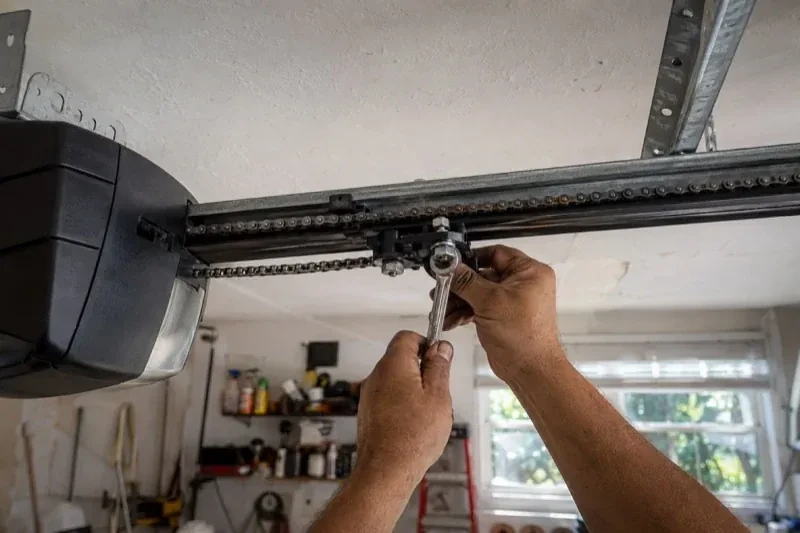
- Chain-Drive Opener RepairThe door opens about a third of the way and stops.
- Belt-Drive Opener RepairAfter the power came back you pulled the red cord to get the car out.
- Photo-Eye Sensor Alignment or ReplacementSomeone backed the car in a little too far, a bin or a bicycle brushed the track, and since then the door starts to close and comes back up.